The SAT Is Winning More Lawsuits—and Capturing Most of the Money at Stake: Signs of Tougher Tax Enforcement
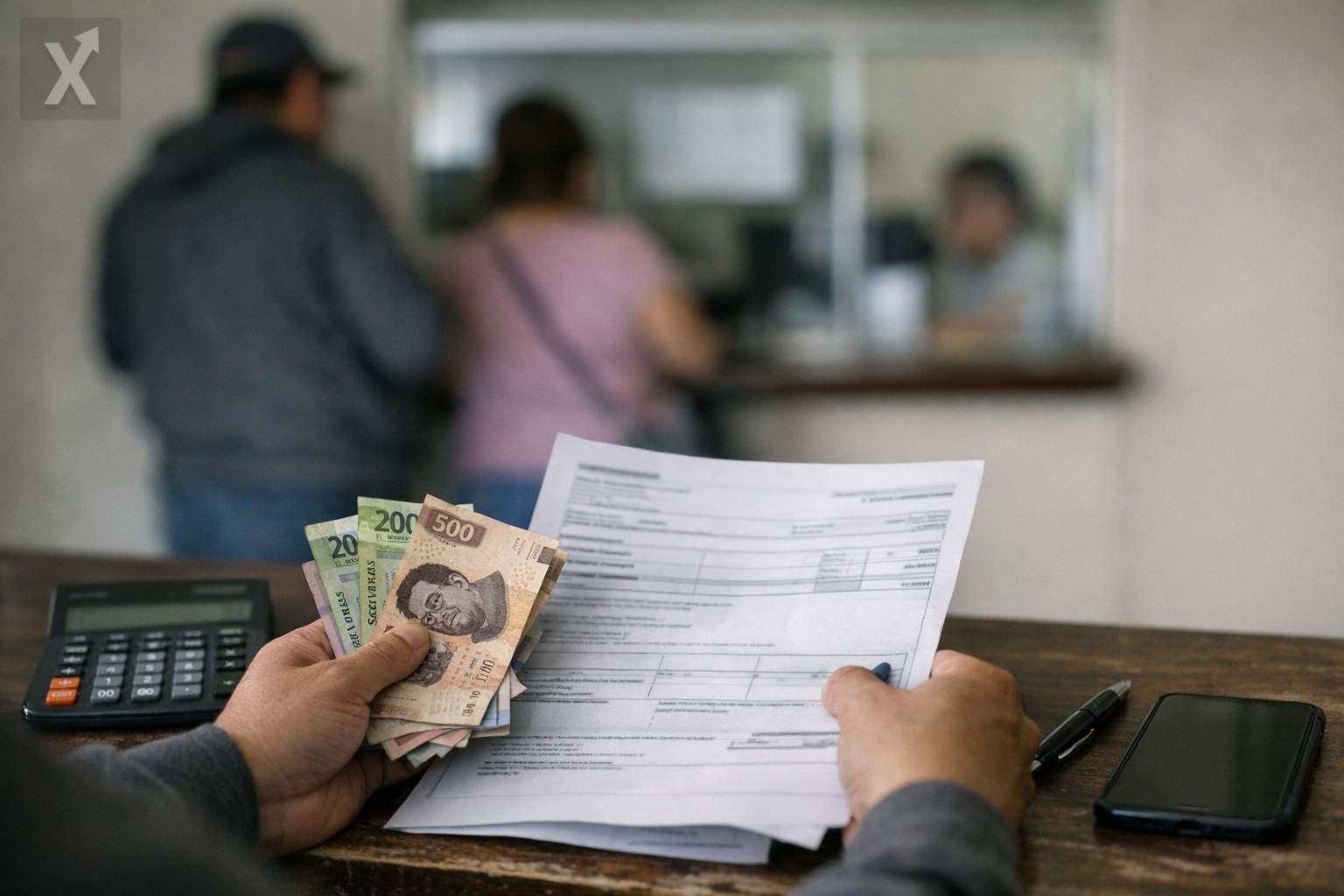
Mexico’s tax authority ended 2025 with more final-stage wins and a higher recovery of disputed amounts, in a more demanding regulatory environment.
The tightening of Mexico’s tax policy is showing up more clearly in the courts. By the end of 2025, the Tax Administration Service (SAT) secured final, favorable rulings in a greater share of cases and, more importantly, captured a larger portion of the money in dispute, according to figures reported by the Ministry of Finance and Public Credit (SHCP). The pattern points to a tax authority with stronger technical and legal capabilities—and to a landscape where, for taxpayers, betting on litigation is more expensive and less predictable.
The data show a shift from 2018: at that time, the authority won 48.5% of final-stage cases and recovered 73.8% of the amount in dispute. By 2025, the government prevailed in 55.5% of final proceedings and recovered close to 80% of the contested resources—roughly 200 billion pesos. On the other side, taxpayers obtained favorable rulings in 32.9% of cases, tied to just 17.4% of the money at stake.
Beyond success rates, the average amount recovered per winning case also grew: the Finance Ministry reports that in 2018 the authority recovered an average of 12.8 million pesos per lawsuit won, while in 2025 the average rose to 23.5 million—an increase of about 45.5% over seven years. In practice, this suggests the SAT isn’t just winning more; it’s better positioned in higher-value disputes or has stronger legal criteria to sustain significant tax assessments.
The shift is explained by several factors. On one hand, the federal administration eliminated the policy of forgiving tax debts for large taxpayers through a 2019 decree and strengthened reviews of prior tax years to determine tax assessments. On the other, the SAT’s Master Plan—implemented since 2019—has driven more targeted audits, with greater use of data analytics, automation, and artificial intelligence tools to detect discrepancies, simulated invoicing networks, and risk patterns.
Tax specialists have also pointed to an evolution in the authority’s legal strategy: better-trained teams and a more active defense in court, which reduces opportunities for taxpayers to win on procedural missteps or technical weaknesses in the state’s representation. High-profile cases—such as tax disputes that have reached the Supreme Court—have reinforced the perception that the playing field has tilted toward the treasury in consequential matters.
2026 Tax Reforms: A Higher Financial Cost to Challenge Assessments
The environment could become even more restrictive starting in 2026. Changes to the Federal Tax Code, aimed at strengthening efforts against money laundering, tax evasion, and avoidance—particularly the simulation of transactions linked to fake invoices—would impose a higher financial cost on those who decide to challenge tax assessments. Under the new framework, when the authority determines an assessment, the taxpayer will face a more rigid choice: pay or challenge it, but to challenge it they must secure the amount through a deposit certificate at Banco del Bienestar, with no alternatives such as a surety bond, letter of credit, or attachment. For companies with liquidity constraints or tight cash flow, the change could mean immediate pressure on working capital, even before there is a final ruling on the legality of the assessment.
This adjustment has economic implications at a time when the country’s growth remains moderate and financing costs continue to matter for businesses. Although Banxico has begun a rate-cut cycle after the inflation peak of recent years, rates are still at levels that make financing expensive—especially for mid-sized companies and for supply chains with more limited access to bank credit. In that context, tying up funds to litigate can affect investment, payroll, and expansion plans.
Two Trillion Pesos in Dispute: Contested Collections as a Fiscal Variable
The universe of contested assessments remains large. By the end of 2025, the Finance Ministry reported 203,221 disputed tax credits—under legal challenge and therefore not collectible—totaling more than two trillion pesos. For public finances, that pool represents significant potential revenue, but also a source of uncertainty: not everything litigated turns into income, and recovery depends on judicial standards, collection capacity, and the solvency of the taxpayers involved.
Within a framework of fiscal discipline—where the government seeks to sustain social programs and public investment projects without broad-based tax increases—collection efficiency becomes a central pillar. The strategy has been to close off room for aggressive tax planning schemes, raise perceived risk among evaders, and accelerate enforcement through technology. The macroeconomic effect can be mixed: on the one hand, higher revenues support fiscal stability; on the other, a climate seen as more punitive can raise compliance costs, increase litigation, and affect certainty for certain investments—especially in sectors with heavy tax regulation.
Implications for Businesses and Individuals: Compliance and Strategy
For businesses, the SAT’s progress in court reinforces the need for preventive shielding: robust documentation, internal controls over suppliers, validation of the substance of transactions, and greater discipline in substantiation and deductions. For individuals with business activity, the impact tends to be more operational: automated reviews, mismatches among CFDIs, tax returns, and bank movements, and requests with shortened deadlines. In both cases, the trend suggests that the margin of maneuver is shifting from “litigate later” to “prevent from the outset.”
There is also an institutional angle: perceptions of the judiciary’s independence and standards in tax matters influence the willingness to settle or take cases to the last stage. If the market concludes that the court route is increasingly ineffective for contesting tax determinations, it will likely drive more agreements, voluntary corrections, and early regularizations—even when doubts remain about whether certain assessments are warranted.
In sum, the 2025 results confirm a more effective tax authority in defending its determinations and capturing a larger share of litigated amounts. With reforms that will raise the cost of challenging assessments and a portfolio of disputed tax credits exceeding two trillion pesos, the debate will shift to how to balance revenue collection, legal certainty, and investment conditions without weakening tax compliance.






