Mexico Slips in IMD Global Competitiveness: Attention Returns to Government and Infrastructure

Mexico fell to 62nd place in the IMD competitiveness ranking, with lags in government efficiency and infrastructure that stand in contrast to its export strength.
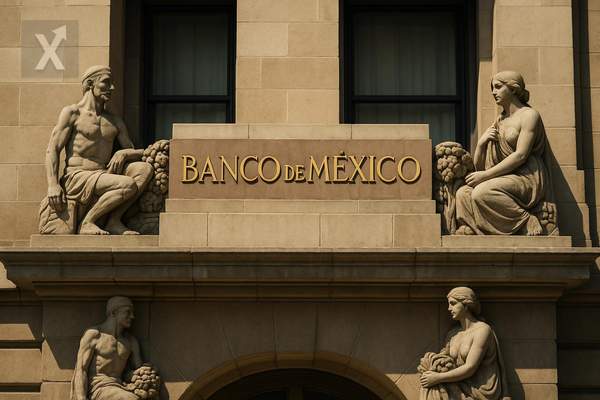
Mexico lost ground in the 2026 edition of the World Competitiveness Ranking from the Institute for Management Development (IMD), dropping seven spots to land at No. 62 among the economies assessed. The decline comes as the country seeks to capitalize on the reorganization of North American supply chains, but it faces internal constraints that weigh on its ability to attract investment and boost productivity.
The IMD indicator compares countries based on their ability to create and sustain a favorable environment for business operations, across four pillars: economic performance, government efficiency, business efficiency, and infrastructure. In 2026, Mexico posted mixed results: it performed relatively well in economic performance (No. 39), but lagged in business efficiency (54), infrastructure (61), and especially government efficiency (62), its weakest component.
The broader takeaway from the ranking is that the country’s structural advantages—market size, competitive labor costs, and manufacturing integration with North America—have not been enough to offset bottlenecks in regulation, institutional capacity, and the quality of key services and infrastructure, from logistics to human-capital development.
Governance and the Regulatory Framework: The Biggest Drag in a High-Uncertainty Year
Mexico’s poorest showing was concentrated in government efficiency, a category that includes public finances, fiscal policy, the institutional framework, and the regulatory environment. In practice, this pillar often captures perceptions about investment certainty: clear rules, the time and cost of permitting and paperwork, consistency in enforcing regulations, and the quality of coordination across levels of government. In a context where companies compare investment destinations based on speed and predictability, regulatory volatility and administrative burden can become disadvantages as significant as energy or transportation costs.
Pressure on public spending and the recurring debate over fiscal room also factor into the assessment. With an economy that has shown resilience thanks to its export platform, the challenge is to turn that momentum into long-term growth—something that requires institutions that speed up projects, reduce risk, and support competition and productivity. For markets, the most valuable signal is often policy continuity and effective execution: ensuring that permits, oversight, and the justice system keep pace with the investment flows driven by production relocation.
On infrastructure, Mexico ranked 61st, reflecting challenges across physical, technological, scientific, and educational components. Economically, this translates into higher logistics costs, congestion in industrial corridors, connectivity gaps, and limits on scaling up higher value-added processes. In the nearshoring environment, infrastructure stops being a “supporting asset” and becomes a core determinant of competitiveness: ports, customs, highways, availability of industrial parks, digital connectivity, and access to reliable energy supply.
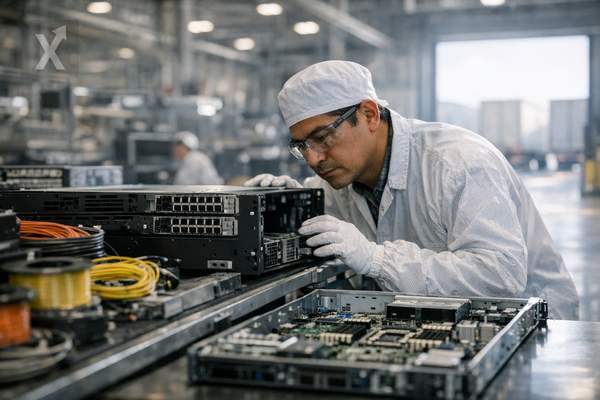
The contrast is that the country continues to show strengths in economic performance. IMD recognizes the size of Mexico’s economy and the competitiveness of its labor costs, along with growth in exports tied to advanced manufacturing. That foundation has helped sustain a significant role in regional value chains, particularly in sectors such as automotive, auto parts, electronics, and medical devices. However, the gap between an open, export-oriented economy and shortcomings in infrastructure and institutions limits the speed at which Mexico can capture new investment or move it into activities with higher technological content.
The IMD report also points to challenges that have become central in Mexico’s public debate: strengthening logistics infrastructure to take advantage of nearshoring, promoting innovation and technological development, shoring up the domestic market, improving education and workforce training, and ensuring energy security. These priorities connect to a familiar diagnosis: Mexico can attract investment thanks to geographic proximity and its trade network, but it needs to raise productivity and provide greater certainty to sustain a faster, more stable growth path.
Looking ahead, Mexico’s performance in international rankings tends to move with incremental changes—regulatory improvements, administrative simplification, greater investment in infrastructure and human capital—rather than isolated measures. For 2026, IMD’s message is clear: the country’s existing competitive advantages remain in place, but internal constraints, if left unaddressed, could cap the potential of the investment cycle associated with regional integration.
In short, the drop to No. 62 does not erase Mexico’s export strengths, but it underscores that the core challenge is strengthening state capacity and improving infrastructure quality to turn external opportunities into sustained, higher value-added growth.