Finance Ministry Keeps Diesel Subsidy and Tamps Down IEPS Collections Amid Energy Market Pressures
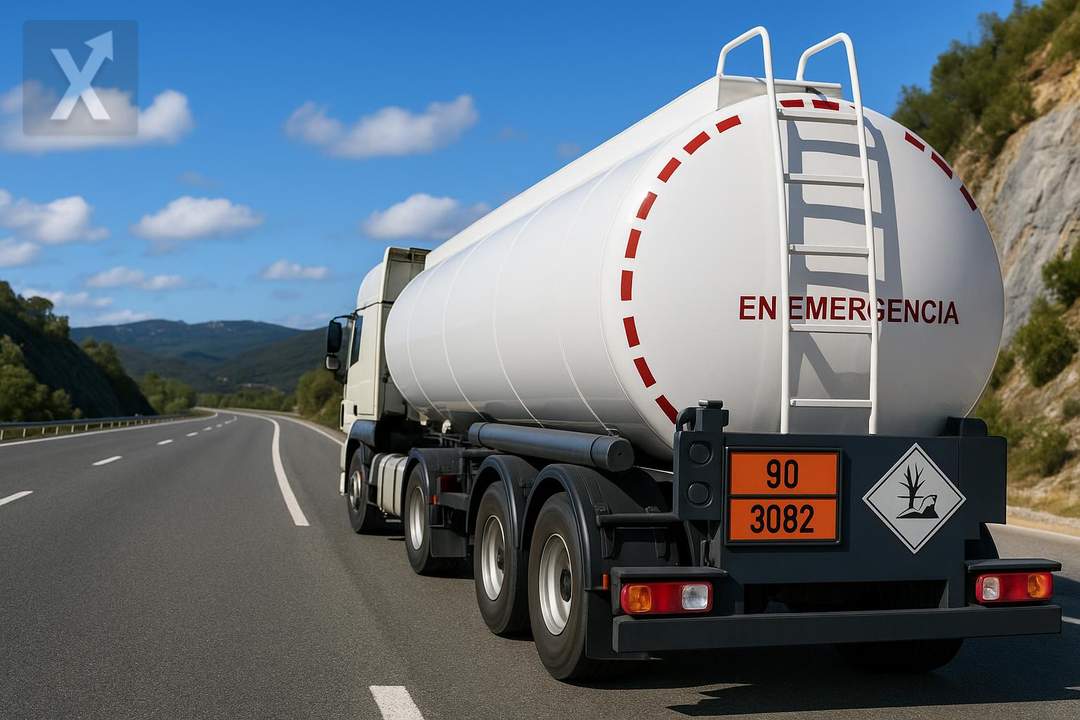
The government again lowered the IEPS on diesel and gasoline to cushion rising energy costs, with potential consequences for tax revenue.
Mexico’s Ministry of Finance and Public Credit (SHCP) extended the diesel tax stimulus for a fifth straight week. Diesel is a key fuel for moving freight and passengers across the country. For the April 11–17 period, the support will stand at 80.3%, slightly below the prior week’s 81.2%, leaving the applicable Special Tax on Production and Services (IEPS) at 1.45 pesos per liter.
The adjustment comes amid heightened volatility in international crude and refined-product prices, with bouts of geopolitical tension that often feed into import costs. Mexico still relies heavily on external fuel supplies—especially gasoline and diesel imported from the United States—so moves in global markets and the exchange rate tend to show up in consumer prices when there are no fiscal buffers.
Beyond diesel, the Finance Ministry kept gasoline stimuli in place for a fourth consecutive week. For Magna, the stimulus will be 27%, with an IEPS charge of 4.60 pesos per liter; for Premium, the discount will be smaller at 8.9%, equivalent to 0.50 pesos per liter, resulting in an IEPS charge of 5.15 pesos.
In practical terms, the stimulus works as a temporary cut to the federal IEPS to smooth out sharp increases at the pump. When international prices rise, authorities can reduce the tax burden to keep the hike from hitting end consumers immediately and sharply; when the market stabilizes or falls, the stimulus is usually reduced or removed, allowing for higher revenue collection.
Economic impact: transportation, inflation, and public finances
Diesel has economy-wide spillovers: it is a direct input for freight trucking and part of public transportation, so higher prices can pass through to logistics costs and, over time, to food prices, industrial goods, and services. In an environment where inflation has shown pockets of stickiness—particularly in services and certain goods—containing sudden fuel spikes can help moderate short-term pressures, even if it does not remove the underlying forces shaping the inflation path.
Still, these stimuli often carry a fiscal cost: by lowering the effective IEPS, the government forgoes some potential revenue. In a year of heavy budget demands—given debt-service costs, social commitments, and investment needs—the administration faces the challenge of balancing energy price stabilization with fiscal discipline. The available room depends, among other factors, on international price levels, trends in domestic fuel consumption, and the performance of non-oil tax revenues.
For businesses, the continued diesel stimulus is especially important for transport-intensive sectors—logistics, retail, manufacturing, and agribusiness—where fuel is a significant operating cost. For consumers, the takeaway is mixed: the support helps buffer volatility, but it does not guarantee low prices if external shocks persist or if other parts of the supply chain become more expensive, such as freight, insurance, or refining costs.
Looking ahead, the pace at which the Finance Ministry adjusts these supports will depend on global energy market stability and domestic conditions, including the tradeoffs among inflation, growth, and public finances. During periods of high volatility, the government is likely to prioritize smoothing moves to avoid abrupt hits to household budgets and production costs; if conditions improve, the stimulus could be gradually scaled back to recover revenue.
In perspective, the decision to maintain IEPS stimuli underscores that fuels remain a sensitive variable for Mexico’s economy: they help contain short-term pressures on prices and logistics costs, but they also reopen an ongoing debate over their fiscal cost and the country’s reliance on external supply.






