Employment Up, Quality Down: Mexico Adds Workers, but the Gains Are Driven by Informality
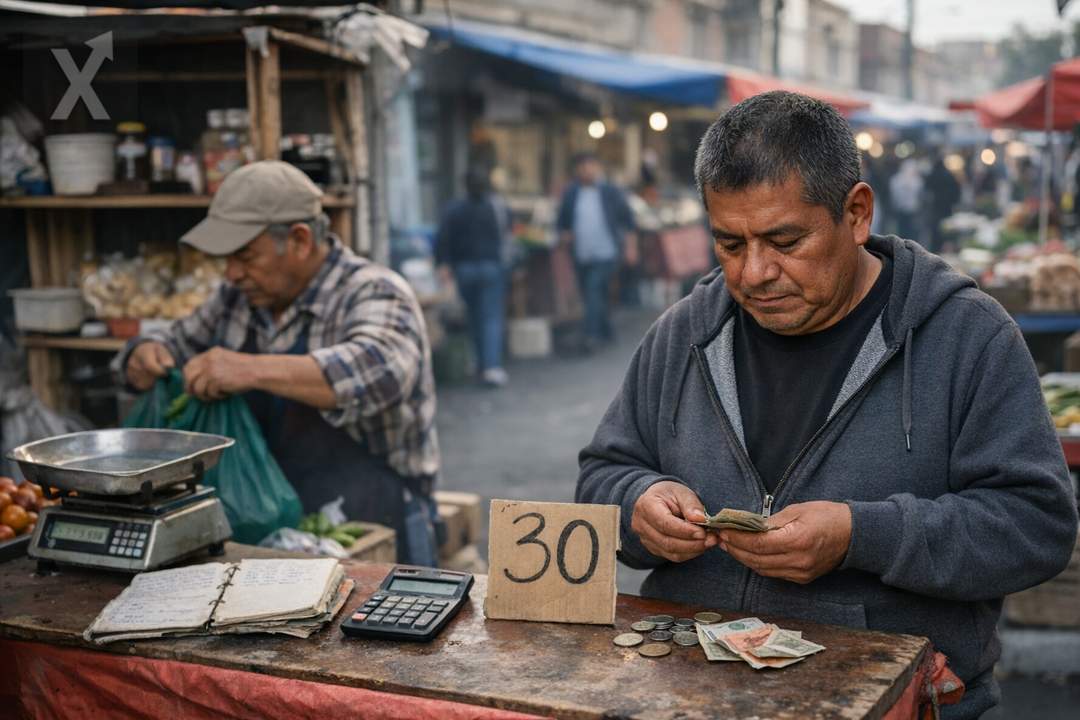
The labor market is growing, but the momentum is coming from microbusinesses and self-employment, while formal jobs stall and signs of precarious work increase.
Mexico’s economy started 2026 with more people working, but with a pattern that raises red flags: employment is rising, yet increasingly in small-scale activities without benefits and with incomes under pressure. Results from INEGI’s National Survey of Occupation and Employment (ENOE) for the first quarter of 2026 show a year-over-year increase of 552,000 employed people, bringing the total to 59.6 million. However, the makeup of that growth indicates that a large share of new workers entered arrangements that are typically informal or survival-oriented.
The momentum was concentrated in microbusinesses and self-employment. Against a backdrop of cyclical slowing and higher labor costs in the formal segment, many households are turning to mixed income strategies—retail selling, personal services, small workshops, and street vending—that generate cash flow but rarely build long-term paths to higher productivity and social security coverage. The paradox is clear: more jobs, but not necessarily better jobs.
According to the ENOE, microbusinesses accounted for 24.5 million employed people—48.7% of non-agricultural employment—and added more than 713,000 workers compared with the same period in 2025, the largest increase across establishment sizes. Employment also rose in small and mid-sized establishments, while large establishments—where positions with benefits, training, and greater stability are typically found—cut their headcount by about 168,000.
The shift is also visible by “employment status.” The number of self-employed workers increased by more than 451,000 to 13.5 million, boosting their share of the total. By contrast, subordinate paid employment barely grew, and its share declined. In practical terms, the labor market is absorbing workers, but a growing portion is doing so outside traditional wage-and-salary relationships.
Informality increased. In the first quarter of 2026, 32.6 million people worked in some form of informal employment—more than 583,000 additional workers year over year—pushing the informality rate up to 54.8%. The largest component was the so-called “informal sector,” with 17.6 million employed people. By comparison, formal employment edged down slightly from the prior year, signaling stalled capacity to generate jobs with social security and full labor-rights coverage.
At the same time, INEGI reported worsening quality indicators: the rate of critical employment conditions rose to 38.8%, and nearly half of employed people earned up to one minimum wage. While unemployment remained low by historical standards (2.6%), its slight uptick and the rise in the number of unemployed people suggest a labor market that is still adjusting more through job quantity than through broad-based wage gains.
What it means for growth, consumption, and public policy
A labor market that expands mainly through microbusinesses and informality can support short-term consumption, but it limits medium-term growth potential. The reason is structural: informality typically operates with less access to credit, technology, and training; it also reduces tax collection and the contribution base for social security, putting pressure on public finances and on health and pension systems. In Mexico—where productivity and regional inequality remain persistent challenges—this dynamic can widen gaps between modern export-oriented sectors and low-productivity services geared to the domestic market.
The economic read also intersects with the inflation and monetary cycle. With real wages still recovering from recent bouts of high inflation, rising employment does not always translate into greater purchasing power if job growth is concentrated in low-income work or fragmented schedules. For public policy, the challenge is twofold: on one hand, make formalization easier by lowering entry costs and simplifying procedures for small businesses; on the other, strengthen labor inspections and expand social security coverage through more flexible schemes for independent workers—without discouraging economic activity. Coordination among labor, tax, and social security authorities becomes critical to keep “new” employment from remaining permanently on the fringes of formality.
Looking ahead, Mexico’s ability to turn job growth into broader well-being will depend on whether microbusinesses can transition to greater scale and productivity, and whether formal employment regains traction in higher value-added sectors. Supply-chain relocation and investment tied to manufacturing and logistics could be a tailwind, but its impact on formal job creation is not automatic and requires human capital, infrastructure, and regulatory certainty to spread beyond a handful of industrial hubs.
In short, the first quarter of 2026 confirms that Mexico is still creating jobs, but with a less favorable composition: self-employment and informality are rising, large establishments are shrinking, and indicators of precarious work are increasing. The key question is not only how many people are working, but under what conditions—and with what prospects for improvement.






