Tariffs and a “Soft Landing” in the U.S.: What Changes for Mexico Ahead of the USMCA Review
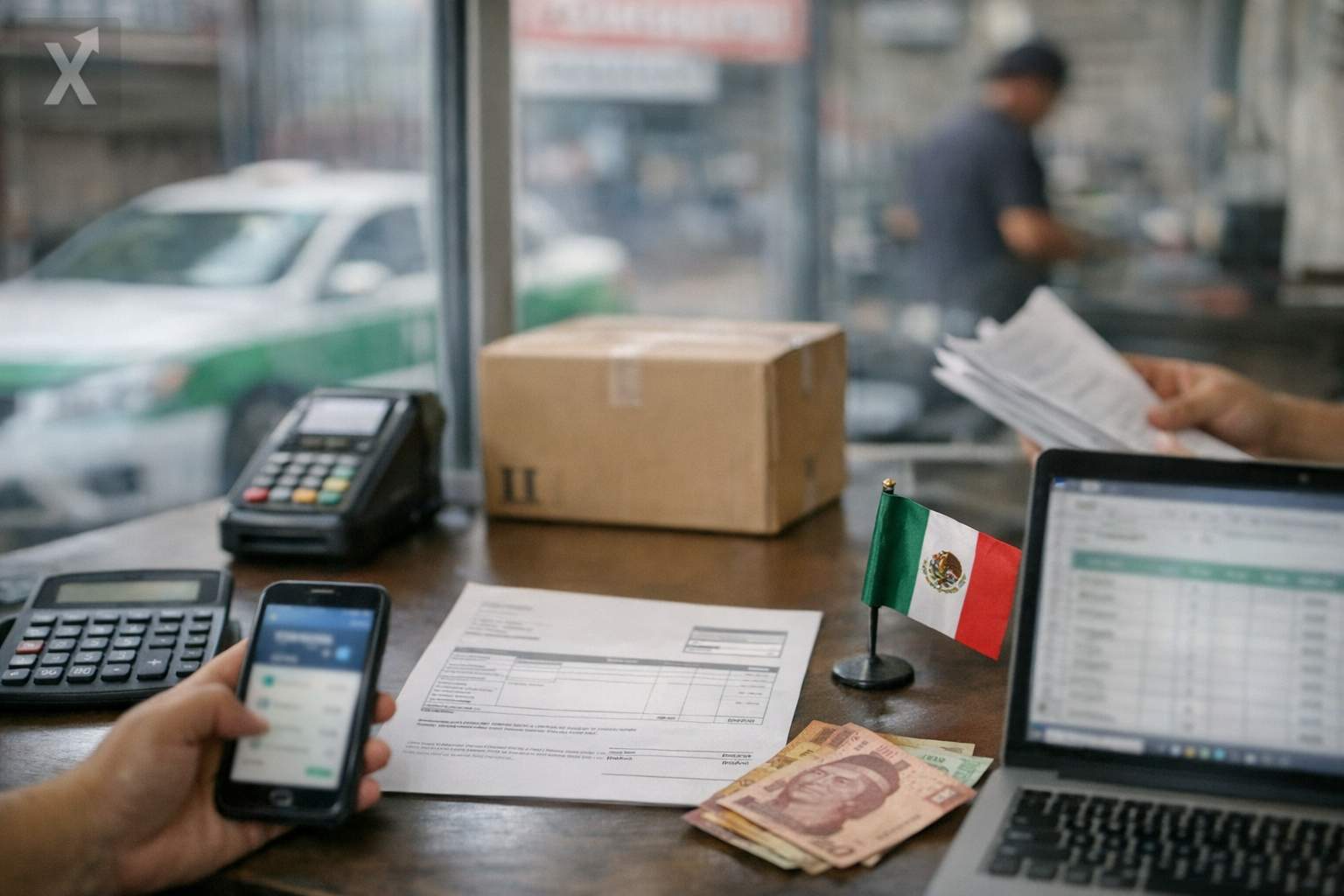
The U.S. economy closed out the first year of Donald Trump’s second term with a mix that, from Mexico’s perspective, is as relevant as it is contradictory: still-solid growth, better-contained inflation, and a labor market that’s cooling without collapsing—yet with a widespread sense that purchasing power is eroding. That contrast matters because the U.S. remains Mexico’s top trading partner and the anchor for much of the manufacturing momentum tied to nearshoring; if the American consumer stays cautious, the impact shows up on the Mexican side in orders, exports, and production tempo.
U.S. data point to stronger-than-expected performance: GDP kept a solid pace into 2025, supported by consumption, government spending, and exports, along with an investment cycle concentrated in technologies like artificial intelligence. For Mexico, a U.S. that avoids recession lowers the risk of a sudden brake in highly integrated sectors—autos, home appliances, electrical equipment, and medical devices—but it can also keep interest rates relatively high for longer if inflation takes time to fully converge. That backdrop tends to translate into tighter financial conditions in emerging markets, including Mexico, through the exchange rate, risk premiums, and borrowing costs.
On inflation, the U.S. move toward more moderate levels eases imported pressures, though the benefit doesn’t pass through evenly. In Mexico, Banco de México has advanced a rate-cut cycle from restrictive levels, but it remains focused on core inflation and on not losing the interest-rate spread versus the Federal Reserve. The combination of “slow disinflation” in U.S. services and the peso’s sensitivity to financial flows forces a careful monetary-policy path: gradual cuts, with close attention to exchange-rate pass-through and to services prices, which in Mexico also tend to be persistent.
The U.S. labor market has avoided an abrupt downturn, but it has shown a clear slowdown in job creation, while real income for part of the population hasn’t fully recovered ground against cumulative inflation. For Mexico, the point is twofold: on one hand, still-stable employment in the U.S. typically supports remittance flows—a key source of consumption in many regions; on the other, slower job growth and a more pessimistic consumer can limit the growth of external demand for Mexican manufactured goods. In 2024 and 2025, Mexico has also faced its own cyclical slowdown, with uneven performance across sectors, where manufacturing and private-project-related construction coexist with mixed signals in services and consumption.
Where the signal is most delicate for Mexico’s outlook is trade policy. The U.S. tariff tightening pushed the average effective rate to highs not seen in decades and, beyond the direct impact, introduced legal uncertainty over the use of executive powers to impose tariffs. In a context of regionalized supply chains, a tariff becomes not only a cost but also a planning variable: exporting companies in Mexico—including those operating under IMMEX programs—must anticipate scenarios involving stricter origin verification, changes in tariff classifications, compliance adjustments, and potential retaliatory measures.
This intersects with the USMCA review, which is shaping up to be a high-impact event for investment. Mexico enters that conversation with strengths—manufacturing capacity, logistical proximity, export experience, and a relatively stable peso in recent periods—but also with unresolved issues that markets are watching closely: regulatory certainty, energy capacity and power transmission, security along industrial corridors, water availability in some areas, and the pace of public and private investment in infrastructure. In practice, nearshoring depends not only on wages or geography, but on a full package of costs: reliable energy, streamlined permitting, labor and customs compliance, and a predictable legal framework.
Domestically, Mexico faces the challenge of sustaining growth with inflation trending down and public finances under pressure from higher spending and investment needs. With an economy highly integrated with the U.S., shifts in rates and in U.S. consumer confidence tend to “filter through” via exports, tourism, and financial markets. That’s why, while a U.S. soft landing reduces recession risk, the turn toward greater protectionism and litigation over tariffs can increase volatility in specific sectors, even as it opens opportunities to replace Asian sourcing with regional production—provided the rules of the game are clear.
In perspective, the base case for Mexico looks like a mix of opportunity and caution: U.S. growth still supports external demand, but the perception of lost purchasing power and tougher trade policy can slow investment decisions or raise operating costs. Mexico’s ability to capture more reshoring and nearshoring will depend less on the cycle and more on structural conditions: legal certainty, infrastructure, energy, and security—just as the USMCA moves back to the center of North America’s economic debate.
Final observations: the U.S. economy has shown resilience, but consumer dissatisfaction and the tariff shift introduce risks Mexico cannot ignore. In the short run, avoiding a U.S. recession is a buffer; looking ahead, the key will be how trade uncertainty and the USMCA review affect investment, supply chains, and manufacturing jobs in Mexico. The country’s overall outcome will depend on how quickly it can turn interest in regionalization into concrete projects, with clear rules and competitive costs.






