Mexico strengthens its position as a key U.S. partner: bilateral trade is now twice the level of trade with China
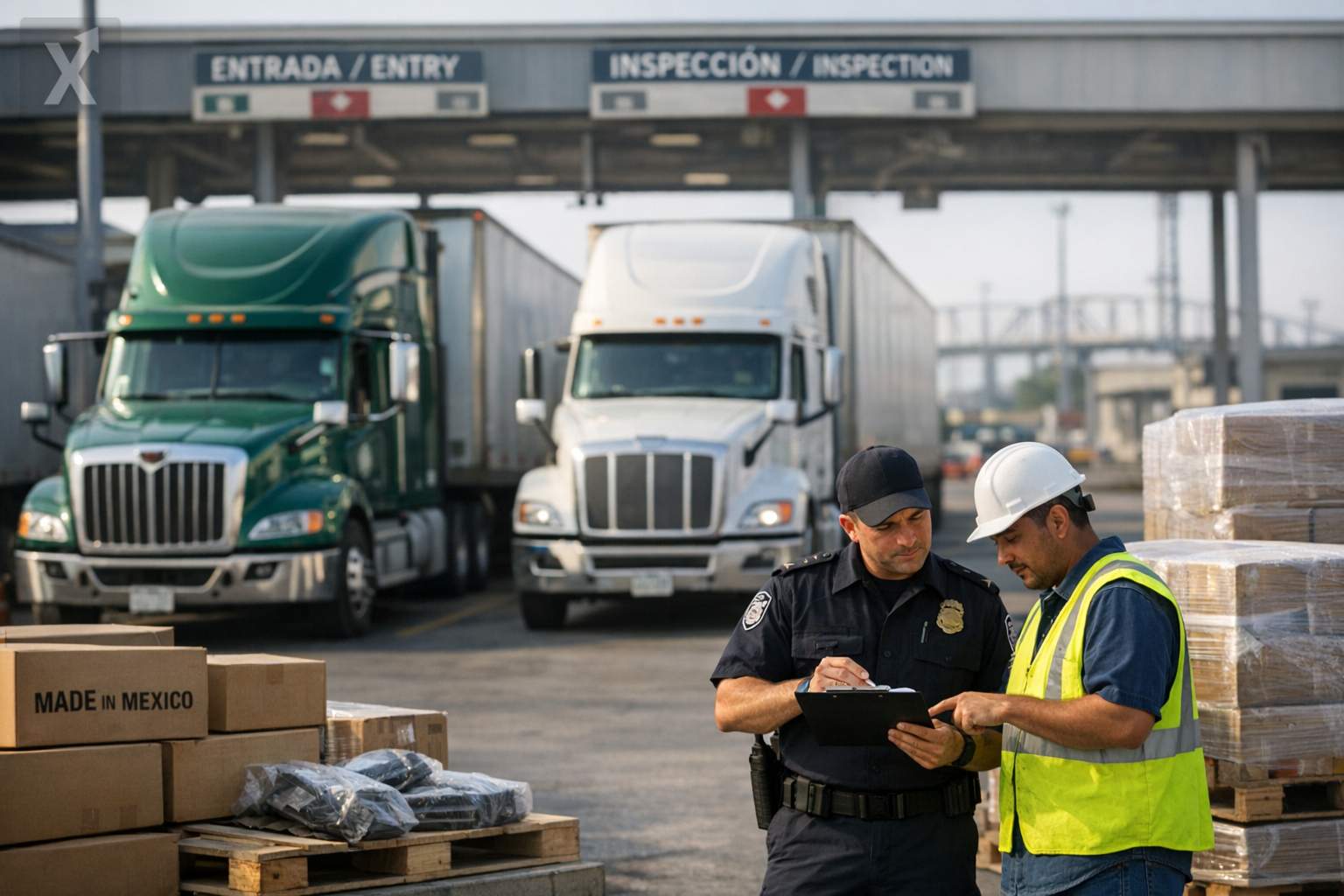
Mexico–United States trade is keeping a solid pace and reshaping supply chains, even as it faces risks from tariffs and industrial cycles.
Goods trade between Mexico and the United States reached $872.834 billion in 2025—an amount that already doubles the trade Washington conducted with China, at $414.688 billion. The gap illustrates a structural shift underway in the U.S. market: deeper integration with North America and less reliance on the Asian giant, amid a global environment of rising protectionism, geopolitical tensions, and a push for closer, more resilient supply chains.
On the U.S. import side, purchases from Mexico totaled $534.874 billion, 1.7 times what it bought from China. Meanwhile, U.S. exports to Mexico hit $337.960 billion—nearly three times what was shipped to Beijing. As a result, Mexico not only remains the United States’ top supplier, it is also gaining importance as a final market for U.S. goods—a meaningful feature because it points to a two-way commercial relationship, not merely an export platform.
Behind the growth is a combination of factors: post-pandemic adjustments, supplier reshuffling by companies seeking resilience and shorter logistics times, and the USMCA framework, which grants preferential treatment to products that meet rules-of-origin requirements. In practical terms, integration shows up in production chains that cross the border several times: machinery, auto parts, electrical equipment, and electronics move between plants on both sides before reaching the consumer.
For Mexico’s economy, that trade momentum is showing up in industrial regions in the north and the Bajío, where export manufacturing, logistics, and trade-related services have gained prominence. At the same time, deeper integration increases Mexico’s sensitivity to U.S. cycles: when consumption or industrial investment slows north of the border, demand for Mexican exports cools, affecting jobs, orders, and freight activity.
Geographic concentration is also part of the story. In the United States, trade with Mexico relies heavily on just a handful of states, with Texas as the dominant hub thanks to border infrastructure, warehousing networks, and highway and rail connectivity. That concentration boosts efficiency, but it also creates vulnerabilities to bottlenecks, customs congestion, or disruptions tied to weather events and security conditions.
Another factor to watch is the balance: the U.S. trade deficit with Mexico has grown and, in size, is approaching the deficit it runs with other major partners, while the gap relative to the deficit with China is narrowing. That data point fuels political debate in Washington over sector-specific measures, particularly in sensitive industries, pushing companies and authorities to plan for potential regulatory changes.
Tariffs, USMCA rules, and the auto sector’s stress test
The main short- to medium-term risk is not the relationship breaking down, but selective increases in costs. Higher duties on certain exports and political pressure to tighten criteria in strategic sectors are already starting to show up in segments like autos, where bilateral trade could feel adjustments through costs, inventories, and investment decisions. In this industry, supply-chain complexity—components crossing the border multiple times—magnifies the impact of any measure: a tariff or administrative change can drive up costs cumulatively. Even so, the USMCA remains an important shock absorber: preferential treatment for goods that meet rules of origin preserves competitiveness and, in many cases, encourages more production stages to stay in the region. For Mexico, the lesson is clear: the nearshoring opportunity requires boosting regional content, strengthening local supplier networks, ensuring reliable energy, and improving compliance capabilities (labor, environmental, and customs) so exports not only grow, but remain within the agreement’s preferential lane.
In advanced manufacturing, Mexico has gained ground in categories labeled as advanced technology for the U.S. market, surpassing China in 2025 as a supplier within that basket of goods. The gains are supported by expanding U.S. demand for computing and electronic equipment, along with corporate decisions to locate production closer to the end consumer. For Mexico, the move up the value chain opens opportunities, but it also demands more consistent public and private efforts in human capital, digital infrastructure, certifications, and intellectual property protection.
The agri-food front also offers mixed signals. Bilateral trade in the sector surpassed $74 billion, with a slight increase in U.S. agricultural exports to Mexico and a decline of around 10% in U.S. purchases of Mexican agricultural products, amid demand adjustments and international price shifts. Economically, this is a reminder that even with deep integration, sector flows can swing sharply due to weather conditions, logistics costs, seasonality, and price cycles.
Beyond the numbers, the backdrop is North America’s production reconfiguration. Mexico is attracting investment due to its proximity to the United States, manufacturing experience, and treaty network, but it faces internal challenges that constrain the pace of the leap: limits in electricity transmission, water stress in industrial hubs, port and border-crossing capacity, and security along logistics corridors. In addition, monetary policy—with Banxico calibrating rate cuts as inflation declines—affects the financing cost of expanding plants, automating, and building inventory, all key decisions in an economy so tied to the export cycle.
In perspective, the trade gap versus China confirms a lasting change in the United States’ sourcing mix, but it does not guarantee a straight-line trajectory. The coming quarters will depend on the path of U.S. demand, trade policy sector by sector, and how quickly Mexico can resolve bottlenecks to turn nearshoring into concrete projects, with higher productivity and greater domestic content.
In sum, trade with the United States has become an even more decisive pillar for Mexico: it is growing thanks to regional integration and relocation, but its future success will depend on maintaining preferential access through the USMCA, navigating tariff tensions, and raising domestic industrial capabilities.






