Insecurity Is Driving a Billion-Dollar Market for Security Technology and Services in Mexico
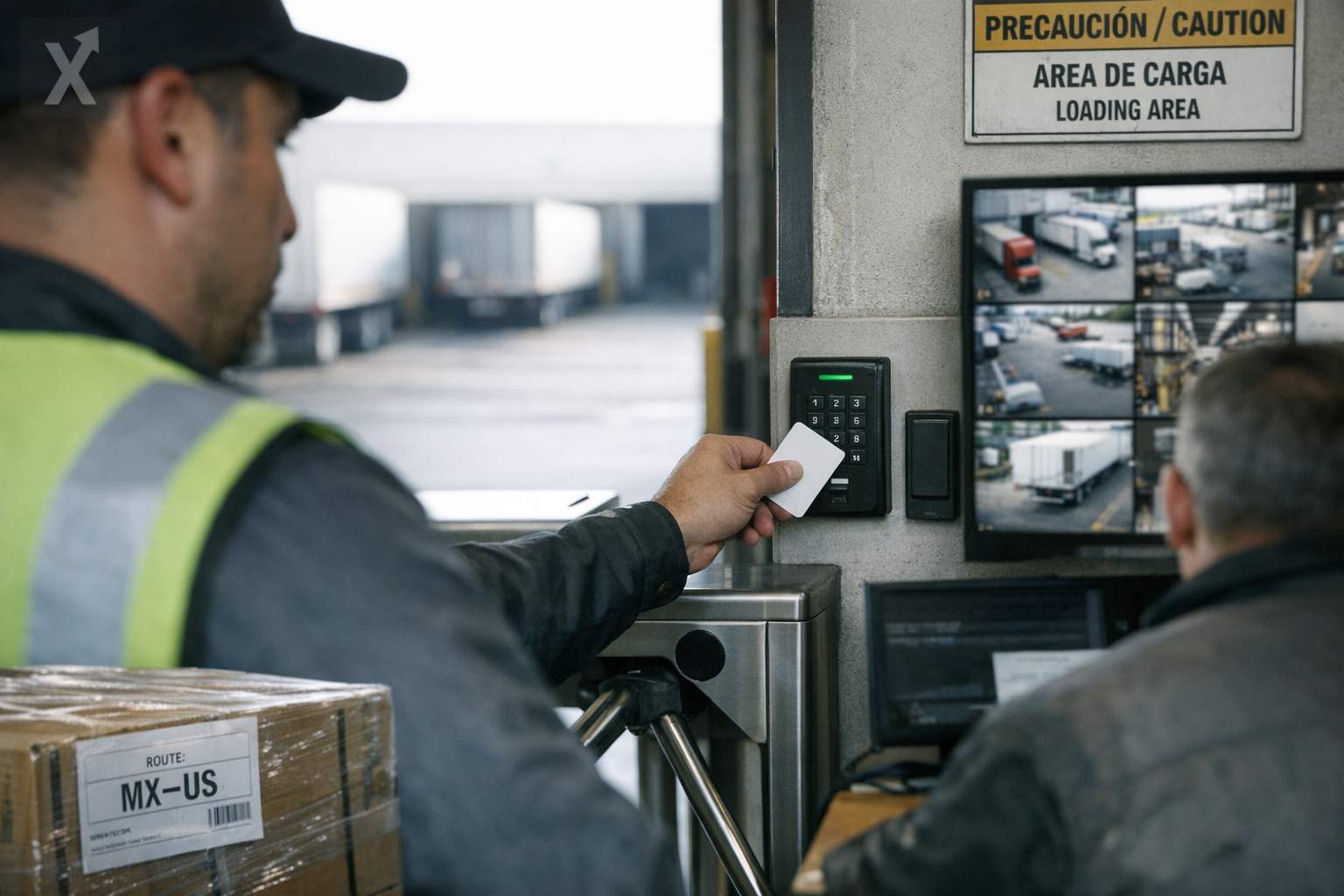
Violence is raising costs for businesses and households, but it’s also accelerating demand for video surveillance, monitoring, and access control nationwide.
Insecurity in Mexico isn’t just a social problem—it’s also reshaping investment, operations, and consumer decisions, with direct effects on the economy. In practice, the rise in crimes affecting people, businesses, and supply chains has turned security—both physical and technology-based—into a recurring expense line. That shift is opening up a growing market for specialized equipment, platforms, and services providers, where U.S. companies are finding an increasingly important commercial opportunity.
Estimates cited by U.S. trade authorities indicate that Mexico’s physical security market was around $1.85 billion in 2024 and could exceed $2.63 billion by 2028, driven by demand for protection solutions for cities, industry, freight transport, and homes. The business breakdown shows a transformation: a significant share corresponds to technology equipment (cameras, sensors, access control), while the largest portion is concentrated in services—monitoring, integration, response, and system management—which locks in long-term contracts and raises companies’ operating costs.
The broader context explains the momentum. Perceptions of insecurity remain high, and violence carries a significant economic cost. For the private sector, the issue has also become a risk factor that constrains growth, dampens investment, and makes logistics more expensive. In a country where foreign trade and manufacturing depend on on-time, reliable movement of inputs and finished goods, every incident on the road—cargo theft, assault, extortion—translates into higher insurance premiums, delays, longer routes, added buffer inventory, and extra spending on escorts and monitoring.
The paradox is clear: while insecurity pressures competitiveness and well-being, it also generates a market growing in step with the need for protection. This is especially visible in industrial and logistics corridors tied to exports, where the business priority is not only to produce, but to ensure operational continuity and safeguard personnel, facilities, and merchandise.
Nearshoring, Logistics, and the “Hidden Cost” of Protecting the Supply Chain
The push for nearshoring and deeper productive integration with the United States has increased the importance of security as an economic variable. New plants, industrial parks, and distribution centers require video surveillance infrastructure, access control, smart fencing, and response protocols—but also tools to manage risk in transit: vehicle tracking, geofencing, pattern analytics, panic buttons, and centralized monitoring. For many companies, security spending is no longer justified only as crime prevention, but as business continuity: avoiding shutdowns, inventory losses, penalties for missed deliveries, and reputational damage with international clients. In that sense, security becomes a “hidden cost” of trade and relocation: it doesn’t always show up in investment announcements, but it does affect margins, site-selection decisions, and operating costs.
Technological progress is accelerating change across the sector. The adoption of AI-powered video analytics, cloud platforms, and integrated systems that combine access, alarms, and video surveillance enables faster responses and, in theory, stronger prevention capabilities. Even so, the Mexican market still relies heavily on imported equipment—from cameras and biometric readers to signage and alarm devices—while local value added is typically concentrated in installation, solution integration, and service contracts. This creates room for foreign suppliers, but also for Mexican companies that act as integrators and security operators with on-the-ground knowledge.
Another important component is the gap between public spending and the actual need for protection. While government security investment can vary by budget cycle and shifting priorities, demand doesn’t disappear—it gets redistributed. Local governments, businesses, and households end up absorbing part of the burden, expanding the private market for surveillance and protection. For consumers, that means more spending on home systems, gated communities with access controls, and monitoring services; for the productive sector, it means internal policies, audits, training, and greater investment in technology and personnel.
For U.S. companies, growth in Mexico’s market represents an opportunity—but also a complex operating environment. Insecurity itself raises the cost of doing business: it forces route planning, stronger protocols, evaluation of operating areas, and hardening of facilities. Business surveys report frequent incidents ranging from violent robberies to attacks on freight transport and extortion, pushing many firms to allocate meaningful shares of their annual budgets to security. In aggregate, that means a portion of capital that could go to expansion, innovation, or wages is diverted to risk mitigation.
Looking ahead, the trajectory of Mexico’s security market will depend on two forces that are now moving in parallel: on one hand, digitalization (AI, cloud, smart monitoring) that lowers the cost of certain capabilities and broadens supply; on the other, the persistence of crime that sustains demand. If insecurity doesn’t ease, private security will continue to grow as both an industry and a country-level cost. If conditions improve, the market wouldn’t necessarily shrink, but it could shift more toward efficiency and compliance, and less toward reaction and containment.
In short, insecurity is functioning like an informal tax on the economy: it makes logistics more expensive, increases operating spending, and shapes investment decisions, while also fueling a fast-expanding market for equipment and services in which U.S. suppliers have found a growing niche.






