Mexico Looks to Close the Steel Gap: From Relying on Imports to Producing Nearly Everything It Consumes
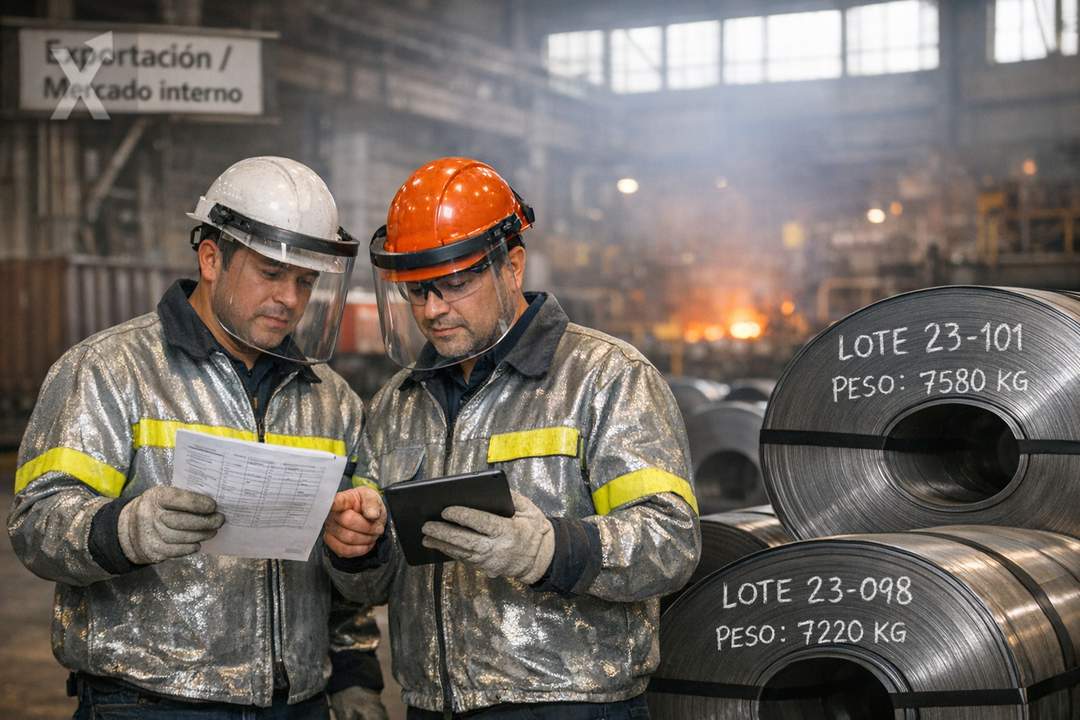
The steel industry and the federal government are betting on import substitution and shoring up supply chains in response to the tariff turn by the United States.
Mexico has room to move closer to self-sufficiency in a strategic input: steel. The National Chamber of the Iron and Steel Industry (Canacero) says the country could produce up to 97% of the steel demanded by the domestic market, leaving imports at just 3% for certain specialty steels that still aren’t made locally at scale or with the specifications required by some industries.
The proposal comes at a complicated time. Domestic production is around 14 million tons, while consumption is estimated at nearly 28 million—a gap that is filled through foreign purchases. For the sector, this dependence isn’t due to a structural lack of mills or infrastructure, but rather to a combination of low-priced import competition, long investment cycles, and a more restrictive international environment for trade.
Against this backdrop, the industry and the federal government have mapped out a path that combines three fronts: curbing the entry of subsidized steel or steel tied to unfair practices, strengthening demand for domestically produced steel—especially in public works and government procurement—and speeding up investments already committed to expand capacity and modernize processes.
Canacero estimates that ongoing investments total about $8.5 billion for this six-year administration. The goal is to increase available supply in the country, boost productivity, and reduce vulnerabilities in supply chains—especially in steel-intensive sectors such as automotive, appliances, machinery, construction, and energy infrastructure.
The rethink is also a response to an abrupt shift in North America’s environment: under Section 232, the United States raised the steel tariff from 25% to 50% and eliminated exceptions, a move that hits Mexico despite the production integration built under the USMCA. In practice, the change makes exports more expensive or more complicated and reshuffles trade flows, pushing the industry to sell more volume in the domestic market.
According to Canacero President Sergio Maza, Mexican exports to the United States have weakened under this new framework, increasing the urgency of regaining share of domestic consumption. The sector’s bet is that if a meaningful portion of imports is replaced, utilization of installed capacity could rise quickly without having to wait for the full investment cycle to be completed.
Tariffs, the USMCA, and the Challenge of Keeping North America Integrated
The U.S. tariff tightening reopens a dilemma for the region: how to reconcile economic security and industrial policy with a North American value chain that operates interdependently. In Mexico, steel is a cross-cutting input: it affects housing and public-works costs, manufacturing competitiveness, and the ability to attract investment tied to “nearshoring.” If trade measures raise the effective price of steel or create uncertainty about market access, companies reassess sourcing, inventories, and, in extreme cases, expansion plans.
For Mexico, talks with the United States become critical in two ways. The first is technical: finding mechanisms that recognize regional origin and traceability to differentiate North American steel from steel entering with subsidies from other economies. The second is economic: balancing import substitution with the need to keep inputs competitive for manufacturing exports, at a time when the country is trying to preserve its appeal for the relocation of supply chains.
At the same time, the domestic market offers opportunities—but also requirements. To replace imports in a sustained way, the industry needs regulatory certainty, reliable and competitively priced energy, efficient logistics, and effective customs enforcement against undervaluation or transshipment. Added to that is environmental pressure: global steelmaking is moving toward lower-carbon processes, and access to financing and contracts may increasingly depend on decarbonization and traceability standards.
Looking ahead, the plan’s success will depend on how quickly agreements translate into real purchases of Mexican-made steel, well-designed trade defense measures, and additional capacity operating efficiently. The industry sees room to win back domestic market share this year, but the final outcome will be tied to the evolution of the manufacturing cycle, construction activity, and the trade relationship with the United States.
In short, Mexico is trying to turn a more restrictive external environment into a push to strengthen its industrial base: producing more steel at home, reducing dependence, and protecting supply chains—without losing competitiveness in North America.






