The United States Looks to Shrink Its Deficit with Mexico by Selling More Energy, Technology, Minerals, and Farm Goods
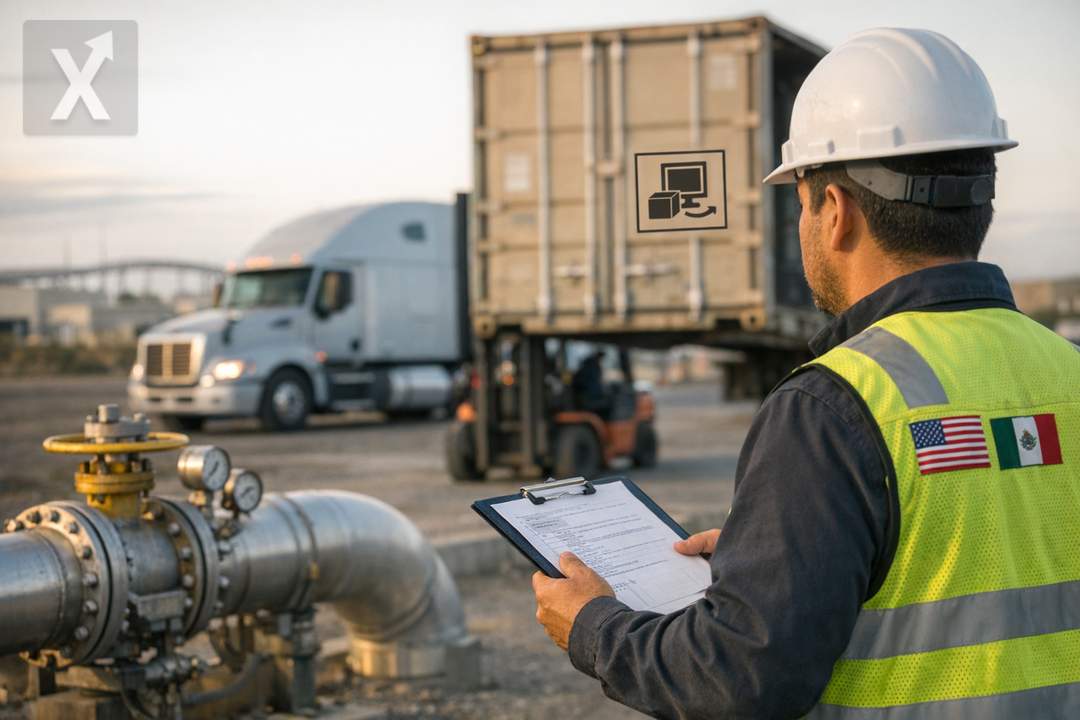
Washington’s strategy ahead of the USMCA review aims to expand key exports to Mexico, deepening integration while also bringing fresh regulatory pressure.
The trade conversation between Mexico and the United States is starting to fall into place with a clear logic heading into the USMCA review: Washington is not proposing a drastic reduction in what it buys from Mexico—as it has tried to do with China—but rather an increase in what it sells into the Mexican market to narrow a bilateral deficit hovering around $200 billion.
In the latest U.S. foreign trade data, exports to Mexico held at elevated levels and posted a moderate gain overall, but with fast growth in strategic categories: oil and gas, computer and electronic equipment, minerals, and agricultural inputs. The implicit message is that regional integration will continue, but with greater emphasis on Mexico absorbing more U.S. goods in areas where the United States has advantages and excess capacity.
For Mexico, the shift has direct implications for energy costs, manufacturing competitiveness, and supply security. It also points to a more technical and demanding negotiating environment: rules of origin, standards, non-tariff barriers, and trade facilitation frameworks could return as bargaining chips at a time when “nearshoring” has raised the region’s strategic value, but has not eliminated Mexico-side bottlenecks in infrastructure, energy, and logistics.
In 2025, U.S. oil and gas sales to Mexico rose sharply from the prior year, in line with record U.S. energy output and the push to place more volumes in nearby markets. Mexico, for its part, remains significantly dependent on imported natural gas to fuel power generation and industrial processes; that relationship, while useful for ensuring supply, also increases exposure to price shocks, Texas weather events, or pipeline logistics constraints.
At the same time, the U.S. export basket to Mexico is becoming more “tech-heavy.” Computer and electronic equipment solidified its position as the top category by value, supported by the investment cycle in data centers, semiconductors, servers, and industrial automation. The artificial intelligence narrative is behind part of that demand: even if Mexico is not a leading producer of advanced hardware, it has become a key link for manufacturing, assembly, and testing, as well as a growing consumer of digital infrastructure.
In strategic minerals, the geoeconomic pressure is clear. The United States is looking to reduce dependence on Asia in critical chains (batteries, electronics, and defense) and to align nearby partners through agreements and financing to secure supply. Mexico enters the equation because of its proximity, its manufacturing role, and its potential to plug into regional supply chains—though with the challenge of strengthening regulatory certainty, permitting, community consultation, and environmental traceability, issues that currently weigh on mining investment and on projects tied to e-mobility.
The agricultural front rounds out the picture. Mexico is already one of the top destinations for U.S. agricultural exports, including corn, dairy products, pork, and soybeans. For Washington, selling more product into Mexico helps offset domestic producer pressures and manage surpluses; for Mexico, the discussion returns to a sensitive point: farm productivity, storage infrastructure, health and safety standards, and the thin line between food security and import dependence, particularly for grains.
What Could Change for Mexico in the USMCA Review
The USMCA review will likely become a negotiation over “accumulated frictions” rather than a full overhaul of the agreement. In manufacturing, the United States could push for mechanisms that reward higher regional content in high-value sectors, while Mexico would seek to preserve competitiveness in auto parts, electronics, and devices—areas where logistics and proximity are advantages, but reliable energy availability and industrial permitting remain bottlenecks. In agriculture, discussions often focus on sanitary measures, permits, labeling, and other non-tariff barriers; any tightening would raise costs and could affect consumer prices. In energy, the issue cuts both ways: on the one hand, U.S. gas flows support Mexico’s power system; on the other, that dependence can become leverage if disputes grow over rules, infrastructure access, or public policy priorities. The most likely outcome is a USMCA with tougher operational and compliance requirements, more oversight, and less room for regulatory ambiguity.
In the short run, Mexico’s economic impact will depend on its ability to turn the greater inflow of U.S. inputs—energy, tech equipment, and raw materials—into more exportable production and greater investment. If Mexican industry uses those inputs to boost productivity, the country can cement itself as a regional platform. If, instead, dependence expands without resolving internal constraints (electricity, water, security, customs, and regulatory certainty), the balance will tilt toward higher costs and greater vulnerability to external shocks.
Looking ahead, the U.S. strategy suggests the trade relationship will keep growing, but with a more geopolitical agenda: securing energy and minerals supply, dominating digital infrastructure, and organizing regional production chains. Mexico has room to capitalize on the moment, though the payoff will depend on how it negotiates disciplines, how quickly it accelerates infrastructure investment, and how effectively it reduces internal risks that make production more expensive.
In short, the United States is pushing to reduce its deficit with Mexico by selling more in sectors where it has strong productive capacity, and Mexico faces the challenge of turning deeper integration into competitiveness and resilience without widening imbalances or critical dependencies.






