Mexico Plan: Finance Ministry outlines investment and job targets to support 3% growth by 2030
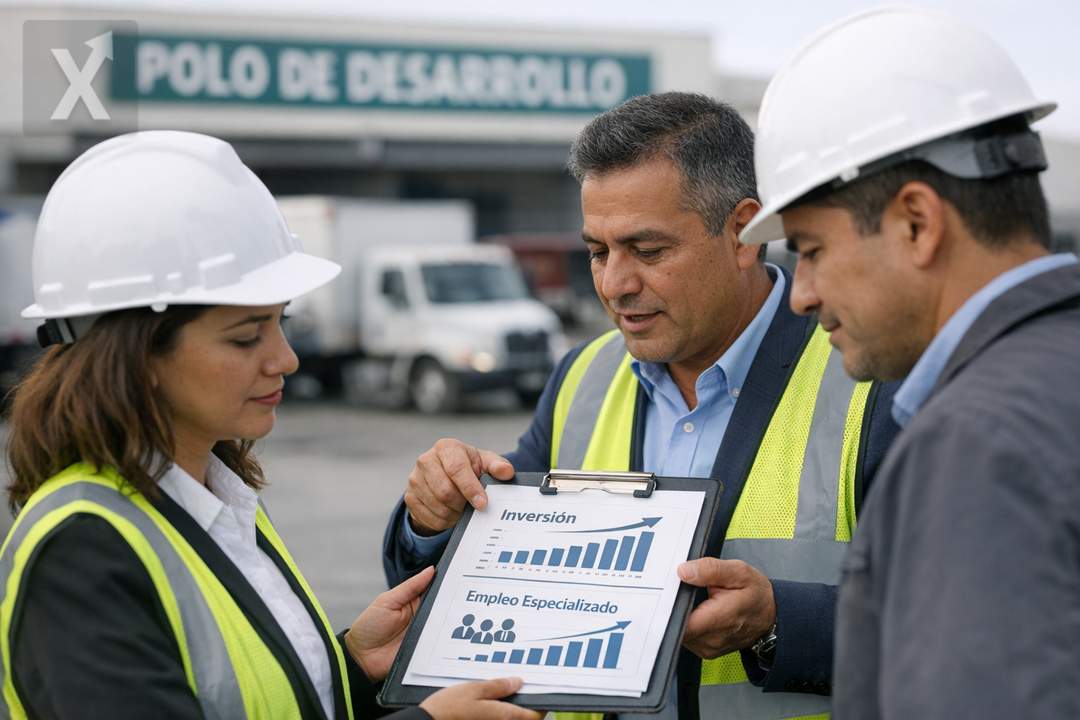
The federal strategy aims to raise investment, strengthen regional hubs, and expand infrastructure to sustain a faster pace of growth starting in 2030.
The federal government has mapped out a path to speed up growth in Mexico’s economy toward the end of the decade through the so-called Mexico Plan, a strategy that, according to the Ministry of Finance and Public Credit (SHCP), seeks to lay the groundwork for gross domestic product (GDP) to expand at a sustained 3% annually starting in 2030. The goal rests on higher investment, the expansion of regional projects, and an agenda focused on connectivity and productive integration.
Édgar Amador Zamora, head of the SHCP, said one of the central pillars is to raise total investment as a share of GDP—from 25% in 2026 to 28% in 2030. The underlying assessment points to a longstanding challenge for Mexico: moderate long-term growth, constrained by insufficient investment levels, productivity gaps across regions, and limited domestic content in several value chains, even as the country has benefited from trade integration and an export-oriented manufacturing boom.
Beyond boosting investment, the strategy also includes employment targets: the creation of 1.5 million specialized jobs by 2030. In a labor market that has shown strength in recent years—with a larger role for services and manufacturing and gradual wage gains—the emphasis on “specialized jobs” signals an effort to build technical capabilities and expand the talent pool in sectors tied to industry, logistics, technology, and business services.
The proposal comes at a time when Mexico’s economy has alternated between periods of momentum—supported by consumption, remittances, exports, and the relocation of production processes—and episodes of global slowdown that weigh on manufacturing and trade. To turn the current moment into a firmer trajectory, the government’s bet is to raise investment and productivity while maintaining macroeconomic stability.
Development Hubs, infrastructure, and domestic content: the regional bet
A key component of the Mexico Plan is the consolidation of Development Hubs, with 29 locations contemplated: 11 already operating, 14 new ones, and four under evaluation. The logic is regional: concentrate infrastructure, services, industrial land, production linkages, and public-private coordination to accelerate investment. In practice, these types of schemes typically aim for agglomeration effects—suppliers close to plants, an available workforce, more efficient logistics—especially relevant in a country with stark contrasts between the industrial north, the Bajío corridor, and several areas in the south-southeast that have grown more slowly.
The Finance Ministry also plans to connect those “geographies” through infrastructure, with a target of 3,000 kilometers of passenger rail by 2030. While the ultimate impact depends on financial feasibility, engineering, and demand, better connectivity can lower transportation costs, spur complementary services, and support labor and tourism mobility. For the economy, the main potential payoff would come if these projects are integrated with productive and logistics nodes—ports, border crossings, industrial parks, and distribution centers—and if they achieve operational continuity and long-term maintenance.
Another goal is to raise domestic content in the value chain from 16.3% to 19% by 2030. The idea is to capture more value inside the country by substituting intermediate imports where it makes economic sense and increasing the participation of local suppliers in export sectors. The challenge is that boosting domestic content depends not only on incentives, but on capabilities: quality, certifications, financing, reliable energy, logistics, and specialized supply networks. If achieved, authorities estimate at least an additional 1.5% increase in potential growth, suggesting the plan is aimed at structural bottlenecks rather than simply stimulating demand.
On the macroeconomic front, the finance minister emphasized that social policy has been rolled out with inflation under control and within the central bank’s variability ranges, along with coordination with fiscal measures to stabilize energy prices. Inflation is a key factor for investment: persistent price pressures tend to raise borrowing costs, increase uncertainty, and erode purchasing power. The government’s view is that with price stability and resilient consumption, a foundation is created for private investment to complement public spending and project planning.
Looking toward 2030, the plan’s implications hinge on execution: ensuring Development Hubs translate into real investment, local linkages, and formal jobs; prioritizing infrastructure using criteria of social returns and productive connectivity; and making sure higher domestic content does not lead to higher costs, but rather to competitiveness. That is coupled with the need for regulatory certainty, the availability of energy and water in industrial zones, and a security environment that protects logistics chains and business operations.
Overall, the Mexico Plan puts the spotlight on investment, geography, and productive integration as levers to lift trend growth. Success will depend on maintaining macroeconomic stability, coordinating across different levels of government, and turning quantitative targets into verifiable projects with measurable impacts on productivity and employment.






