Mexico Facing Global Trade in 2026: Between the AI Tailwind and a Middle East–Driven Oil Shock
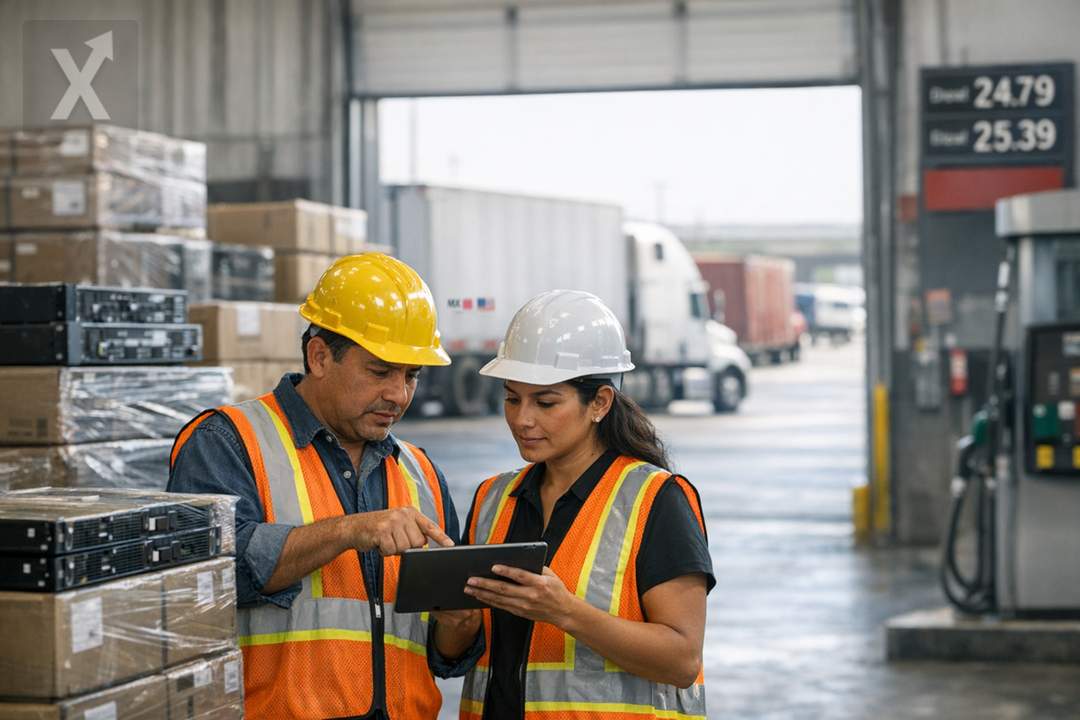
The tech rebound could support exports, but expensive oil tied to geopolitical tensions is pushing up costs, inflation, and logistics in Mexico.
Global trade heads into 2026 pulled in opposite directions: on one hand, the investment cycle linked to artificial intelligence (AI) is boosting demand for tech goods and digital services; on the other, the escalation of conflict in the Middle East is keeping the risk of persistently higher energy prices alive, with direct effects on transportation costs, corporate margins, and inflation. For Mexico—an open economy tightly integrated into manufacturing supply chains—the mix is especially important: the country can benefit from the tech wave through exports and the relocation of production processes, but it can also feel the sting of an oil shock that makes logistics more expensive and complicates monetary policy.
The World Trade Organization (WTO) has warned that if oil prices remain elevated, growth in global merchandise trade could slow, and in services the impact would be more noticeable given how sensitive transportation and travel are to disruptions in routes, insurance, and fuel. In Mexico, that channel shows up as higher costs to move inputs and finished goods—from auto parts and appliances to processed foods—with implications for export competitiveness and consumers’ wallets.
The challenge is that Mexico is playing on both fields. The economy depends on manufactured exports—with the United States as its main destination—and on a web of intermediate imports that cross the border multiple times. More expensive energy and freight can reduce trade volume momentum and weigh on transportation-sensitive sectors, while the AI boom could sustain demand for components, equipment, and digital services, lifting activity in segments tied to electronics, data centers, and industrial automation.
In the domestic market, an energy shock typically filters through two channels: energy prices and distribution costs. That can reignite inflation pressures in categories like transportation and some foods, forcing a more cautious reading of the easing cycle in monetary policy. While inflation in Mexico has shown periods of moderation and the central bank has adjusted its stance as data evolve, higher oil prices complicate the balance between growth and inflation and increase the value of keeping expectations anchored.
Exports, nearshoring, and an energy “bottleneck”: the test for industry
The AI boom is sustaining a new phase of global investment in hardware and computing capacity: semiconductors, servers, networking gear, cooling systems, and data-processing services. For Mexico, this opens opportunities in advanced manufacturing and in supplier networks tied to electronics and auto parts—especially if regional integration deepens and companies seek shorter, more resilient supply chains. However, the potential isn’t automatic: industry also faces energy and logistics constraints in certain regions, along with infrastructure and human-capital needs. In a high-oil-price environment, the cost of moving goods and operating plants can rise just as firms try to accelerate investment, meaning competitive advantage will increasingly depend on energy efficiency, power availability, transportation quality, and regulatory certainty.
The automotive sector—one of the main engines of foreign trade—illustrates the point: the shift toward more connected vehicles with higher software content coexists with a supply chain that demands just-in-time deliveries. A prolonged episode of fuel and shipping-route volatility can disrupt delivery schedules, raise insurance costs, and increase inventory-carrying expenses. Even so, the same tech wave is pushing companies to digitize processes, automate warehouses, and improve traceability, which can cushion part of the logistics hit if adopted quickly.
In services, the picture is mixed. Digitalization creates room for exports of knowledge-based services—software development, data analytics, remote support—but the travel and transportation component is more vulnerable to geopolitical shocks. For Mexico, a deterioration in tourism flows or air connectivity driven by higher costs can sap regional momentum, while demand for digital services tends to be more resilient. Public policy and the private sector therefore face the challenge of accelerating connectivity, training, and technology adoption without losing sight of energy costs.
On the fiscal and corporate fronts, the environment calls for caution: companies heavily dependent on transportation or fuel may step up hedging, renegotiate logistics contracts, and pursue route efficiencies; the government, meanwhile, often faces pressure when energy prices rise, whether through price-containment measures or through impacts on inflation and activity. Over the medium term, the most durable strategy for the country is to raise productivity and reduce vulnerability to external shocks: more investment in logistics infrastructure, reliable energy, and industrial modernization.
Looking ahead, Mexico’s outlook will involve constant tradeoffs between opportunity and risk. The AI wave can attract new investment and raise the tech content of exports, but a prolonged energy shock can cap global growth, increase operating costs, and delay decisions. In that balance, Mexico’s ability to remain competitive will depend on logistics costs, energy availability, and technology adoption across its production chain.
In sum, 2026 is shaping up as a year in which technology can underpin trade, while geopolitics threatens to push costs higher. For Mexico, the challenge is to turn the AI tailwind into investment and productivity without underestimating the risk that expensive oil poses to inflation, logistics, and growth.






