Treasury Ministry scraps the Premium gas subsidy and cuts support for Regular and diesel: fiscal pressure and inflation risks
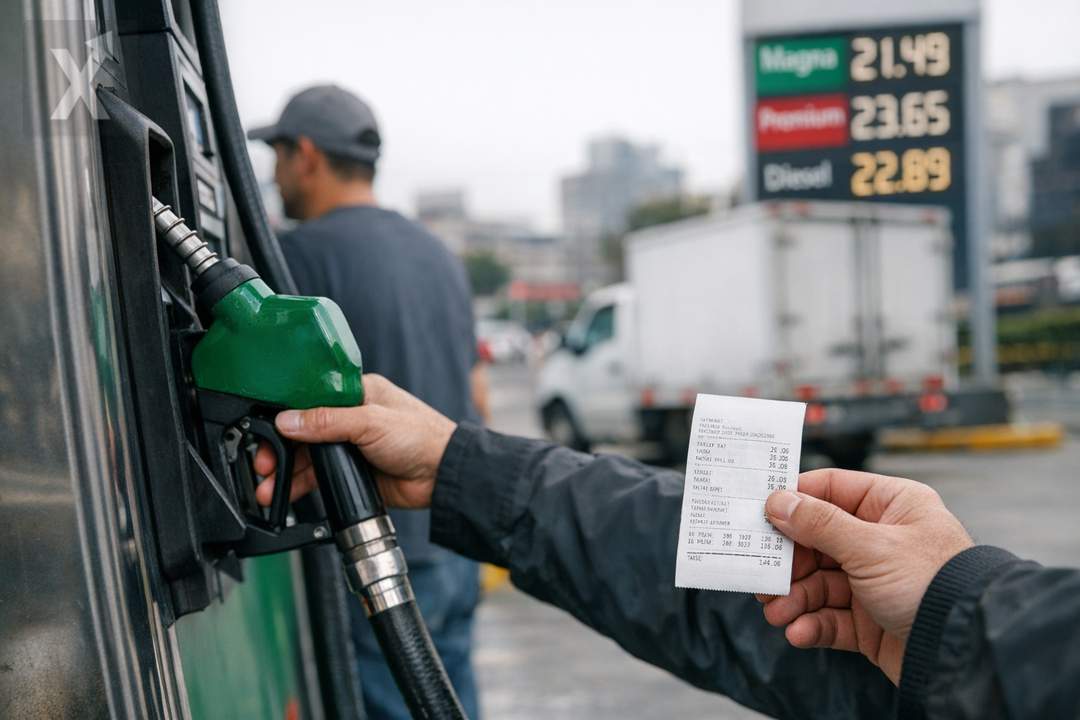
The IEPS adjustment reduces fuel support just as oil prices rebound, increasing pressure on prices and transportation costs in Mexico.
Mexico’s Ministry of Finance and Public Credit (SHCP) adjusted the tax incentives tied to the Special Tax on Production and Services (IEPS) for fuels for the week of June 6–12, in a move that fully eliminates the subsidy for Premium gasoline and reduces the discounts applied to Regular (Magna) gasoline and diesel. In practice, the change increases the tax burden embedded in the final price, at a time when energy markets are experiencing bouts of international volatility.
For Premium gasoline, the Treasury set the incentive at zero, meaning the full IEPS rate is passed on to consumers: 5.66 pesos per liter. The prior week, the discount had been 0.96 pesos per liter, or 17%, which partially softened the impact on pump prices.
For Regular (Magna) gasoline, the incentive was also reduced: the discount will be 0.90 pesos per liter, with an IEPS charge of 5.80 pesos. That compares with the previous week’s support, when the discount was 1.89 pesos—nearly double—signaling a shift toward less fiscal offset.
For diesel, the Treasury kept a relatively high incentive, though lower than the previous week’s: 40.4%, down from 46.21%. As a result, the IEPS charge for this fuel came in at 4.68 pesos per liter, versus 3.96 pesos in the prior period.
The mechanics of these incentives—updated weekly—are designed to smooth sharp swings in consumer prices when international costs for crude oil and refined products rise. However, by scaling back fiscal support, the government leaves more room for global price increases to show up at the pump, particularly if pressure in global energy markets persists.
Implications for inflation, transportation, and public finances
In Mexico, fuels have both a direct and indirect influence on inflation: on one hand, they affect the price index through the energy component; on the other, they shape transportation and logistics cost structures, with knock-on effects on goods and services. Diesel is especially sensitive because of its heavy use in freight and public transportation, which is why the government typically shields it more than gasoline—though the cut in the incentive implies a higher tax cost being passed on to consumers.
From a public-finance standpoint, trimming IEPS incentives typically boosts revenue in the short term, helping offset budget pressures and support fiscal targets. The trade-off is that if the adjustment coincides with rising oil prices, it can increase the risk of a more visible pass-through to consumer prices. In an environment where monetary policy remains focused on bringing inflation back down, stronger energy-driven pressures could complicate the pace of disinflation and the balance between growth and price stability.
The market also differentiates across consumers: eliminating the Premium incentive tends to concentrate the impact on higher-income households and certain fleet segments, while Regular (Magna) gasoline and diesel matter more for mass consumption and productive activity. Even so, moves in any of these fuels can influence inflation expectations, especially when combined with bouts of oil-market volatility.
Looking ahead, the path of these incentives will depend on crude prices, the exchange rate, and the fiscal strategy for balancing revenue with price stability. In weeks of external shocks, the IEPS acts as a buffer; when that buffer is reduced, the adjustment becomes more noticeable in day-to-day spending and in companies’ operating costs.
In sum, the removal of the Premium incentive and the cuts to Regular (Magna) gasoline and diesel reflect a shift toward less fiscal price containment for fuels, with potential effects on inflation and transportation costs; the key factor shaping the impact will be whether higher global energy prices persist.






