CNBV Sanctions Banco del Bienestar: Internal Controls Under Scrutiny Amid a Surge in Social Transfers
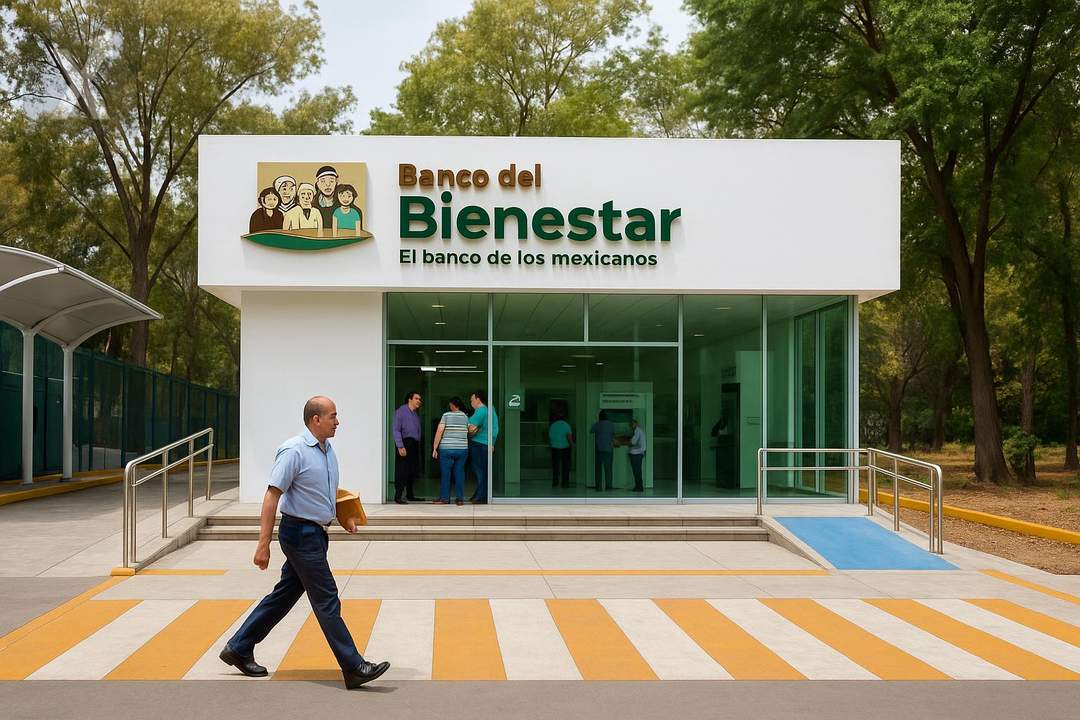
The fines have reignited debate over governance and operational transparency at the bank that distributes benefits to millions of people.
Mexico’s National Banking and Securities Commission (CNBV) has imposed 10 sanctions on Banco del Bienestar so far this year for irregularities tied to internal controls, operations, and recordkeeping, totaling 5.55 million pesos. The case matters because the bank serves as the main channel for distributing social programs and has rapidly expanded its footprint in recent years—at a time when Mexico’s financial system is facing tougher regulatory demands around security, accounting, and compliance.
According to publicly available information on the CNBV’s sanctions portal, the fines were issued at different points in time. In January, three sanctions were recorded (two for 260,640 pesos each and another for 268,860 pesos, the latter linked to failure to comply with basic security measures). In March, two more fines were added for 311,220 pesos each. Then in April, most of the total amount was concentrated in five sanctions related to incorrect accounting records and regulatory obligations: one for 1,443,300 pesos, two for 1,037,400 pesos each, and two more for 311,220 pesos each.
After these sanctions were published, Banco del Bienestar pursued legal remedies, arguing that disclosure could cause reputational harm. Specifically, it challenged the framework that requires the CNBV to publicly disclose sanctions, claiming that online posting creates discredit and damages the institution’s public image. The dispute opens a broader question about the balance between regulatory transparency and institutions’ right to contest decisions without facing an immediate reputational cost.
For the market, the main issue isn’t just the amount—relatively modest compared with the size of the banking system—but what it may reveal about the strength of internal processes at an institution with a wide territorial reach and a large customer base. In a country where financial inclusion has advanced unevenly, operational reliability is especially sensitive: accounting errors, control failures, or security incidents directly affect beneficiaries’ experience and public confidence that payments will be delivered with certainty.
Financial Inclusion, Operational Pressure, and Supervisory Standards
Banco del Bienestar has become a key part of Mexico’s financial inclusion strategy by expanding its branch network and centralizing the distribution of benefits through accounts and cards. But that expansion also increases operational complexity: more service points mean more processes, more cash handling in certain localities, and higher requirements for training, cybersecurity, and accounting controls. In this context, CNBV oversight—by a technical autonomous agency within the Ministry of Finance (SHCP)—aims to ensure that institutions comply with prudential and operational rules, from properly recording transactions to adhering to minimum security measures, in an environment where technological and fraud risks have become more significant.
Publishing sanctions is part of a transparency approach that also functions as a disciplinary mechanism: it exposes noncompliance and, in theory, encourages improvements. Still, the case highlights tensions. For an institution focused on social functions, reputation can affect the confidence of its target public, while for the regulator, publicizing sanctions is part of accountability. A court ruling on the constitutionality or scope of these disclosure obligations could set precedents for the rest of the financial system.
Economically, the episode fits into a broader agenda: ensuring that greater access to banking comes with standards comparable to those of commercial banks, in a country where payment digitization and the use of transfers have grown, but where regional gaps in infrastructure and financial literacy remain. If the bank strengthens controls and processes, the impact could be positive by reducing friction in delivering funds; if not, operational strain could translate into complaints, remediation costs, and increased supervisory pressure.
Looking ahead, the message to the sector is twofold: expanding financial services—especially those tied to mass transfers—requires sustained investment in internal controls and compliance; and regulatory transparency will remain a key yardstick for evaluating institutional performance. The path Banco del Bienestar takes—between litigation, internal fixes, and operational adjustments—will be a meaningful indicator of its maturity as a nationwide financial intermediary.
In short, the CNBV’s fines against Banco del Bienestar put the spotlight on operational quality and internal controls at an institution critical to social policy; the legal outcome and corrective measures will set the tone for its future credibility and efficiency.






