Mexico Capitalizes on North American Trade Realignment Amid Tensions Between Canada and the United States
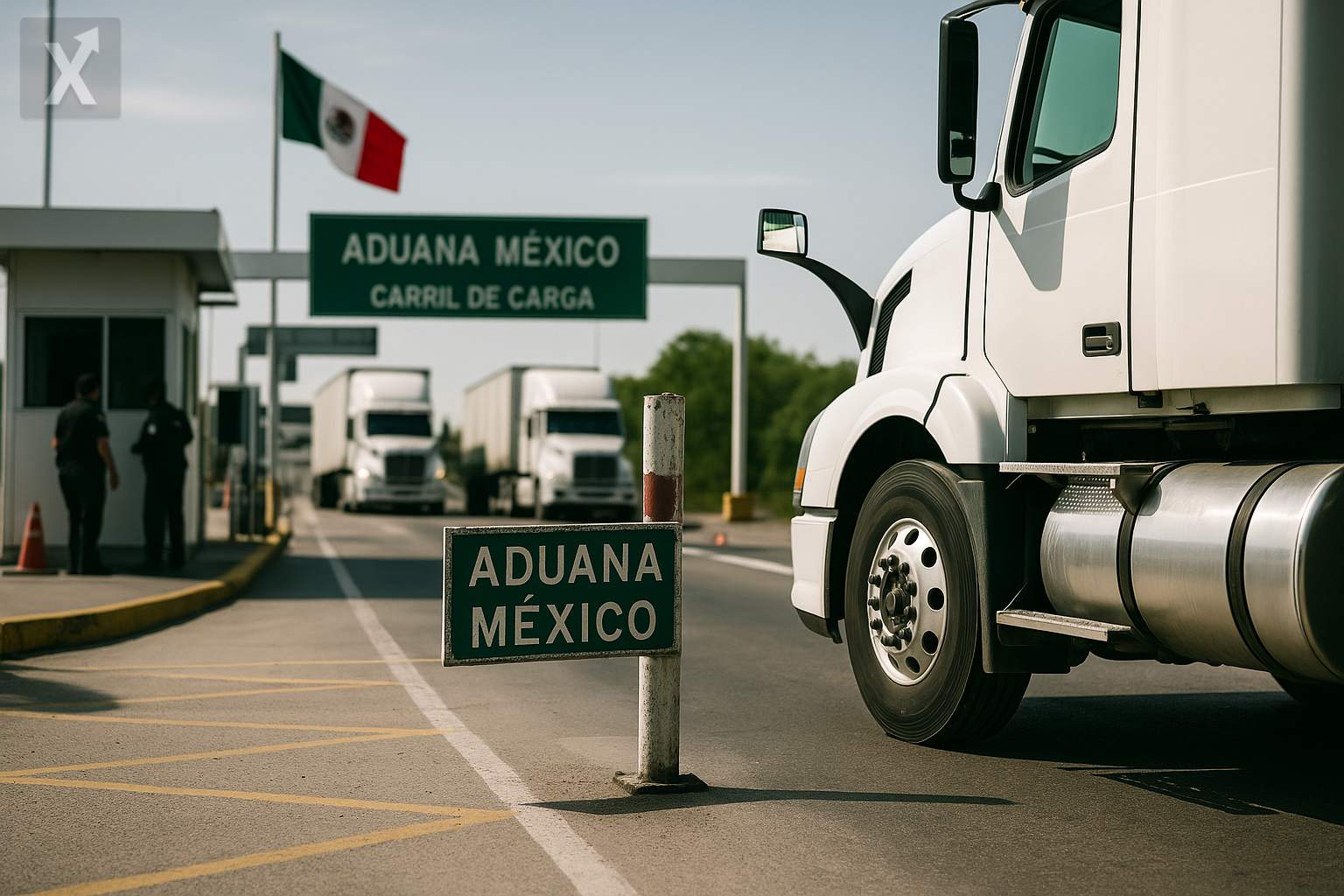
The map of North American trade took a turn this year: in the first eight months, Mexico became the top destination for U.S. exports. This rise was not due to a surge in Mexican demand, but rather to the reshuffling caused by Canada’s response to new U.S. tariffs. The U.S. government’s imposition of trade barriers was followed by a “mirror tariffs” strategy and stricter country-of-origin measures on the Canadian side, which reduced the flow of U.S. goods into that market and gave Mexico room to gain ground in U.S. export statistics.
Data from January through August show that Canada increased its total foreign purchases by 5%, indicating that domestic demand remained steady, but suppliers were shifted. Canadian authorities removed certain imported products from shelves, reinforced origin labeling, and launched campaigns to favor domestic goods. In August, when the volume of U.S. imports into Canada hit its lowest point of the year, Mexico rose to become the top export market for Washington. This move was accompanied by a 6% contraction in Mexican imports from the U.S., according to numbers from the Bank of Mexico. This underscores that the shift was more about trade diversion than a boom in Mexican domestic demand.
The sector breakdown of Canada’s adjustment reveals declines in purchases of U.S.-origin metal and non-metal products, energy, and agricultural goods. In the spaces left behind, countries like Mexico and China increased their share. Meanwhile, bilateral friction between Ottawa and Washington persisted: the Canadian government maintained mirror tariffs, mainly targeting products it believes do not comply with provisions under the United States-Mexico-Canada Agreement (USMCA). Talks have been on hold since October 24, in a highly politicized environment adding strain to regional supply chains.
For Mexico, the realignment is a double-edged sword. On one hand, it strengthens its role as a key U.S. trade partner and aligns with the “nearshoring” trend that, since 2022, has led to increased investment in manufacturing, logistics, and industrial parks in northern Mexico, the Bajío region, and along the border. Sectors such as automotive, auto parts, electric-electronic equipment, and machinery remain highly integrated with U.S. demand. On the other hand, the fact that Mexican purchases from the U.S. have declined points to the fact that the momentum is being driven less by internal market strength and more by the redirecting of external flows.
The macro backdrop in Mexico has been one of moderate growth, with inflation trending downward from its 2022 peaks and a still-restrictive monetary stance to lock in disinflation. The peso has stayed relatively strong thanks to interest rate differentials, high remittance inflows, and investment, making imported inputs cheaper but potentially undermining the competitiveness of some exports. In this environment, sustaining the manufacturing boom will depend on solving bottlenecks in energy, water, permits, border crossings, and expanding logistics infrastructure.
The USMCA will remain the guiding framework. The upcoming review of the agreement in 2026 puts pressure on all three partners to address outstanding issues related to rules of origin, labor compliance, and energy matters. For Mexico, beyond capitalizing on diverted trade, the challenge will be to avoid being seen as an unauthorized platform for rerouting goods from third countries. Strengthening customs, supply chain traceability, and regulatory compliance will be crucial to maintain the trust of investors and regional trade authorities.
Looking ahead, if tensions between Canada and the United States persist, Mexico could retain, at least temporarily, the newly-won position as the top destination for U.S. exports. However, the sustainability of this advantage will depend on a stable tariff framework, strong trilateral coordination, and Mexico’s ability to absorb productive investment at competitive costs with regulatory certainty. In a volatile global environment, diversifying markets and deepening regional integration under clear rules will be decisive.
In short, Mexico benefited from trade diversion triggered by Canada–U.S. tensions and consolidated its role in the region without a parallel increase in domestic demand. The opportunity is real, but to ensure this momentum is not short-lived, improvements in logistics, energy, trade facilitation, macroeconomic discipline, and USMCA compliance will be essential.






