Citibanamex digital outages during payday highlight the economic cost of banking glitches
A disruption in digital services on payday impacted transfers and transactions, underscoring how dependent everyday economic activity has become on mobile banking.
An intermittent outage affecting the app and other digital channels at Citibanamex was reported this Friday, February 27, right in the middle of the mid-month payday cycle, when a significant share of formal workers receive their wages and banking activity typically spikes. Users reported trouble logging in, making transfers, and completing routine transactions, prompting complaints on social media and adding uncertainty for people who rely on mobile banking to manage day-to-day bills and expenses.
The bank publicly acknowledged the disruption and said it was a broad intermittent issue, asking customers to try again later while its team worked to restore service. In situations like this, the impact goes beyond user frustration: it can also trigger delays in paying third parties, force purchases to be rescheduled, and create friction in household and microbusiness cash flow.
According to reports from outage-monitoring platforms, the incident began late in the morning and intensified through the early afternoon. Among the most frequently cited problems were access to online banking and the inability to complete transfers. Geographically, reports were concentrated in major urban areas with high transaction density, such as Mexico City, the State of Mexico, Jalisco, and Nuevo León, along with other key markets.
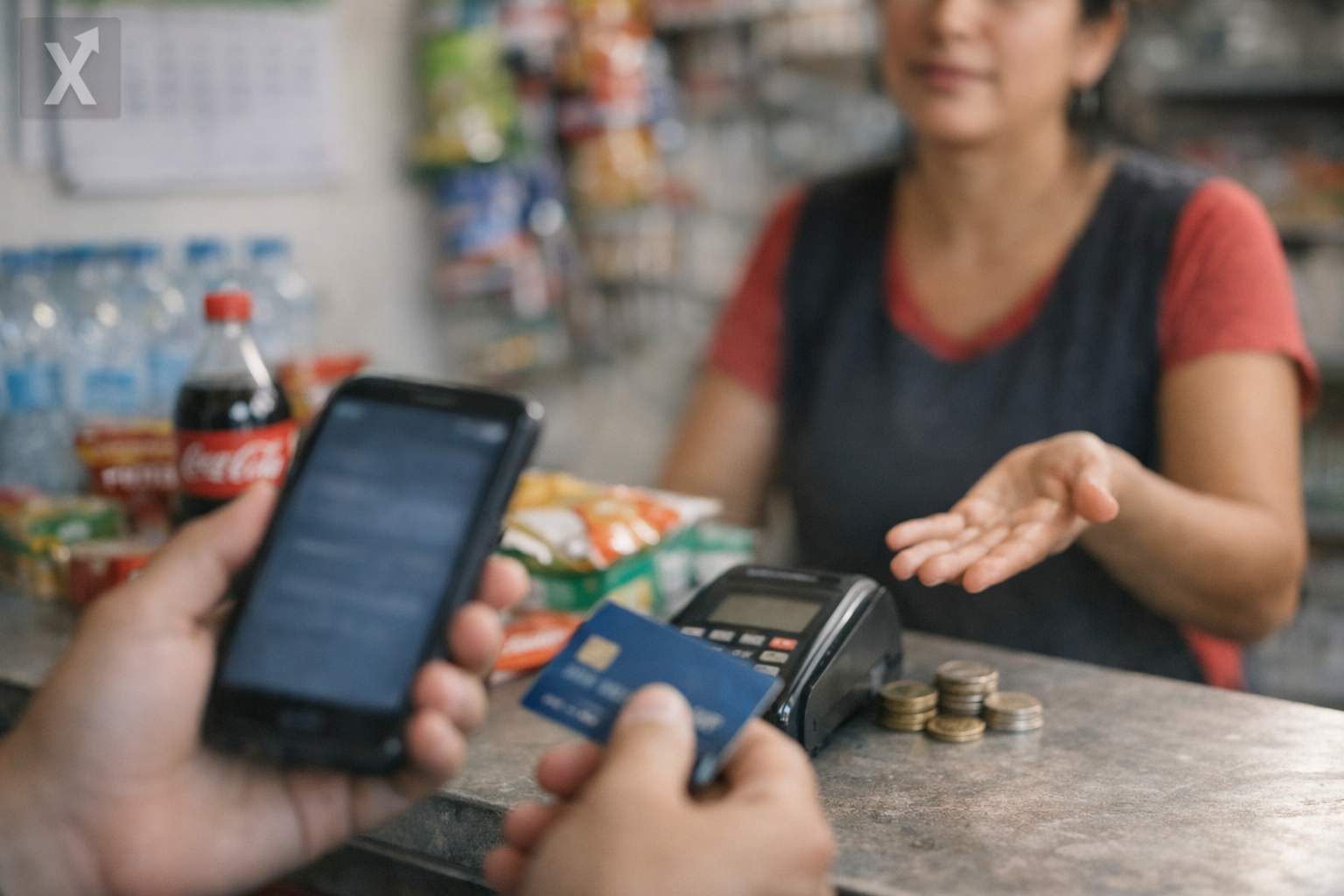
For consumers, a digital outage on payday often has immediate effects—from being unable to pay utilities or rent on time to postponing purchases at businesses that rely on transfers or electronic payments. For small businesses, the issue can be even more disruptive when SPEI payments or transaction confirmations become unstable, since getting paid has become central to day-to-day operations.
The impact on consumer spending and small-business operations
Mexico’s economy has grown increasingly dependent on digital channels for everyday life: payroll deposits, utility payments, person-to-person transfers, and merchant collections rely more and more on banking apps and instant-payment infrastructure. On payday, transaction volumes typically rise due to wage payments, loan installments, and routine spending on transportation, food, and services. That’s why an interruption can create bottlenecks that reduce same-day spending and push users to rely on cash, delay payments, or use alternative accounts. For microbusinesses and self-employed workers—from delivery drivers to service providers—mobile banking availability is critical for reconciling payments, buying supplies, or covering short-term obligations.
The episode comes as Mexico’s financial system accelerates its digital transformation, with broader adoption of transfers and electronic payments and a user base increasingly accustomed to real-time transactions. But that efficiency also raises the cost of downtime: when the app is the primary point of interaction, glitches translate into lost time, added expenses from switching payment methods, and potentially late fees or penalties, depending on contract terms.
From a risk-management perspective, these events often revive the conversation around business continuity, system capacity during demand peaks, and timely customer communications. For end users, the practical advice is usually to diversify payment methods (having an alternative bank account or a backup card) and to schedule critical transfers ahead of high-traffic dates—though that isn’t always possible, especially for people living paycheck to paycheck or relying on immediate deposits.
Looking ahead, customers in Mexico increasingly expect greater digital resilience and faster recovery times, not just for convenience but because daily transactions carry real economic weight. In an environment where domestic consumption and recurring payments depend more and more on technology infrastructure, banks’ operational stability becomes a key component of trust.
In short, the intermittency reported at Citibanamex on payday showed how a technology failure can ripple through households and businesses—and underscored the need for robust systems, clear communication, and backup options to reduce friction in everyday economic activity.