Mexico picks up speed as a medical-device exporting powerhouse—but its challenge is moving up the value chain
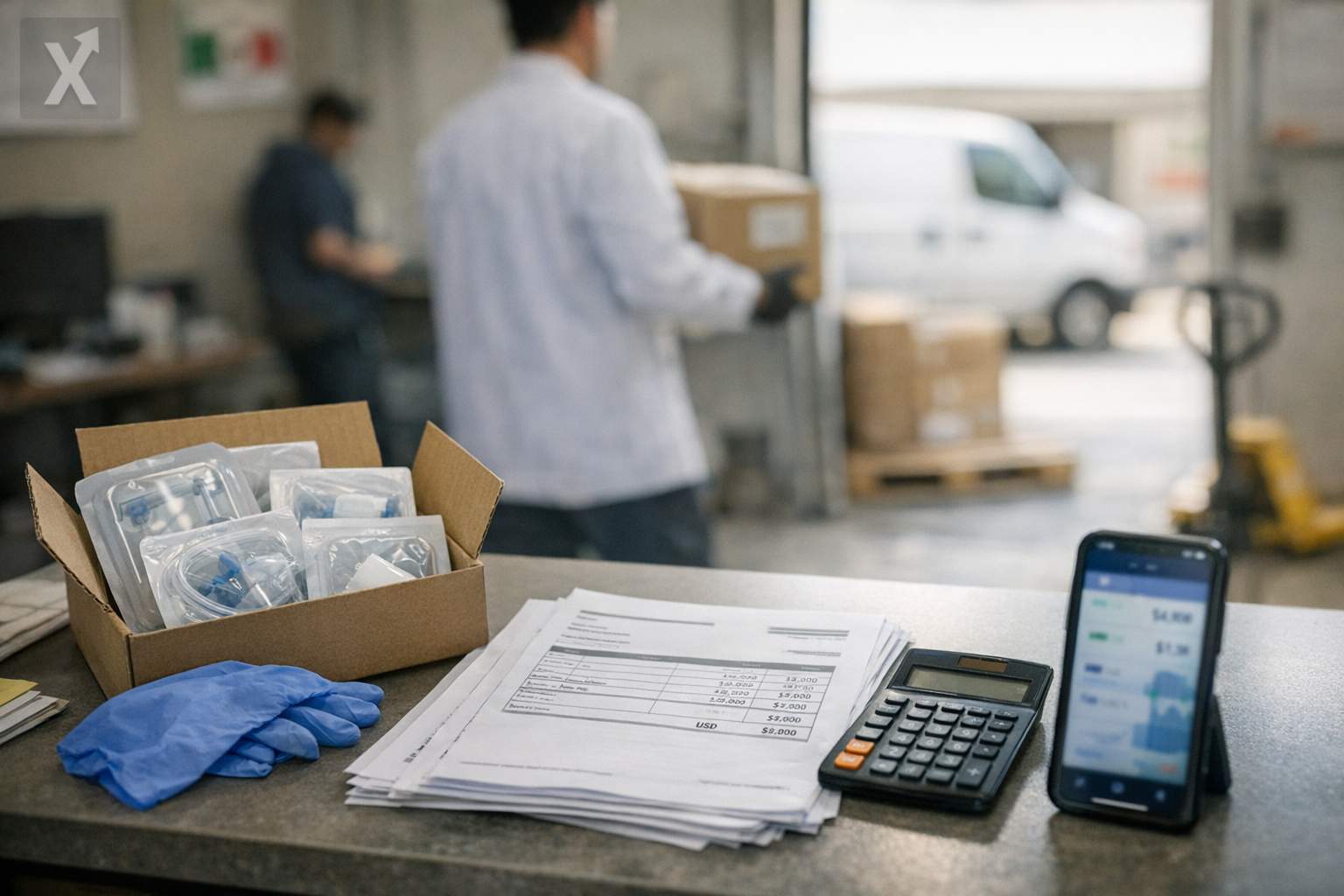
The export boom in medical devices is solidifying clusters in the country’s north and west, while the challenge is to develop more suppliers and homegrown technology.
Medical-device exports in Mexico have stopped being a peripheral segment of manufacturing and have become an increasingly visible piece of the country’s external growth engine. Over a five-year period, the value of overseas sales doubled—from $10.668 billion in 2020 to $20.55 billion in 2025—according to figures from Banco de México. The jump confirms that, beyond the automotive and electronics industries, Mexico is building a competitive front in health-related goods with high technical content and rising regulatory requirements.
The growth reflects a mix of factors: stronger global demand after the pandemic, the reorganization of supply chains across North America, the maturation of manufacturing clusters, and the availability of technical talent. In an environment where nearshoring remains central to Mexico’s economy—given its logistical proximity to the United States (U.S.) and its network of trade agreements—medical devices have found fertile ground because of the need for fast deliveries, traceability, quality controls, and international certifications.
In terms of positioning, Mexico remains Latin America’s leading exporter of medical devices and ranks among the major global players by volume. A key feature of the model is how concentrated the destination market is: roughly 90% of these exports go to the United States. That makes the sector particularly sensitive to the industrial cycle and to regulatory and purchasing decisions in the U.S. market, but it also provides stability thanks to deep regional production integration.
The appeal for global corporations is not limited to cost. The industry runs on regulated processes, testing, validations, and audits that demand industrial discipline. On that front, Mexico has developed capabilities: manufacturing engineering, quality control, metrology, and the handling of specialized materials. The combination of scale, export experience, and proximity to the world’s largest market has solidified the country as a platform for production lines ranging from consumables (syringes, catheters) to higher-precision components and assemblies.
Clusters, specialized employment, and the “second wave” of nearshoring
The sector’s industrial geography rests on hubs that were already strong in advanced manufacturing. Baja California and Sonora have grown as corridors tied to U.S. demand; Chihuahua maintains a robust industrial base; and Guadalajara has become a convergence point for manufacturing, electronics, and design capabilities, while the Mexico City metro area concentrates specialized services, research, and corporate activities. This network makes it possible to integrate suppliers, calibration services, sterile packaging, logistics, and technical talent—critical elements for competing in a business where mistakes can cost certifications and contracts.
The labor-market impact is also significant: the sector tends to create formal jobs with technical profiles—specialized operators, process technicians, and quality, validation, and automation engineers—and it requires ongoing training due to changes in standards and equipment. In a national context where manufacturing employment has faced pressure from sector slowdowns and technological transition, medical devices provide a growth path with greater sophistication and, in many cases, stronger compliance and traceability practices.
The industry also benefits from the presence of global companies that have set up plants for exports and regulated processes, pushing higher standards across their supply chains. This creates opportunities for domestic suppliers of medical-grade plastics, packaging, metal components, precision machining, electronics, sterilization, and laboratory services. However, the challenge is for more Mexican companies to obtain international certifications and achieve the scale needed to become recurring suppliers—not just marginal vendors.
From a macroeconomic perspective, export performance brings in foreign currency and helps diversify the manufacturing export basket—especially valuable for Mexico during periods of external volatility. At the same time, reliance on a single market requires active risk management: shifts in the U.S. consumption and investment cycle, changes in hospital purchasing policies, episodes of logistical disruption, or regulatory adjustments can quickly translate into changes in production orders.
Alongside the export boom, Mexico remains significantly dependent on imports in high-complexity segments: advanced equipment, certain diagnostic inputs, and critical components. Health-sector imports were around $10.55 billion in 2024, according to industry references, suggesting that the country exports strongly in manufacturing but still purchases technology and strategic parts. This dual reality—an important exporter and, at the same time, a net importer in sophisticated categories—defines the next step: boosting domestic content, design capabilities, clinical testing, and intellectual property development.
The federal government, for its part, has placed the pharmaceutical and medical-device industry among its priority sectors for industrial policy. In practice, how effective that push will be depends on enabling conditions: regulatory certainty, reliable power and water infrastructure in industrial regions, security along logistics corridors, faster customs processing, and the training of technical talent. Attending international trade shows and promoting investment-attraction packages helps, but the structural leap will be measured by the number of certified suppliers, the complexity of the products being made, and the growth of engineering, validation, and design activities within the country.
Looking ahead, the market points to expanding segments: medical imaging, minimally invasive surgery devices, sensors, components for monitoring equipment, digital health, and specialized cold-chain logistics. In addition, technological competition among major powers—and the geopolitical sensitivity of supply chains—could accelerate regionalization decisions in North America, with Mexico as a natural candidate if it maintains investment conditions and responsiveness.
In short, the medical-device sector is strengthening Mexico’s export profile through regulated manufacturing and specialized employment, but the core challenge is to raise technological content and reduce dependencies on critical inputs—without losing competitiveness as the U.S. cycle shifts.






