Moody’s Keeps Mexico on a Negative Outlook: Security Is Once Again Weighing on Investment and Public Finances
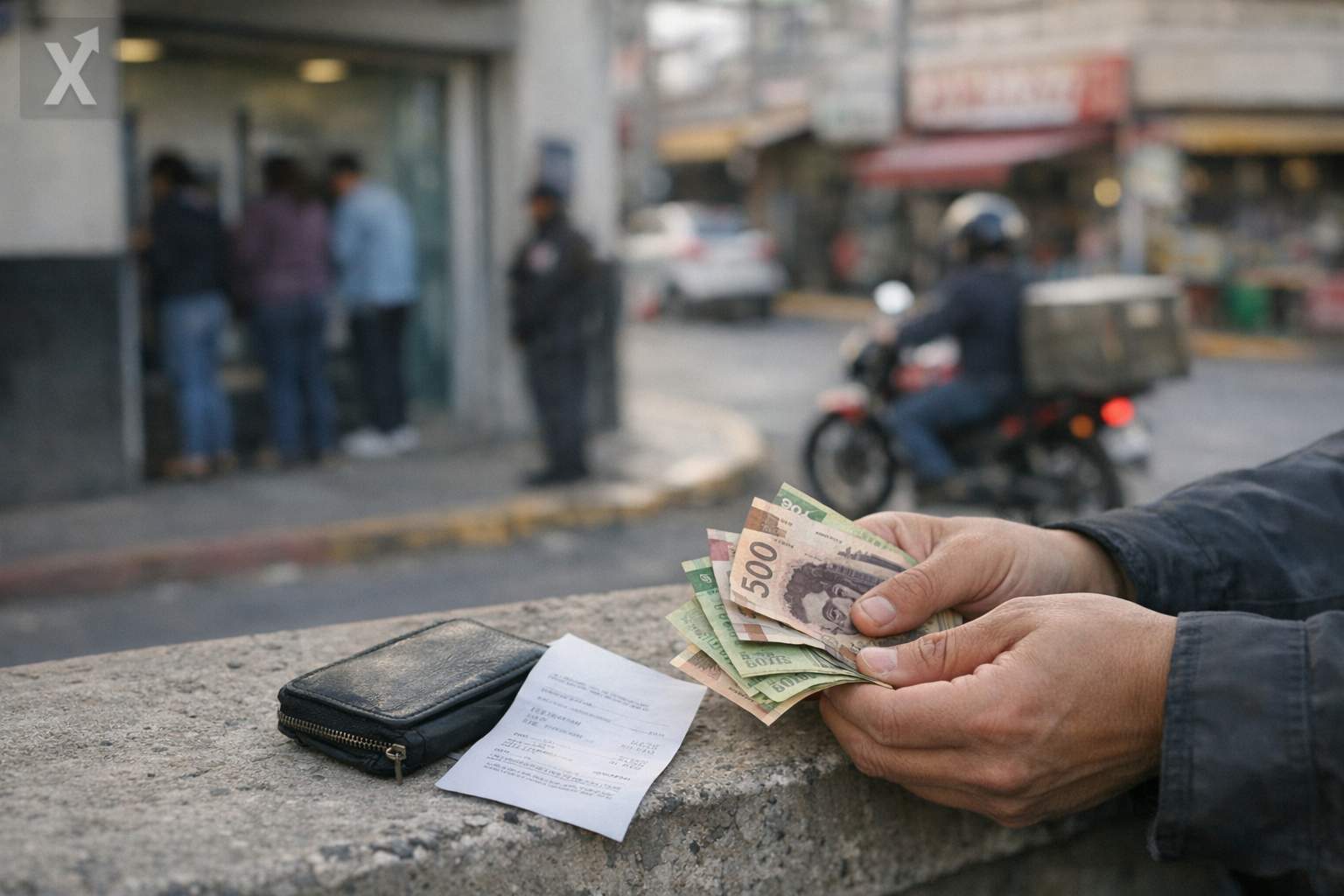
Violence—and how institutions respond to it—has become an economic variable: it makes operating more expensive, shapes expectations, and can put pressure on public spending.
The debate over Mexico’s economy has once again intersected with an issue that often falls outside traditional indicators: security. Following the recent killing of Nemesio Oseguera Cervantes, leader of the Jalisco New Generation Cartel (CJNG), Moody’s framed the episode as a turning point in the federal government’s strategy and, at the same time, a reminder that the risk of violence continues to influence the country’s credit perception.
The ratings agency is maintaining Mexico’s sovereign rating at Baa2 with a negative outlook and warns that violence shocks tied to security operations can increase uncertainty, disrupt local supply chains, and raise operating costs for companies. While its analysis suggests the immediate impacts tend to be contained if events are concentrated in specific areas, the focus shifts to the structural effect: insecurity as a persistent drag on growth and as a factor that undermines institutional quality.
In practice, the economic cost is not reflected only in days lost to roadblocks or disruptions. It also accumulates through private security spending, more expensive logistics, insurance, employee turnover, and, in the worst cases, extortion payments. That set of pressures erodes margins, discourages new investment, and distorts decisions about where to locate plants—especially relevant at a moment when Mexico is trying to capitalize on the reshoring of North American supply chains.
Moody’s message arrives in a mixed economic context: on one hand, the country maintains a solid export base and a manufacturing sector integrated into regional supply chains; on the other, it faces weaker global momentum, financing costs that remain high compared with prior years, and more visible fiscal constraints due to rising spending obligations. In that balance, security acts as a risk multiplier: it doesn’t always explain economic performance on its own, but it can tilt investment expectations and appetite for Mexico risk.
Security, Ratings, and Spending: The Fiscal Channel of Risk
One sensitive point Moody’s highlights is the potential fiscal impact of a sustained uptick in violence. If the government is forced to raise security spending—equipment, intelligence, territorial deployment, strengthening prosecutors’ offices and prison systems—the room to consolidate public finances could shrink. For an economy like Mexico’s, where tax revenue as a share of GDP has historically been low compared with OECD peers, and where debt-service costs have become more significant after years of high rates, any added spending pressure complicates the balance between fiscal discipline and public demand for services.
At the same time, Moody’s suggests that durable improvements in security could work in the opposite direction: lowering costs for the private sector, improving the business climate, and strengthening state capacity. In credit terms, the key is not a single operation, but evidence of consistent results that reduce the incidence of high-impact crimes, contain extortion, and curb criminal infiltration of local economies. Those kinds of gains tend to show up gradually, but with cumulative benefits for productivity and tax collection.
The analysis also incorporates an emerging risk: the spread of disinformation amplified by Artificial Intelligence tools during episodes of violence. For markets, the speed at which false narratives spread can heighten perceptions of chaos, affect travel and consumption decisions in the short term, and complicate official communication at critical moments. In an economy where tourism, services, and domestic mobility are important drivers, the perception of security can have outsized effects relative to the actual duration of an event.
Another component is the bilateral front with the United States. Moody’s notes a shift in President Claudia Sheinbaum’s strategy toward more direct confrontation with cartels, with increased cooperation and intelligence-sharing with the United States. The economic reading of that coordination is not straightforward: it can contribute to stability if it reduces violence, but it can also raise the likelihood of political friction if it is perceived as external pressure or unilateral changes to the security agenda.
Sensitivity is heightened by the calendar: the USMCA review in 2026, as well as the FIFA World Cup that Mexico will co-host with the United States and Canada. Both events put the spotlight on regulatory certainty, logistics, and security. For sectors such as export manufacturing, logistics, and tourism, any escalation that affects highways, ports, or host cities can translate into higher costs and a larger risk premium for new projects.
For the private sector, the underlying message is that Mexico’s competitive advantage—proximity to the United States, its network of trade agreements, and manufacturing capacity—can be constrained if the security environment raises costs and reduces predictability. For the government, the challenge is twofold: maintain a credible fiscal framework while also strengthening institutional capabilities that shape the investment climate.
Looking ahead, Moody’s report suggests that the market will evaluate not only the growth print or the path of inflation, but also governance quality and the state’s ability to contain risks that affect day-to-day economic activity. A sustained trajectory of improved security could become a positive catalyst for investment and the rating; a deterioration, by contrast, would tend to show up in higher financing premiums and more conservative business decisions.
In short, Moody’s warning reinforces that public security is no longer separate from the economy: it influences business costs, investment expectations, fiscal flexibility, and perceptions of Mexico risk—especially in the relationship with the United States.






