U.S. inflation is putting renewed pressure on rates and complicating Mexico’s outlook
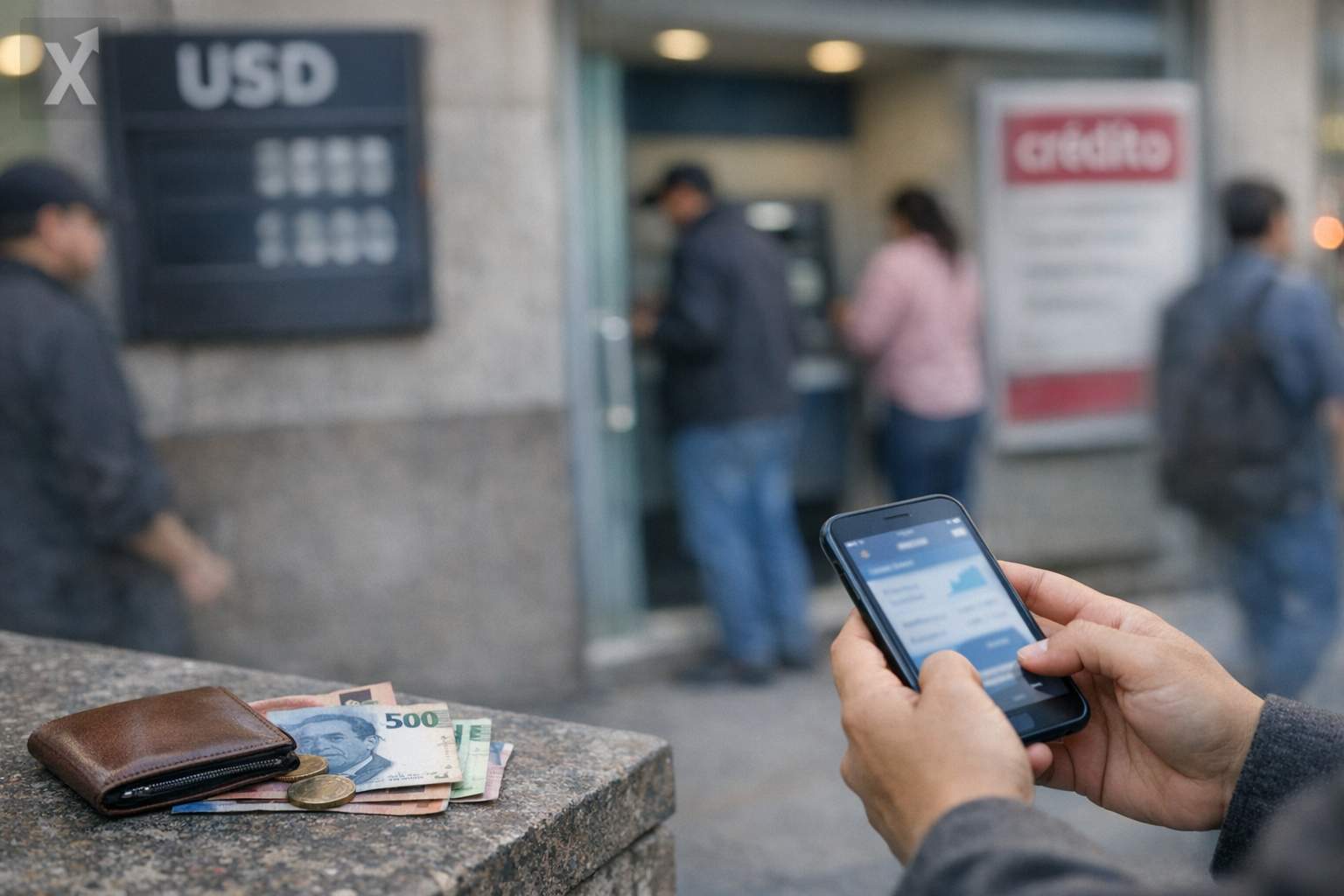
The inflation rebound in the United States reinforces the Fed’s cautious stance and keeps pressure on Mexico’s exchange rate and borrowing costs.
Inflation in the United States regained momentum at year-end and reinforced the message of caution from the Federal Reserve (Fed)—a shift that is often felt quickly in Mexico given its tight trade and financial integration with its northern neighbor. The Personal Consumption Expenditures (PCE) price index, a key gauge for the Fed, came in at 2.9% year over year in December, with a 0.4% monthly increase, above what the market had expected.
The report also showed persistence in core inflation—which excludes food and energy—with a 0.4% monthly rise and an annual rate near 3%. In practice, numbers like these reduce the near-term room for U.S. rate cuts and increase the likelihood that monetary policy remains restrictive for longer. For Mexico, this matters through two main channels: the interest-rate differential (which influences flows into local debt) and the behavior of the U.S. dollar versus the peso.
On the political front, public pressure from President Donald Trump on the Fed’s leadership added noise to an environment that is already sensitive for markets. While central bank independence is an anchor for expectations, episodes of confrontation tend to raise volatility in financial assets and amplify short-term moves in the foreign-exchange market, with indirect effects on import prices and hedging costs for Mexican companies.
For Mexico, the main takeaway is that a prolonged period of relatively high U.S. rates can limit the room for Banxico to cut its own policy rate quickly without risking pressure on the exchange rate. While Mexican inflation has moderated from its peaks, the services component and some cost-sensitive categories still call for caution—especially when the external environment becomes less supportive.
Exchange rate, financing, and Banxico decisions: the Fed’s “spillover effect” on Mexico’s economy
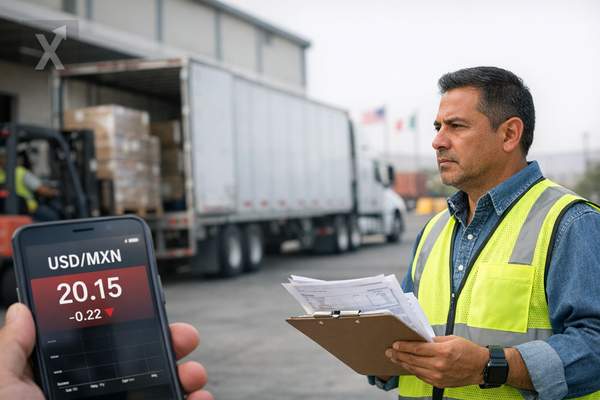
When the Fed maintains a restrictive stance, the U.S. dollar typically strengthens or, at a minimum, remains supported against emerging-market currencies. In Mexico, this translates into two potential effects: on one hand, it can make dollar-priced imports more expensive—industrial inputs, intermediate goods, and some foods; on the other, it can raise funding costs for companies with dollar-denominated debt or ongoing FX-hedging needs. At the macro level, the rate differential has acted as a cushion for the peso during bouts of volatility, but it also implies a delicate balance for Banxico: cutting too fast could reduce the relative appeal of peso assets, while cutting too slowly can prolong the cost of credit for households and businesses.
The financing channel is especially relevant in a context where consumer and business credit respond to rate changes with a lag. High rates tend to cool domestic demand, temper short-term investment, and raise working-capital costs, particularly for small and mid-sized businesses. However, Mexico also has structural sources of support, such as investment flows tied to supply-chain relocation (nearshoring) and the resilience of manufacturing exports to the United States—although both ultimately depend on the U.S. economic cycle.
Looking ahead to the next few months, the base-case scenario for Mexico’s economy hinges on the interaction between the local inflation path and the persistence of core inflation in the United States. If the Fed delays cuts or delivers them at a slower pace, Banxico may choose gradual adjustments, prioritizing peso stability and well-anchored expectations. By contrast, a more pronounced slowdown in the United States—if confirmed in activity data—could open space for a less restrictive stance, albeit with close monitoring of exchange-rate pass-through to prices.
In the near term, markets will also be watching for signals from the Fed on its roadmap, the trajectory of U.S. growth, and global volatility. For Mexico, the combination of monetary discipline, prudent FX-risk management in the private sector, and clear economic-policy signals will be key to maintaining orderly financial conditions.
In sum, still-sticky inflation in the United States reinforces a high-rate environment Mexico cannot ignore: it keeps pressure on the U.S. dollar, constrains Banxico’s pace, and increases the importance of hedging and financing decisions in the real economy.