U.S. Slowdown Tests the Pace of Mexico’s Economy in 2026
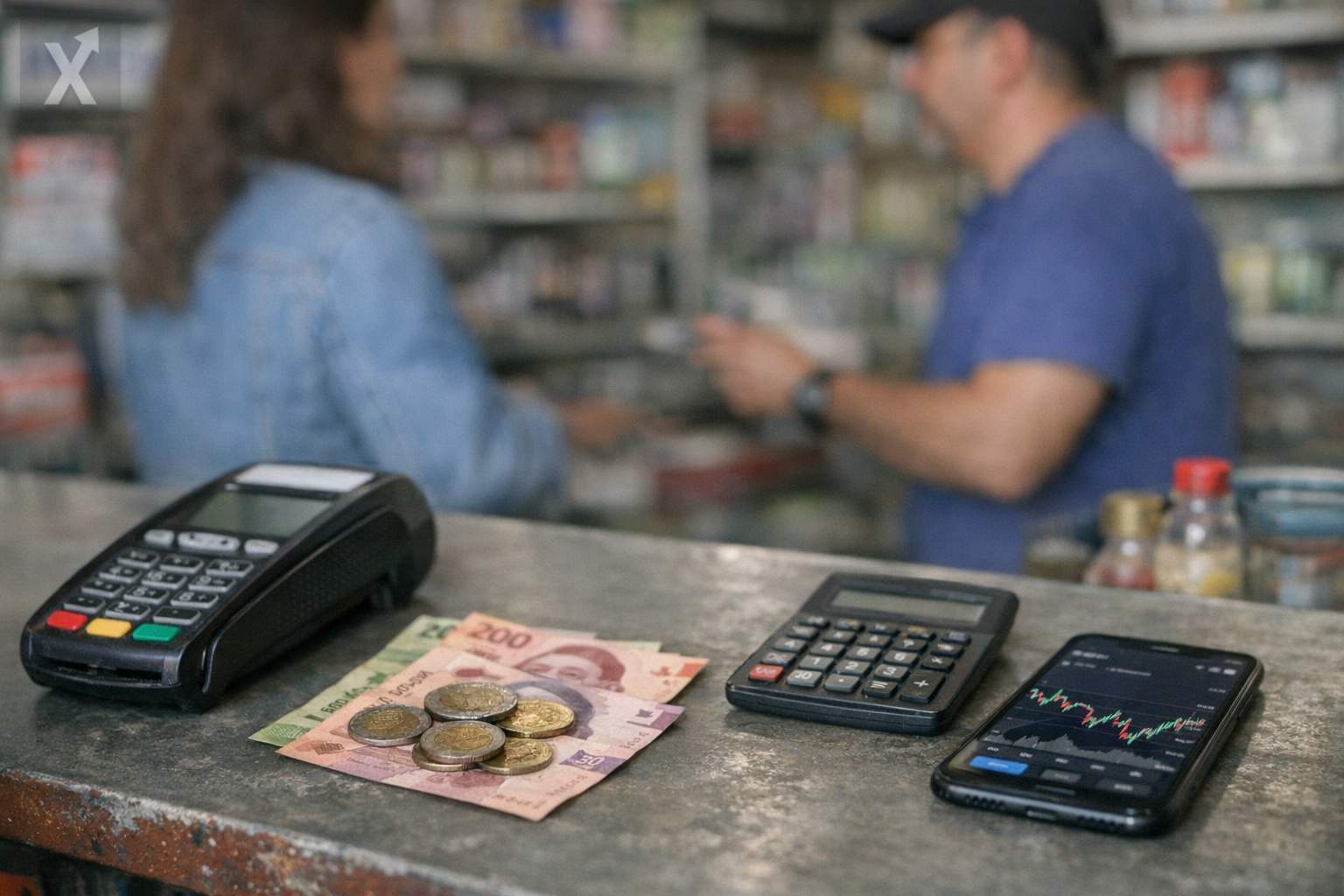
Slower U.S. growth at the end of 2025 reshapes expectations for Mexico, squeezing exports and industry while consumption and investment look for support at home.
The cooling in U.S. growth toward the end of 2025—with annualized expansion in the fourth quarter coming in below expectations and full-year growth of 2.2%—once again puts Mexico in familiar territory: when the world’s largest economy loses momentum, its top trading partner feels the adjustment through trade, manufacturing output, and, with some lag, formal employment tied to exports.
For Mexico, the U.S. figure isn’t just an external data point. Deep production integration—especially in sectors such as autos, auto parts, electrical equipment, and electronics—means that relatively small changes in U.S. demand filter into purchase orders, capacity utilization, and inventory decisions at plants located in the Bajío, the north, and the central industrial corridor.
In the near term, the impact isn’t necessarily linear: the slowdown reported in U.S. government spending and exports, alongside more moderate consumer demand, contrasts with signs of more resilient investment. For Mexico, that points to a mix of risks: less momentum for certain durable consumer goods, but opportunities for suppliers embedded in chains where investment and the relocation of processes (nearshoring) keep moving forward.
Markets also tend to translate these episodes into currency volatility. Weaker-than-expected U.S. growth can shift expectations for interest rates, risk appetite, and flows into emerging markets, affecting the peso’s exchange rate against the U.S. dollar. While the peso has gone through periods of strength supported by interest-rate differentials and financial inflows, an extended phase of slower growth or political uncertainty abroad can amplify short-term swings.
Trade, Manufacturing, and Remittances: Mexico’s Key Channels
The first channel is foreign trade: Mexico’s economy depends on U.S. demand for a substantial share of its manufactured exports. If the slowdown deepens, it’s common to see adjustments in industrial production, hours worked, and eventually formal hiring in export-linked activities. The second channel is remittances, which in recent years have provided meaningful support to disposable income in many states; a less dynamic U.S. labor market can moderate their growth without necessarily implying an immediate decline. The third channel is financial: shifts in U.S. inflation and rate expectations change financing costs, asset valuations, and the overall risk balance for emerging economies.
Looking ahead to 2026, Mexico’s challenge is to keep domestic engines running without sacrificing stability. Private consumption has shown resilience when employment and real wages keep pace, but it faces limits if credit becomes more expensive or certain imported goods rise in price. On investment, the potential tied to relocation coexists with persistent obstacles: energy availability, logistics infrastructure, security, and regulatory certainty. The likely outcome is uneven growth across regions, with export hubs and states with better connectivity capturing more of the gains, while others rely more heavily on services and local spending.
On the monetary front, Banco de México remains a key anchor for inflation control. A less dynamic external environment can ease demand pressures, but it doesn’t eliminate supply-side risks or one-off shocks in energy and food. The tradeoff for monetary policy typically sits between ensuring inflation converges to target and avoiding tightening that cools activity too much—especially if the U.S. cycle loses strength.
For the public sector, slower growth abroad also requires careful reading of revenues and financial planning. If industrial production and trade moderate, some tax-collection lines can lose momentum, making spending quality, revenue-collection efficiency, and prudent balance-sheet management more important—particularly in an environment where markets penalize signs of fiscal deterioration.
In short, the U.S. slowdown at the end of 2025 doesn’t by itself determine Mexico’s performance, but it does increase Mexico’s sensitivity to shifts in trade, investment, and financial conditions. Mexico enters with strengths—export integration, competitive sectors, and a monetary policy focused on inflation—and with structural challenges that shape how much it can capitalize on nearshoring and its ability to grow sustainably.
Final note: if the United States moves into a phase of more moderate growth, Mexico will need to lean more on productive investment, productivity gains, and infrastructure to cushion the external cycle, while maintaining macroeconomic discipline to reduce volatility.






