U.S. Supreme Court Ruling Curbs Trump Tariffs and Reduces Uncertainty for Trade with Mexico
The decision narrows the use of “emergencies” to impose tariffs and could stabilize expectations for Mexican exporters and regional supply chains.
The U.S. Supreme Court held that former President Donald Trump exceeded his authority when he imposed a series of tariffs that disrupted global trade, concluding that the International Emergency Economic Powers Act does not empower the executive branch to apply tariffs of that kind. The 6–3 ruling cuts back a tool that had been used to advance economic and diplomatic aims through trade pressure.
For Mexico—whose economy is highly integrated with U.S. manufacturing and consumer demand—the immediate takeaway is a reduction in a key source of legal uncertainty around U.S. tariff policy. While the decision does not eliminate all risks of protectionist measures overnight—since other legal avenues for imposing tariffs still exist—it does set an important limit on the discretionary use of “emergencies” as a rationale for taxing imports.
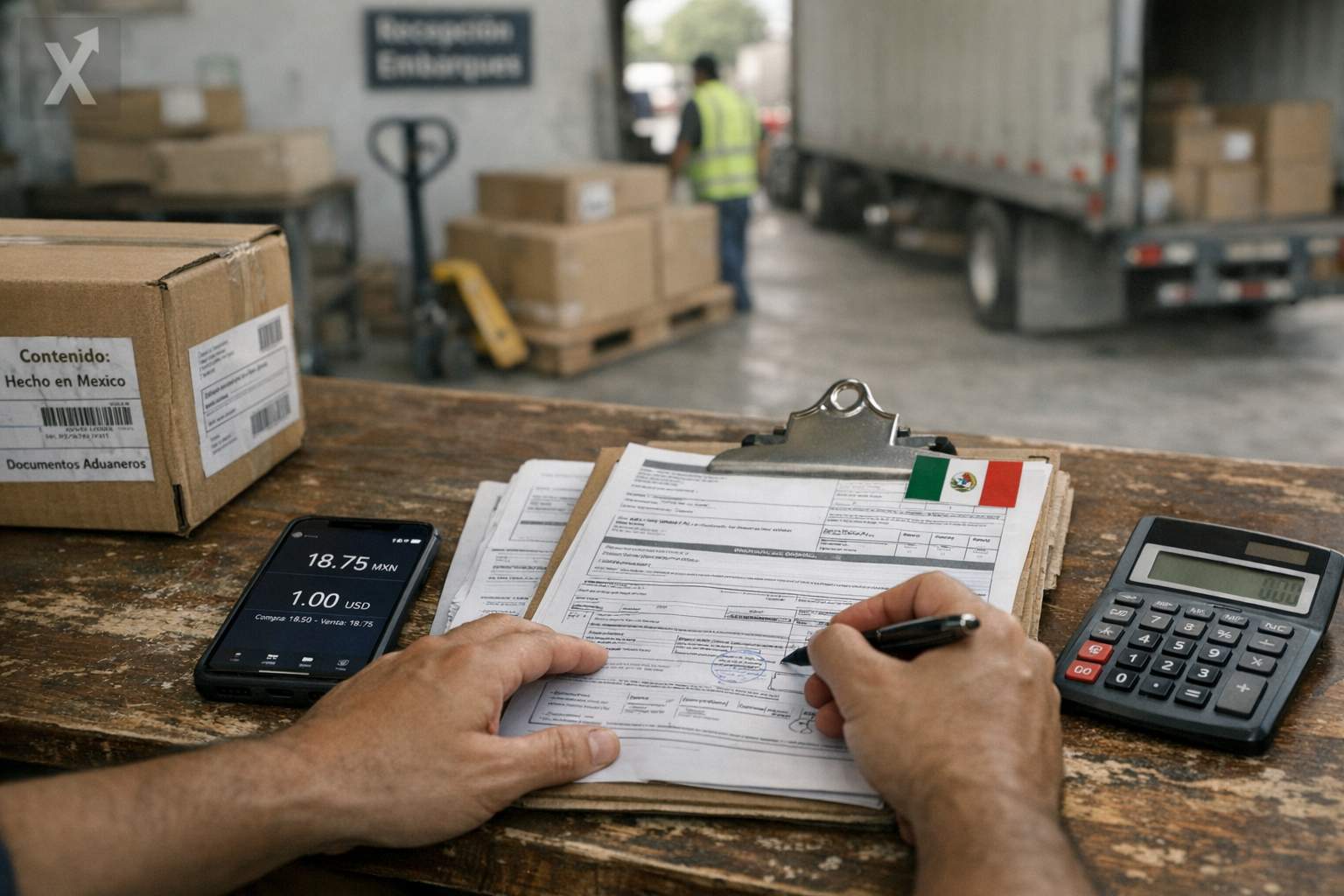
In an environment where companies are reshaping supply chains due to logistics costs, geopolitical tensions, and the search for resilience, Mexico has become more attractive as an export platform to the United States. Regulatory stability and predictable rules are critical to that narrative: a more constrained U.S. framework for extraordinary tariffs reduces the incentive for firms to delay investment and may support industrial expansion decisions in Mexico’s manufacturing regions.
The economic impact, however, will depend on how the U.S. administration responds and whether Congress or other trade authorities find alternative routes. In practice, Mexico–U.S. trade operates under the USMCA umbrella, but it remains exposed to sector-specific disputes (such as those tied to rules of origin, energy policies, or sanitary measures) and to trade-defense actions brought by particular industries.
Implications for the peso and investment flows
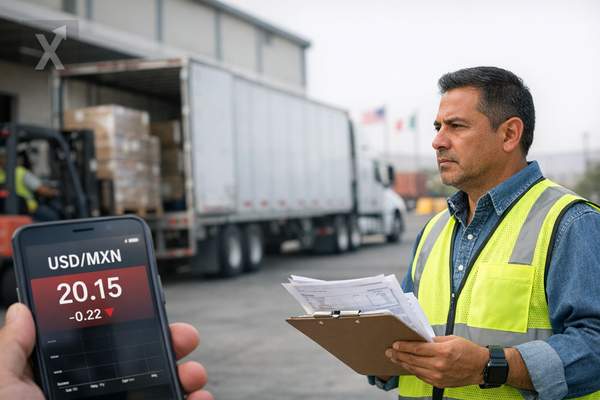
The financial channel matters as well: when the risk of broad-based U.S. tariffs rises, risk aversion typically increases and volatility picks up in emerging-market currencies, including the Mexican peso. A legal constraint on sweeping tariffs can help stabilize expectations, although the exchange rate will still respond to interest-rate differentials, inflation and jobs data, and monetary-policy guidance in both countries. In Mexico, Banco de México’s stance remains an anchor against external shocks, as markets closely track the pace of monetary easing and the persistence of services inflation.
On the investment side, the ruling could strengthen the nearshoring thesis by moderating the risk of sudden, broad tariff shocks—particularly in sectors such as auto parts, electronics, medical devices, and machinery. Even so, project momentum will also depend on domestic factors: access to reliable power, logistics infrastructure, security, water availability in industrial corridors, and regulatory certainty. Competition for productive capital in North America is intense, and any potential gain for Mexico is not automatic.
Looking ahead, the ruling’s central message is that U.S. trade policy faces clearer institutional constraints, which could reduce bouts of volatility driven by unilateral decisions. For Mexico, that offers a window of greater predictability in its main export market, though the local competitiveness agenda and the management of sector-specific risks will continue to determine how much that certainty translates into investment, jobs, and growth.