Tortilla Prices Keep Rising Despite Cheaper Inputs: The Clash of Hidden Costs, Microbusinesses, and Market Control

The debate over tortilla prices is exposing pressure from energy, logistics, and insecurity—costs you don’t see in the price of corn, but that do show up in household budgets.
The price of tortillas is once again at the center of Mexico’s public debate, amid the possibility of new increases that, in some regions, could push the price of a kilogram close to 30 pesos. The controversy comes at a seemingly contradictory moment: the main industrial input—corn flour—has not seen a significant recent jump in price, yet the consumer price remains under strain due to a mix of factors that go far beyond the grain itself.
The disagreement is no small matter because tortillas are an everyday staple with few substitutes, especially for lower-income households. According to benchmarks used to estimate income-based poverty lines, spending on corn tortillas carries considerable weight within the basic food basket, particularly in rural areas. That’s why even adjustments of 1 to 4 pesos per kilogram have a direct and rapid effect on family budgets, in a context where the cost of living remains a sensitive issue after the inflation episodes of recent years.
Organized producers have defended the idea of updating prices after a period in which, they argue, operating pressures built up without being fully passed on to consumers. On the other side, groups within the corn–dough–tortilla supply chain and sector analysts say there are no “technical” conditions for abrupt increases and urge avoiding a scenario of broad-based hikes that look more like coordinated movement than individual, cost-based decisions.
At its core, the episode reflects a structural challenge: tortillas are produced and distributed in an ecosystem dominated by microbusinesses operating on thin margins, fast cash turnover, and little room to absorb shocks. In practice, many tortilla shops adjust prices quickly in response to any pressure from rent, payroll, maintenance, transportation, or energy—even if corn or flour prices stay stable.
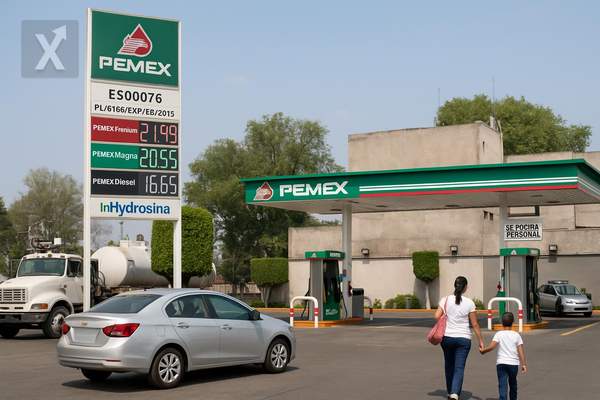
The corn flour data illustrates the point. Even with only moderate changes in the cost of a sack over the past year, retail prices have moved because of a broader cost basket: gas, electricity, fuel, spare parts, packaging, payment processing fees, and wages. Added to that is the minimum-wage increase—a policy that has raised purchasing power for part of the population—but that also raises costs for small businesses that depend on local labor and, in many cases, lack major operational efficiencies.
The result is a uneven reality: official data may show relatively contained national averages, but consumers shop in local markets where a kilogram can run anywhere from the 20–25 peso range and, under pressure scenarios, climb closer to higher levels. That regional spread depends on the type of input (flour vs. nixtamal), the scale of the business, local competition, and increasingly, security and logistics costs.
“Mass Delivery” and the Cost of Moving a Daily Staple
A less visible component of the final price is the way businesses are supplied. A significant share of tortilla shops don’t produce all their own dough; instead, they rely on mills that process it and deliver it daily. That distribution—often in short but constant trips—makes the system especially sensitive to fuel costs and the efficiency of delivery networks. When mill capacity doesn’t grow at the same pace as retail outlets, deliveries become more expensive due to saturated routes, unproductive downtime, and higher operating cost per kilogram delivered.
On top of that, daily logistics get pricier due to frictions that don’t show up on a traditional inputs list: shrinkage, equipment maintenance, power outages, and operational changes to comply with sanitation and labeling rules. At the same time, a high-impact factor in some states and urban corridors is insecurity, which can translate into extortion, off-the-books payments, or route disruptions. For a business that “lives day to day,” these costs—hard as they are to quantify—end up being built into the price or lead to shutdowns, reducing competition and putting even more pressure on the local market.
The discussion also touches on the government’s role. For decades, tortilla prices have been deregulated, and price-containment pacts or agreements have limited reach in a free-market environment. Even so, the government still has an important role: monitoring anti-competitive practices, investigating signs of collusion if increases happen simultaneously and uniformly, and improving enabling conditions (security, competition, infrastructure, and access to energy) so the supply chain can operate at lower cost.
In the short term, the main risk is that a widespread increase in a basic staple like tortillas reignites pressure on core inflation and hits hardest those who devote a large share of their income to food. In the medium term, the challenge is broader: without improvements in productivity and logistics—and without a more predictable security environment—tortilla prices will continue to reflect not just the price of corn, but the accumulated frictions of producing and distributing an essential food across thousands of small establishments.
In perspective, the debate shows that tortilla prices function as a thermometer of day-to-day economic life: when energy, transportation, wages, or operational risks go up, the adjustment reaches the counter quickly. The key will be to distinguish between increases justified by costs and episodes of improper coordination, while strengthening conditions for a more efficient and competitive corn–dough–tortilla supply chain.