IOAE points to a stumble at the start of 2026: Mexico’s economy cools, sparking debate over the year’s pace

INEGI’s early figures suggest flat activity in March and a possible quarterly contraction, with industry as the main weak spot.
Mexico’s economy likely entered 2026 with less momentum than expected. The Timely Indicator of Economic Activity (IOAE), published by INEGI, suggests that in March activity was unchanged from February (0.0% month over month), following an uneven start to the year. Based on that performance, various private estimates—including Banco Base’s—put GDP at a 0.54% quarter-over-quarter decline from January to March, which would mark the first contraction for a full quarter since the fourth quarter of 2024.
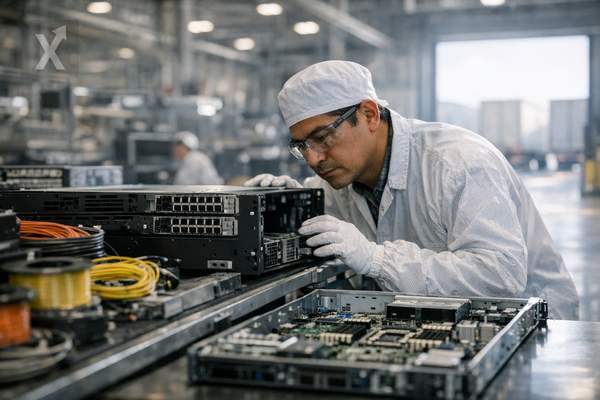
Year over year, the IOAE points to moderate growth of 0.5% in March, a sign of a slowdown that has become more broad-based. The gain would be driven mainly by services: tertiary activities would rise 1.1% from a year earlier, while secondary activities—more closely tied to manufacturing, construction, and mining—would fall 0.5%, underscoring fragility in the industrial engine.
The monthly pattern reinforces the view of a fragile quarter. In January, the IGAE—the observed, not preliminary, measure—posted a 0.92% month-over-month contraction; February was revised higher to 0.51% growth, but the rebound likely wasn’t enough to offset the early stumble. Taken together, the period suggests a less dynamic backdrop than what was seen toward the end of 2025.
It’s worth emphasizing that the IOAE is a preliminary estimate designed to provide a read on the IGAE up to five weeks earlier and can be revised as more complete information becomes available. Even so, it often serves as a meaningful signal for anticipating short-term turns in the economic cycle.
Industry down, services up: a divergence setting the tone
The gap between industrial weakness and service-sector resilience has become one of the defining features of the moment. The estimated year-over-year decline in secondary activities suggests the productive sector is facing headwinds: still-high financing costs, more cautious demand for durable goods, and periods of softer construction momentum. By contrast, services tend to hold up better when the labor market remains relatively stable and day-to-day spending is preserved, though that cushion can fade if investment and industrial output don’t regain traction. For the rest of the year, the balance between both sectors will be decisive: if industry doesn’t rebound, growth could end up leaning too heavily on services, raising the risk of slower and more uneven expansion.
If the quarterly contraction is confirmed, the debate will shift to the growth path for 2026 and the economy’s ability to bounce back without creating inflation pressures. In the near term, investment performance—public and private—along with credit conditions and external demand will be critical variables, particularly given the weight of export-oriented manufacturing in the industrial cycle.
Domestically, the reading also arrives at a time when companies often recalibrate spending and hiring plans after year-end, while households adjust consumption decisions in response to borrowing costs and perceptions of job security. If the slowdown becomes entrenched, markets are likely to focus more on how quickly monetary conditions normalize and on whether infrastructure spending is effective in supporting activity.
In short, the IOAE’s timely figures suggest a first quarter with growth essentially stalled and signs of contraction, with weak industry and services still resilient; confirmation in the hard data and the response of investment and production will set the economic tone for 2026.