Tortillas in the spotlight: Profeco and the Agriculture Ministry deny higher input costs, but tortilla shops warn of cost pressure
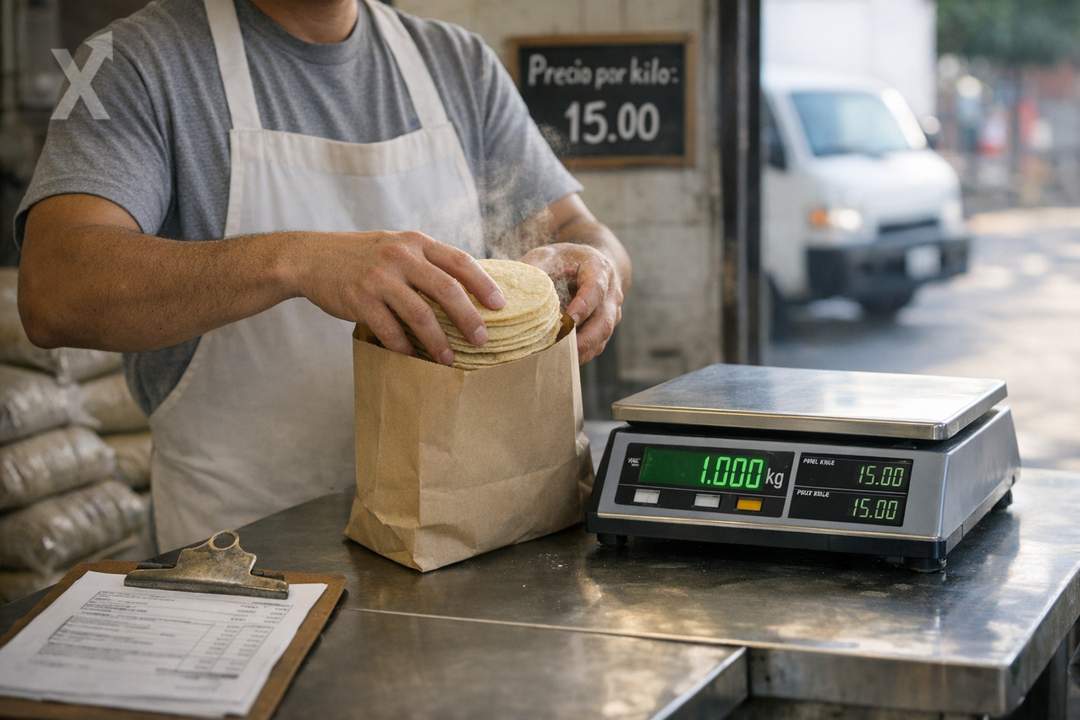
The government says there’s no reason to raise prices due to corn or flour, while the industry points to energy, transportation, and squeezed margins.
The price of tortillas reignited public debate in April after reports circulated about a possible increase starting on the 15th. In response, the Federal Consumer Protection Agency (Profeco) and the Ministry of Agriculture and Rural Development (Agriculture) said there are no conditions that would justify a broad-based increase. Their main argument is that there has been no rise in the cost of corn or corn flour that, on its own, would push up the consumer price.
The official message aims to cut off expectations of “preemptive” increases—something that, for frequently purchased staples, often translates into preventive hikes that vary by region. From the federal government’s perspective, stable inputs and coordination among supply-chain players support keeping tortilla prices steady, especially in a context where food inflation remains one of the most sensitive issues for household budgets.
This stance is backed by the National Corn-Tortilla Agreement, a collaboration framework that includes flour producers and industry organizations, aimed at containing costs and improving supply conditions. While the agreement doesn’t eliminate price differences—which depend on scale, logistics, energy costs, and local competition—it does seek to prevent abrupt jumps and encourage gradual reductions when conditions allow.
At the same time, groups such as the National Chamber of Industrialized Corn (CANAMI) and the National Union of Masa and Tortilla Industrialists (UNIMT) have reiterated that there are no technical or economic grounds for a nationwide adjustment at this time, aligning with the call to keep production and distribution efficient.
On the other side, the National Tortilla Council, led by Homero López García, has argued that some tortilla shops could implement zone-specific increases, roughly in the range of 1 to 4 pesos per kilogram. The explanation focuses less on the grain itself and more on the “cost of doing business”: fuel, transportation, parts, equipment maintenance, and other expenses that have squeezed profitability—especially for smaller establishments with less purchasing power or without access to preferential terms.
Inflation, wages, and consumption: why tortillas matter more than other prices
Tortillas are not only a staple food; they also serve as a social barometer of inflation. In Mexico, a relatively small change in tortilla prices can have an outsized impact on spending for lower-income households, where food takes up a larger share of the budget. While headline inflation has shown periods of cooling compared with peaks in prior years, the path of prices for prepared foods, regional energy costs, and distribution-related services can rekindle local pressures. In addition, the labor market—with sustained minimum-wage increases in recent years—has raised costs for labor-intensive businesses, a positive dynamic for workers’ income but challenging for micro-businesses if they can’t offset it with efficiency gains or higher volume.
In that sense, the tortilla debate concentrates classic tensions in the real economy: on one hand, the public goal of protecting purchasing power; on the other, the need for the value chain to operate with viable margins to sustain supply, investment, and upkeep. Unlike durable goods, adjustments here happen “on the corner”—neighborhood by neighborhood—with distribution costs and local competition as decisive variables.
To curb abuses and improve consumer information, Profeco continues to monitor prices through its “Who’s Who in Prices” program, checking hundreds of tortilla shops, along with scale inspections and follow-up reports on businesses linked to organizations that signed the agreement. In practice, these actions seek to discourage unjustified increases, while also highlighting price gaps across regions and business models.
Looking ahead, the main risk does not necessarily come from the price of corn, but from shocks to logistics and energy costs, as well as weather events that reduce agricultural yields and make the supply chain more expensive. The public strategy on market organization, supply, and commercialization—with an emphasis on food sovereignty—will have to coexist with one reality: costs are not uniform, and the profitability of thousands of small tortilla shops depends on variables that go beyond the grain.
In sum, the government insists there is no basis for a broad-based increase in April, while the industry warns of targeted adjustments driven by operating cost pressures. Price trends will depend on how long input stability holds and whether coordination and oversight mechanisms can prevent preemptive increases without jeopardizing supply.






