Banamex Adjusts Its Executive Helm and Reinforces Its Course Toward the Stock Market
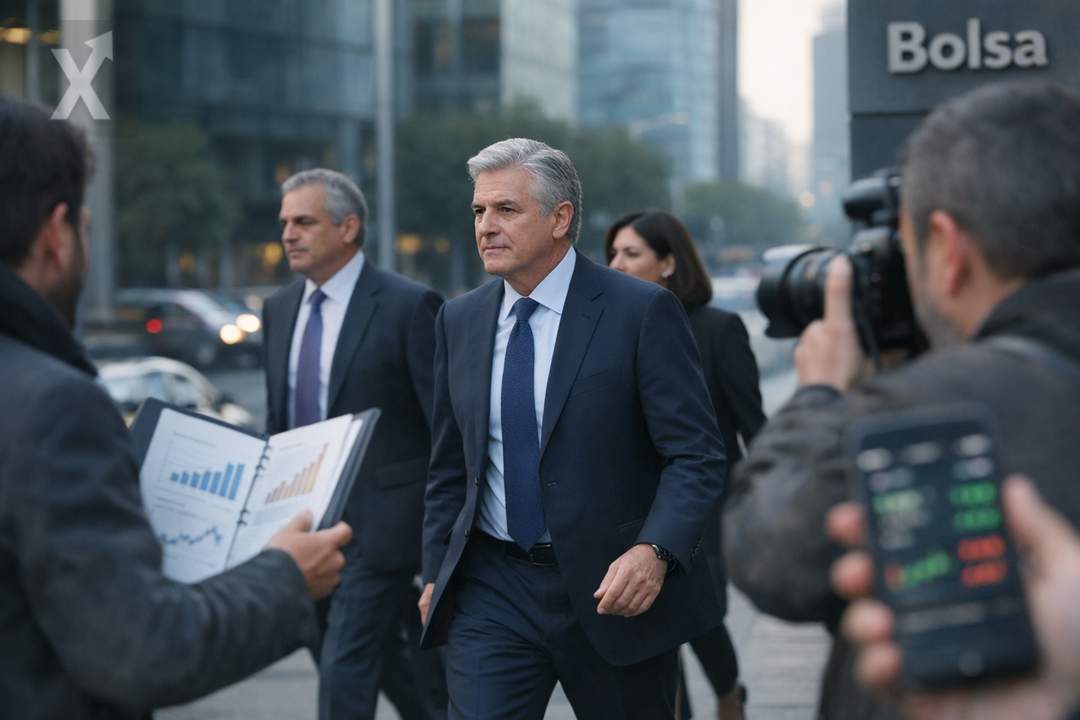
The leadership change aims to strengthen investor confidence as Banamex accelerates its separation from Citi and prepares for a potential IPO.
Banamex took a significant step in its corporate reconfiguration process by appointing Edgardo del Rincón as its new CEO—a move that owner Fernando Chico Pardo framed as a signal of operational continuity and, above all, greater certainty for investors as the bank moves toward an Initial Public Offering (IPO). In an internal message, Chico Pardo emphasized the new CEO’s client-focused profile and his ability to align teams—traits that, in market terms, are typically valued when a financial institution is getting ready to open its equity to the public.
The change follows the resignation of Manuel Romo, who will leave the role on June 1. Romo led a critical phase: the partial sale process and Banamex’s gradual separation from Citigroup. The outgoing management team was key to stabilizing operations during a transition period in which the bank had to maintain commercial momentum, safeguard risk standards, and at the same time prepare the corporate redesign required by the deconsolidation.
In the background is a share transaction that has already reshaped the bank’s ownership: Citigroup sold 49% of Banamex. First, it placed 25% with Fernando Chico Pardo for 42 billion pesos and later 24% with private investors and family offices in a transaction valued at 43 billion pesos, with participation from global institutional players. According to the timeline shared with the market, Citigroup’s deconsolidation is expected to be completed by late January 2027, and while additional capital moves are not ruled out, the central thesis remains: taking the bank to the public markets.
For Mexico, the potential return of a historic banking brand to the trading floor is not an isolated event: it fits into a financial market seeking greater depth, new issuances, and more options for institutional investors—such as pension funds (Afores)—in an environment where diversification and the quality of corporate governance matter more than ever. In a banking IPO, the transformation narrative (technology, efficiency, deposits, lending, and risk controls) is often just as decisive as financial multiples.
A Banking IPO in a High-Rate, Moderate-Growth Environment
Banamex’s preparations are taking place amid a macroeconomic backdrop that combines opportunities and constraints. Mexico enters 2026 with growth that has cooled from post-pandemic peaks, while investment is being reshuffled by nearshoring, North America’s industrial policy, and the need for energy and logistics infrastructure. At the same time, the cost of money remains high relative to historical averages, which tends to raise funding costs, cool credit demand in certain segments, and increase the market’s sensitivity to loan book quality. In this context, an IPO will require demonstrating not only profitability, but resilience: the ability to sustain margins, manage delinquencies, and grow profitably in high-volume products—such as payroll accounts, credit cards, and SMEs—without weakening controls.
For potential investors, the CEO transition is also read as a signal of execution discipline: solidifying a credible business plan, strengthening market engagement, and presenting clear transformation metrics. In Mexico’s financial sector, where competition is intensifying due to digitization and the entry of new players, the challenge is twofold: preserve scale and brand while also accelerating processes, analytics, and digital experiences under increasingly demanding cybersecurity standards.
From a market standpoint, a potential Banamex IPO could help energize Mexico’s local equities ecosystem and expand the investable universe, although its success will depend on financial market timing, valuation, and perceptions of country risk. In particular, investors tend to scrutinize corporate governance quality, strategic clarity, leadership team stability, and the institution’s ability to compete in a concentrated banking system where scale and funding costs make a difference.
Looking ahead, the deconsolidation timeline from Citi and IPO preparations place Banamex under unusual visibility: every business, technology, and capital decision becomes a message to the market. With Edgardo del Rincón at the helm, the institution faces the challenge of turning the leadership change into consistent results—especially in operating efficiency, profitable growth, and clear execution.
In short, Banamex is accelerating a corporate transition that combines an executive handoff, an ownership reshuffle, and a bet on returning to the public markets; Mexico’s macro environment offers upside through investment and consumption, but demands discipline amid high rates, digital competition, and sensitivity to risk.






