Inflation Slows to 4.53% in the First Half of April, but Food Keeps Pressure On and Banxico Still Isn’t Declaring Victory
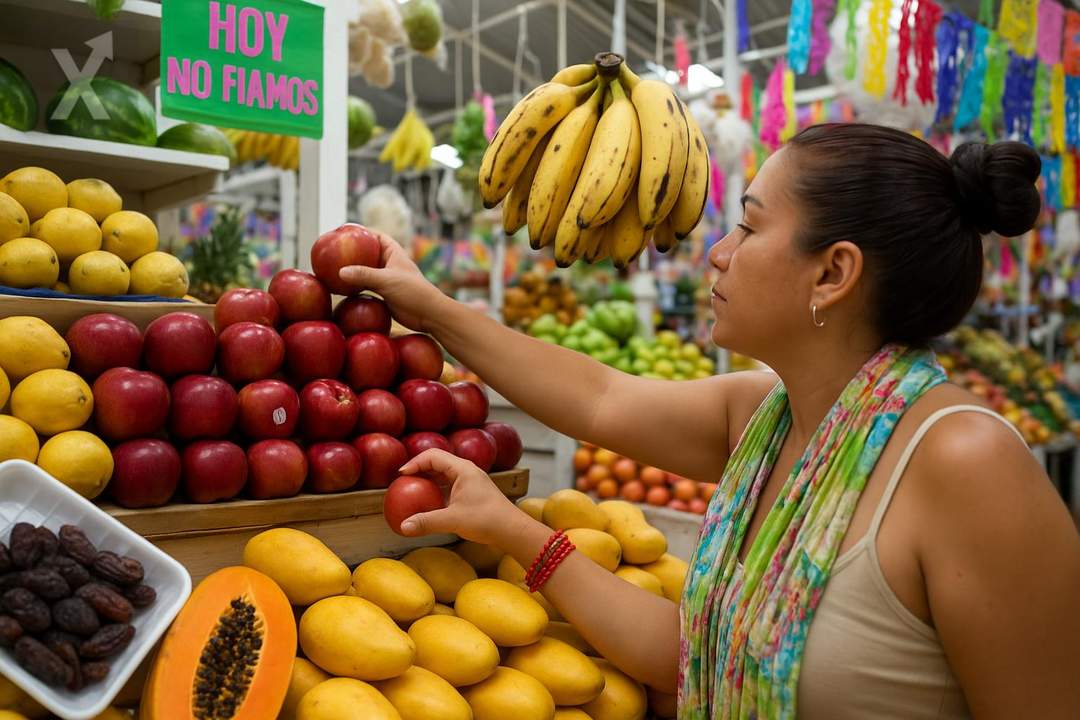
The electricity subsidy helped cool the headline index, but a rebound in fruits and vegetables is keeping inflation outside the central bank’s target range.
Inflation in Mexico posted a slight slowdown during the first half of April, though it remains above the Bank of Mexico (Banxico) target (3% +/- 1 percentage point), in an environment where food prices—especially fruits and vegetables—continue to be the main source of pressure for households. According to INEGI, the National Consumer Price Index (INPC) rose 0.11% over the two-week period, bringing annual inflation to 4.53%, slightly below the late-March reading but still far from the range consistent with price stability.
The figure also came in marginally above market expectations for the headline index, suggesting the disinflation trend is continuing, but not with the consistency the central bank typically wants before easing its monetary stance. In practice, this extends the debate over the right time to keep cutting the policy rate or to hold it restrictive for longer, given that core inflation—the component that best reflects domestic pressures—continues to move higher.
Breaking it down, core inflation increased 0.18% over the two-week period and stood at 4.27% year over year. Within core, goods rose 0.25% and services 0.12%, a mix that points to ongoing price adjustments in segments tied to everyday consumption and labor costs, especially services. This behavior is typically important for Banxico because core inflation tends to be stickier and therefore harder to bring down quickly.
In contrast, the non-core component fell 0.13% over the two-week period, supported by a 1.34% decline in energy prices and government-administered tariffs. The main driver was lower electricity prices due to the start of the warm-season rate scheme (the summer subsidy), which typically reduces the INPC level in the states where it applies and provides a temporary “breather” for headline inflation.
Still, the relief from energy wasn’t enough to dissipate food-related pressures. Fruits and vegetables jumped 4.29% over the two-week period, with annual inflation at 23.03%—an elevated pace reflecting supply shocks, seasonality, and climate vulnerability in agriculture. Among the items with the largest increases were tomatoes, several types of chiles, and potatoes, translating into a direct hit to household spending given the weight of these goods in the consumer basket.
Banxico Faces Uneven Disinflation: Energy Falls, but Core Calls the Shots
April’s snapshot reinforces a key takeaway for monetary policy: disinflation is moving forward, but unevenly. Declines tied to electricity and some energy components can be temporary and depend on administrative decisions or external factors, while core inflation typically responds to the domestic economic backdrop. In Mexico, services have been slow to come down due to cost pass-through (rent, dining out, personal care, urban transportation) and gradual adjustments in wages and other inputs. In this context, Banxico tends to place greater weight on the core trend to gauge whether a restrictive policy rate is still needed to anchor expectations.
In addition, Mexico’s inflation path is being closely watched at a time when economic performance is sending mixed signals: on one hand, domestic demand has shown resilience in various periods, supported by the labor market and growth in real wages when inflation eases; on the other, activity may feel the effects of still-tight financial conditions and a global economy that remains exposed to bouts of volatility. This combination often favors cautious decisions: gradual cuts, conditioned on core inflation confirming a clearer downward trajectory.
For consumers, the immediate implication is that the cost of living isn’t rising at the same pace across categories: while the electric bill may ease due to the subsidy in certain areas, the food basket continues to get noticeably more expensive when fresh products spike. For businesses, the picture suggests pricing will remain under scrutiny and that logistics costs and agricultural input costs may continue to be a risk, especially in food-related supply chains.
Looking ahead, the challenge will be to distinguish between temporary effects—such as the seasonal adjustment in electricity—and components that signal persistence. The path for fruits and vegetables will depend on weather conditions, availability, and the normalization of harvests, while core inflation will be more tied to demand, service-sector costs, and how quickly domestic pressures fade. If core inflation stays near 4% for longer, the return to target could be slower, even if the headline index posts occasional declines due to energy effects.
Overall, inflation delivered a moderating signal by landing at 4.53% year over year, but the episode rests on a seasonal, administrative factor, while food and core inflation continue to set the tone. The takeaway for Mexico’s economy is caution: disinflation is ongoing, but it is not yet uniform enough to say the process is fully under control.






