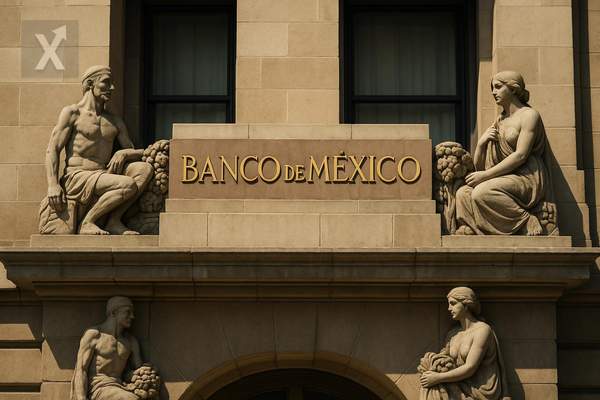
Mexico and the growth that never arrives: signs and causes of an economy stuck in stagnation
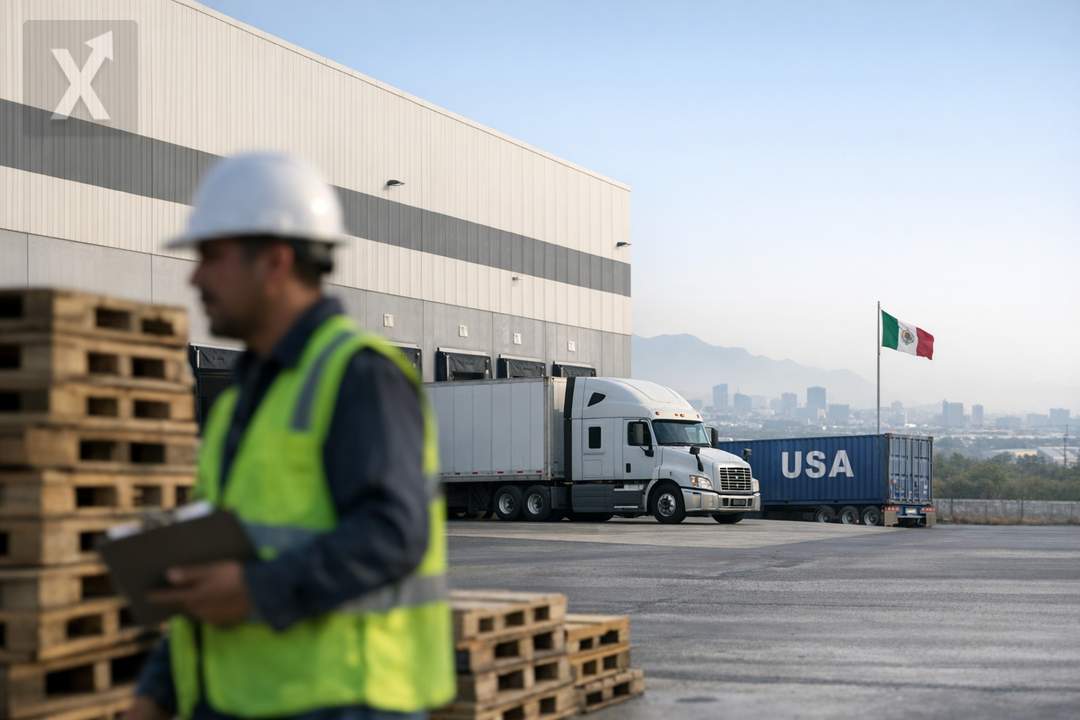
Mexico is pairing record trade and revenues, but weak gains in productivity and investment are limiting growth in GDP per capita.
For more than two decades, Mexico has lived with a recurring promise: “this time” growth will finally take off. Reforms have come and gone, development models have shifted, the economy has opened up, and public policy has been adjusted; still, average GDP performance remains moderate—and, most importantly, not enough to quickly transform living standards for a population that continues to grow. The result is a persistent sense of slow progress: modern, globally integrated sectors coexist with a low-productivity domestic market and high informality.
The phenomenon is often described as a “stagnation trap”: it’s not a classic recession that reverses with a rebound, but rather a low-growth equilibrium where investment fails to scale, total factor productivity makes little headway, and human capital doesn’t translate into greater value added. In that context, the country can post standout figures—such as strong remittance inflows or record-high tax collections by Mexico’s Tax Administration Service (SAT)—without that automatically turning into broad-based gains in income per person.
The strains become more visible when economic growth is compared with demographic growth. Even when GDP rises, it does so at a pace that competes with population growth and with new demands for infrastructure, public services, housing, and formal employment. That’s why the debate isn’t only about how much GDP grows, but whether it grows enough to accelerate GDP per capita and close regional gaps.
At the same time, the country shows signals that, in theory, should support stronger performance: Mexico remains a crucial trading partner for the United States, and its manufacturing platform is still relevant in sectors such as autos, auto parts, electronics, and medical devices. Even so, export momentum on its own has not managed to sustainably raise productivity across the broader economy or generate a long-term investment surge nationwide.
The bottleneck: investment, rule of law, and informality
The main drag doesn’t seem to be a lack of external integration, but rather domestic obstacles that make it more costly to produce, invest, and grow. Fixed investment—public and private—has been uneven, and when it doesn’t expand consistently it limits infrastructure modernization, technology adoption, and capability-building. On top of that is an environment where legal certainty and public security weigh heavily on business decisions: projects that require 10- to 20-year horizons become harder to justify if there are doubts about rules, permits, compliance costs, or effective contract enforcement.
Another factor is labor informality, which reduces productivity, tax revenue, and access to financing, and perpetuates a low-scale economy. A segmented labor market—with a relatively integrated formal segment and a large segment in precarious conditions—tends to disconnect export growth from broad-based well-being. In practical terms: the country can export more, but if formal employment and domestic-market productivity don’t rise, social progress remains slow.
The public sector’s ability to catalyze investment is also decisive. When the budget prioritizes current spending and transfers over well-executed physical investment, it limits the multiplier effect on future productivity. This doesn’t mean social policy is irrelevant—rather, without a strong component of infrastructure, logistics, energy, and technical education, potential growth remains constrained.
The current debate over how to escape this trap focuses on restarting domestic engines. In the short run, the interest-rate cycle and the cost of credit influence consumption and investment; but the core problem is structural. Changing the trajectory would require a combination of higher investment as a share of GDP, improvements in human capital, effective competition in key markets, a stable regulatory framework, and stronger institutions that reduce risk for productive capital.
Nearshoring appears as a real opportunity: the reconfiguration of supply chains, along with proximity to the U.S. market, can attract manufacturing and logistics projects. However, its reach depends on local conditions: reliable energy availability, water, industrial parks, transportation, security, and a workforce with technical skills. There is also the risk that the wave concentrates in a few regions in the north and the Bajío, widening gaps with the south unless it is paired with policies that improve connectivity and develop talent.
In that sense, a trade agreement like the USMCA can serve as an “anchor” for preferential access and rules, but it does not replace the microeconomic reforms and public-sector execution that raise productivity. The deeper challenge is turning external advantages—trade integration, location, manufacturing experience—into internal gains: more competitive domestic suppliers, more innovation, more investment in technology, and sustained expansion of formal employment.
Looking ahead, the signals of an exit from stagnation would be clear: several years of growth above 3% driven by investment and productivity; a visible increase in investment in infrastructure and human capital; lower informality; improvements in institutional indicators; and, ultimately, faster gains in income per person. Without that full set of conditions, Mexico could continue to rack up “records” in isolated variables without breaking through its growth ceiling.
In perspective, Mexico is not facing a single problem, but a combination of low investment, stagnant productivity, and uncertainty that limits the conversion of a trade boom into broad prosperity; the challenge is to align institutions, infrastructure, and talent so growth becomes sustained and inclusive.