Tension with Canada under the USMCA points to a tougher review; Mexico bets on certainty and nearshoring

Political pressure between Washington and Ottawa is hardening the USMCA review, but the costs of a rupture keep the agreement standing—and raise the value of certainty for Mexico.
North America’s trade relationship is entering a rougher phase heading into the USMCA review, with Canada striking a more forceful tone toward the White House and signs that in Washington the idea is once again circulating of redesigning the deal into bilateral arrangements. Even though the political noise is significant, the prevailing view among analysts and business leaders remains continuity with friction: the agreement would stay in place, but with tougher negotiations on rules, verification, and sector-specific commitments.
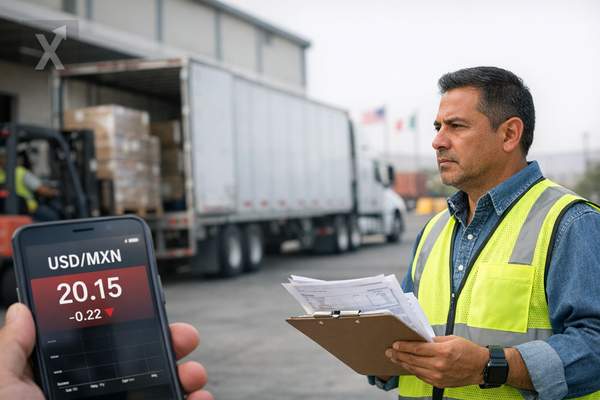
For Mexico, this moment matters for two reasons. First, because manufacturing integration with the United States has deepened in sectors such as autos, electronics, medical devices, and aerospace—making trade certainty as important as the exchange rate or financing costs. Second, because in recent years the country has captured part of the global supply-chain reshuffle (“nearshoring”), a dynamic that depends on stable rules, border logistics, and preferential access to the U.S. market.
In goods trade figures, Mexico–U.S. exchange remains the most dynamic in the region. Even as Canada maintains a very high level of integration with its southern neighbor, the recent reshuffling of trade flows and political sensitivity in Washington are reshaping priorities. The bottom line is that, despite tariff threats and recurring disputes, the economic incentives to preserve the USMCA remain substantial: millions of U.S. jobs are tied to regional trade, and tariff costs are often passed on to consumers and businesses in the form of higher prices.
Mexico’s read is pragmatic. While Ottawa has chosen a tougher stance to gain negotiating room and diversify ties, Mexico’s strategy has tended to prioritize channels of understanding to preserve access to the country’s main export market. In practice, however, both partners face the same challenge: dealing with a more transactional U.S. trade policy, with greater use of tariff tools and heightened scrutiny of compliance on rules of origin, subsidies, and economic security.
In the short term, the biggest risk is not the immediate disappearance of the USMCA, but rather a review with more conditions, deadlines, and monitoring mechanisms—along with bouts of tariff pressure that increase volatility in investment decisions. For Mexico, this could translate into higher demand for supply-chain traceability, audits of regional content, and, above all, the need to demonstrate regulatory and labor compliance in sensitive sectors.
Mexico facing a tougher review: investment, the exchange rate, and the domestic agenda
A more friction-filled USMCA would raise the value of Mexico’s macroeconomic certainty. With an economy that has shown resilience supported by manufactured exports, remittances, and a well-capitalized banking system, the challenge is sustaining gross fixed investment and productivity in a context of still-high rates and corporate caution. For markets, the Mexican peso tends to react more to perceptions of trade risk and interest-rate differentials than to isolated headlines; that’s why a drawn-out review or intermittent tariff threats could show up as bouts of volatility—especially if they coincide with inflation data or monetary policy signals from the Bank of Mexico (Banxico).
At the same time, Mexico’s ability to capture nearshoring doesn’t begin and end with the agreement: it requires sufficient, competitively priced energy; water in industrial regions; security along logistics corridors; regulatory streamlining; and legal certainty. In other words, the external USMCA debate intersects with domestic tasks that determine operating costs. If the regional environment tightens, companies will tend to reward destinations that reduce non-trade risks (permitting, customs, infrastructure, tax and labor compliance).
At the sector level, Mexico enters this review with a different set of disputes than Canada’s. While Ottawa often focuses on irritants such as dairy, softwood lumber, or digital taxes, Mexico faces fronts tied to rules and regulations in energy, agrifood access and sanitary measures, as well as verification issues in automotive supply chains. The implication is that Mexico may find areas for coordination with Canada on trilateral disciplines (origin, trade facilitation, digital rules), but it will also have to manage its own bilateral agenda with Washington through a technical approach to prevent disputes from escalating into panels or retaliation.
Looking ahead, the most likely outcome is a USMCA that is “in force but more closely policed”: continuity of the general framework, but with complex negotiations, tighter scrutiny, and potential windows of tariff pressure as a political bargaining tool. For Mexico, that reinforces the importance of maintaining macro stability, strengthening domestic competitiveness, and gradually diversifying exports without losing the North American anchor.
On balance, tension with Canada raises the temperature of the review and could tighten conditions, but the scale of regional integration and the costs of a rupture mean the base case remains continuity; what’s most at stake for Mexico is the degree of certainty for investment and trade.