Institutional Clash in the U.S. Rekindles Tariff Uncertainty and Raises Risk for Mexico
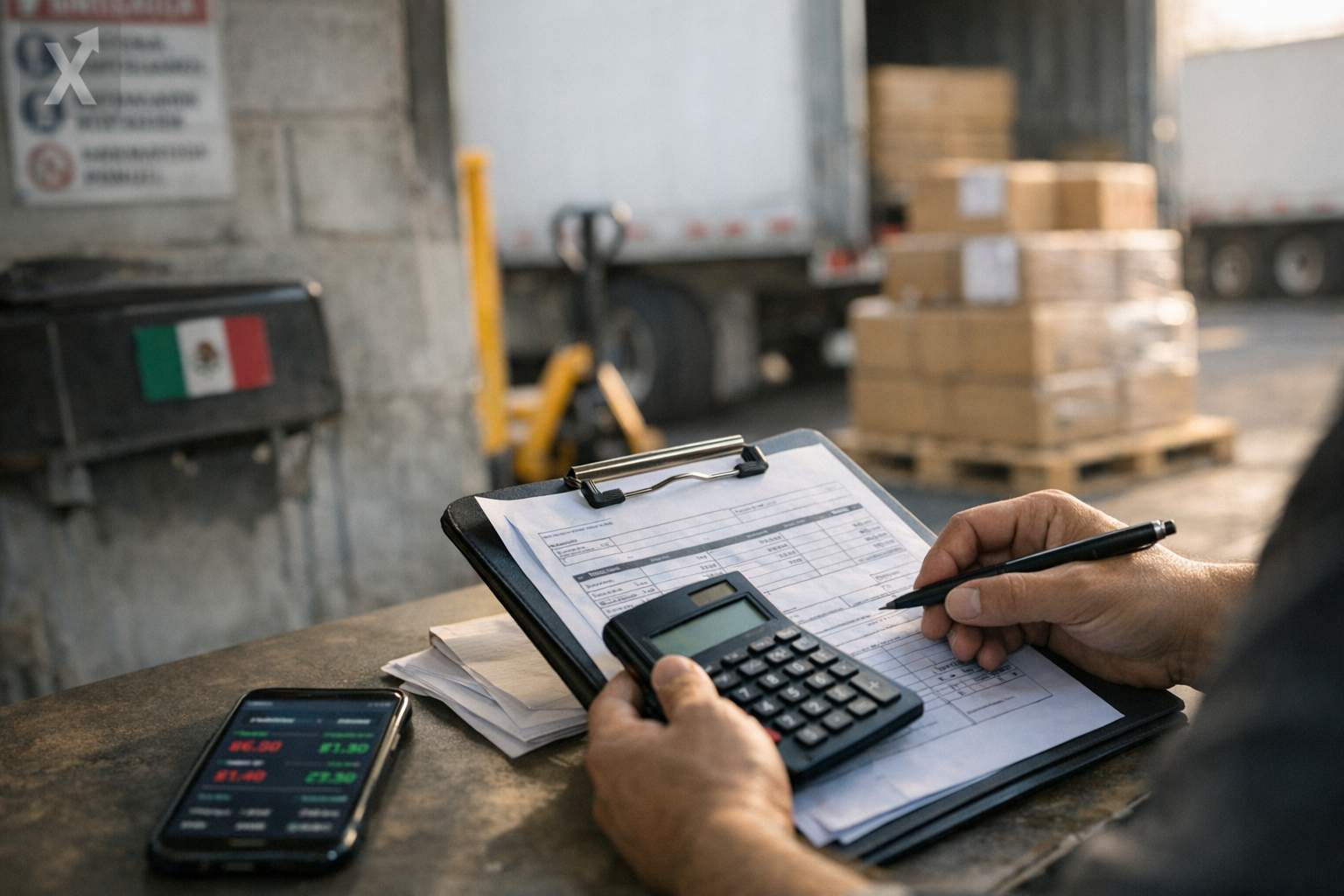
The tariff dispute in the United States adds volatility to trade and forces Mexico to strengthen hedging, supply chains, and investment plans.
The renewed confrontation by U.S. President Donald Trump with the Supreme Court over a ruling that limits his ability to impose across-the-board tariffs has reintroduced an element of political uncertainty with potential consequences for Mexico, whose economy relies heavily on foreign trade and, in particular, stable access to the U.S. market. Even though the litigation is domestic, the message abroad is clear: trade policy will remain a tool of pressure, even if courts narrow its scope.
The backdrop matters for Mexico at a time when export-oriented manufacturing—autos, auto parts, electronics, medical equipment, and agribusiness—supports a large share of formal job growth in industrial regions such as the Bajío, the northern border, and central Mexico. Any abrupt change in tariffs, licensing requirements, sector-specific exemptions, or rules-of-origin criteria can affect costs, inventories, and investment decisions, even if existing agreements remain formally in place.
In Washington, U.S. Trade Representative Jamieson Greer has insisted that the United States aims to respect agreements with the European Union and China and to maintain active talks with partners. However, the combination of an institutional dispute—with the Executive Branch openly criticizing the nation’s top court—and announcements of tariff increases with specific timelines and exemptions keeps alive the perception that trade policy could shift quickly. For Mexico, the issue is not only the tariff itself, but the volatility it creates in the exchange rate, financing, logistics, and production plans.
In the local market, episodes like this tend to show up as moves in the peso against the USD and changes in demand for currency hedges from importers and exporters. With interest rates still relatively high and growth moderate, companies operating on thin margins are especially sensitive to exchange-rate swings and higher costs for imported inputs—particularly in supply chains that rely on Asian components that pass through the United States before being integrated in Mexico.
Implications for Exports, Investment, and the USMCA
Mexico operates under the USMCA umbrella, which in principle provides a more predictable framework than trade without an agreement. Even so, the risk does not disappear: broad measures, changes implemented through “licenses,” or sector-specific actions can strain the flow of goods and increase the administrative burden, with costs that ultimately get passed on through prices, inventories, or delivery times. Sectors with strict rules of origin—such as automotive—also face the risk that any tougher interpretation could trigger technical disputes and raise compliance costs.
On investment, the nearshoring narrative favors Mexico thanks to geographic proximity, its network of trade agreements, and its manufacturing capacity. But productive investment requires multi-year regulatory and trade visibility. If global companies perceive that access to the U.S. market may hinge on shifting political decisions, they may choose to diversify: holding more inventory on U.S. soil, relocating critical production stages, or moving to shorter supply contracts. For Mexico, that translates into a challenge: sustaining the pipeline of projects requires infrastructure, reliable energy, secure logistics, and regulatory certainty that can offset external noise.
Another transmission channel is financial. A rise in risk aversion typically strengthens the USD and makes funding more expensive in international markets, affecting Mexican companies’ cost of capital and the sovereign risk premium. If the exchange rate depreciates, the impact can be mixed: it helps exporters with dollar-denominated revenue, but pressures importers and can complicate the fight against inflation, especially in goods and some industrial inputs. For Banxico, bouts of external volatility can affect the risk balance, particularly if they coincide with shocks in energy or food.
In the short term, Mexico’s economy is watching for concrete signals: which sectors would be exempt, how the measures would be applied, and how quickly they would be implemented. In the medium term, the takeaway for companies and policymakers is to reinforce resilience: greater supplier diversification, disciplined use of hedges, more flexible logistics contracts, and an investment-attraction strategy that reduces domestic bottlenecks.
In sum, the clash between branches of government in the United States and Trump’s insistence on using trade tools are reviving global uncertainty. For Mexico, the challenge is not only to brace for a potential tariff adjustment, but to manage the volatility it sets off in trade, investment, and finance—at a time when integration with the United States remains the main engine—and the main source of exposure—of the national economy.






