Switzerland Freezes 687 Million Francs in Venezuela-Linked Assets: Signals for Banking and Capital Controls

The Swiss case underscores how sanctions and anti-money-laundering compliance are reshaping global financial flows and increasing scrutiny of cross-border transactions.
Switzerland reported for the first time the size of assets linked to sanctioned individuals connected to Venezuela that remain immobilized in its financial system: 687 million Swiss francs—equivalent to about 880 million U.S. dollars—according to information from the Swiss Ministry of Foreign Affairs. The figure offers a snapshot of the reach that preventive asset-freeze mechanisms can have in jurisdictions with a strong banking tradition and a high level of regulatory compliance.
The move comes amid tighter controls Switzerland has been applying since it aligned with European Union sanctions in place since 2018 against senior Venezuelan officials. Swiss authorities specified that a significant portion of the funds had already been frozen under the prior regime, and that the remainder was immobilized under the most recent order, designed to prevent a potential capital flight and facilitate judicial cooperation.
Operationally, the freeze relies on reports that financial intermediaries submit to the specialized anti-money-laundering office. Swiss authorities did not disclose the names of account holders, but they did make it clear that the blockage opens the door to requests for legal assistance in criminal investigations; even so, it falls to prosecutors and courts in the countries involved to initiate proceedings and prove the illicit origin of the funds.
For Mexico, the announcement matters because of the indirect message it sends to banks, broker-dealers, insurers, and financial service providers: “know your customer” (KYC) standards, transaction monitoring, and beneficial-ownership tracing have become decisive factors for operating with international counterparties—particularly when there is exposure to politically exposed persons or to jurisdictions subject to sanctions.
Implications for Mexico: compliance, correspondent banking, and the cost of operating in dollars
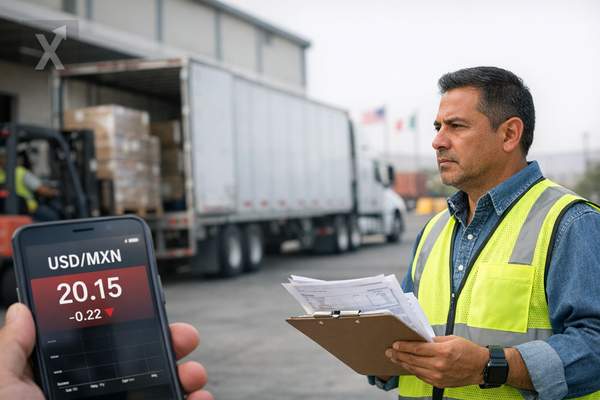
Mexican banks rely on correspondent networks to move cross-border payments, especially in U.S. dollars, given the weight of trade with the United States and the role of the global financial system. In that context, episodes like the Swiss freeze reinforce a broader trend: international banks raise their filters and demand stronger evidence of the source of funds, which can translate into longer processes, higher compliance costs, and, in some cases, the termination of relationships deemed high-risk.
In practice, this affects both large corporations and small and medium-sized businesses that import, export, or pay for services abroad. Tighter AML standards often show up as additional documentation requests, verification of ultimate beneficial owners, and transaction traceability—elements that in Mexico have become especially relevant amid the growth of digital payments, the strong momentum of remittances, and heightened monitoring of unusual activity.
At the macro level, Mexico faces a dual incentive: to preserve the integrity of its financial system to ensure smooth access to international markets and payment rails, while also preventing rising compliance costs from excluding legitimate customers or pushing transactions into informal channels. In an environment where the exchange rate and interest rates are sensitive to bouts of global volatility, perceptions of institutional strength and regulatory compliance also play a role in investor confidence.
Looking ahead, the Swiss case confirms that sanctions and preventive measures are not only foreign-policy tools, but also mechanisms that reconfigure capital flows and risk management in banking. For Mexico, the takeaway is clear: integration with global markets demands ever-higher standards of transparency and traceability, with concrete impacts on timelines, costs, and controls for any international transaction.