The Transition at the Fed and the “Warsh Factor”: What Mexico Needs to Watch on Rates, the Dollar, and Capital Flows
President Donald Trump’s announcement that he will nominate Kevin Warsh as the next chair of the Federal Reserve has reignited the global debate over the independence of the world’s most influential central bank—and the direction of interest rates in the United States. Although the nomination still must clear the Senate, the mere signal of a possible shift in the tone of U.S. monetary policy has direct implications for Mexico: from risk appetite in emerging markets to borrowing costs, the peso’s performance, and Banco de México’s strategy.
Warsh, a former Fed governor (2006–2011) with close ties to Wall Street financial circles, has sharpened his criticism of the institution in recent months and has aligned with Trump’s view of favoring lower rates to support growth. The backdrop is especially sensitive: the Fed held its benchmark rate in the 3.50% to 3.75% range at its latest meeting, while political debate in Washington has intensified amid accusations and investigations that, according to Jerome Powell himself, can be interpreted as pressure on the central bank’s independence.
For Mexico, the most immediate transmission channel runs through the exchange rate and interest rate differentials. A scenario in which the market senses political pressure to accelerate Fed rate cuts could weaken the dollar at the margin, but it could also raise the risk premium if investors fear a resurgence of inflation or an overly early easing cycle. In that balancing act, the Mexican peso typically reacts with volatility: it can benefit from flows into higher-yielding assets, but it can also suffer “risk-off” episodes if institutional uncertainty around U.S. monetary policy increases.
Mexico’s read isn’t linear because opposing forces can coexist. On one hand, Fed cuts tend to lower global funding costs and give emerging markets some breathing room. On the other, if the market concludes that the Fed’s anti-inflation credibility is eroding, Treasury yields could move higher on rising inflation expectations, tightening global financial conditions. That kind of scenario tends to hit open, financially integrated economies like Mexico’s, raising the cost of refinancing corporate and sovereign debt and making currency hedges more expensive.
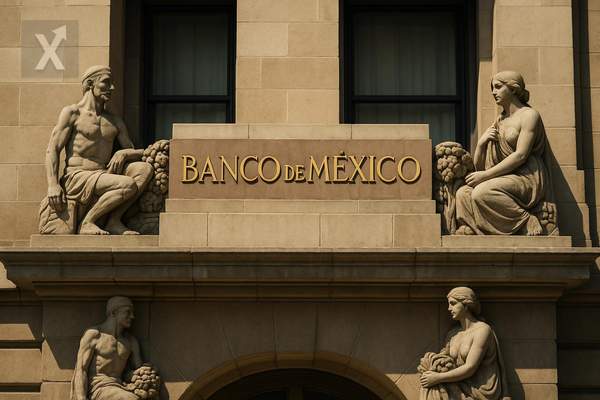
On this chessboard, Banco de México faces a calibration challenge: maintaining an inflation anchor without choking off activity. Mexico has been moving through a disinflation process with bouts of persistence in services, and the central bank has said its decisions depend on the inflation path and on differentials versus the Fed. If Washington cuts faster, Banxico could have more room to lower rates without triggering capital outflows; but if uncertainty around the Fed puts pressure on the dollar or lifts global volatility, Banxico may choose caution to avoid exchange-rate pass-through into prices.
The link extends into the real economy: a shift in U.S. rates transmits to Mexico through exports, remittances, tourism, and financing costs. Lower rates in the United States usually support consumption and investment, benefiting Mexico’s manufacturing industry integrated into North American supply chains. However, an environment of political disputes over the Fed can also cool investment decisions, affecting flows into nearshoring projects Mexico is trying to capitalize on—especially in sectors such as autos, home appliances, and electronics.
Local investors are also watching the impact on credit and banking. An orderly global easing cycle could reduce the cost of issuance and syndicated loans; by contrast, a volatility episode driven by doubts about Fed independence typically widens spreads and prompts a preference for liquidity. For Mexican companies with dollar liabilities or revenues tied to foreign trade, risk management becomes a priority: FX hedges, debt structure, and market diversification.
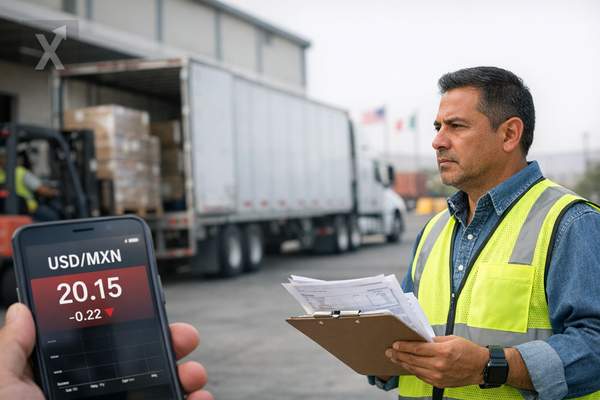
For now, the main institutional gatekeeper will be the U.S. Congress: the nomination must be confirmed by the Senate, and it is not automatic—even with a Republican majority—because some lawmakers have voiced reservations about a confrontation with the Fed. That confirmation phase could prolong uncertainty, a factor that typically shows up in short-term exchange-rate moves, particularly in the peso–dollar pair, and in portfolio shifts toward safe-haven assets.
In broader perspective, the “Warsh case” underscores that Mexico must track not only the path of U.S. interest rates, but also the institutional quality of U.S. monetary policy. In a world where inflation remains sensitive to supply shocks, geopolitical tensions, and the reconfiguration of production chains, central-bank credibility is an asset. For Mexico, the best shock absorber remains a combination of macro discipline—credible public finances, adequate reserves, and an independent central bank—and a growth strategy that raises productivity and investment, so the exchange rate isn’t the only thermometer of confidence.
In sum, Kevin Warsh’s potential arrival at the Fed opens a window of scenarios: from looser financial conditions that benefit emerging markets to bouts of volatility if central-bank independence is called into question. For Mexico, the impact will play out in the rate differential, the dollar’s behavior, inflation’s sensitivity to the exchange rate, and the continuity of nearshoring-related flows—variables Banxico and investors will be watching closely in the months ahead.