World Cup 2026: Mexico’s informal economy gears up to capture as much as $500 million
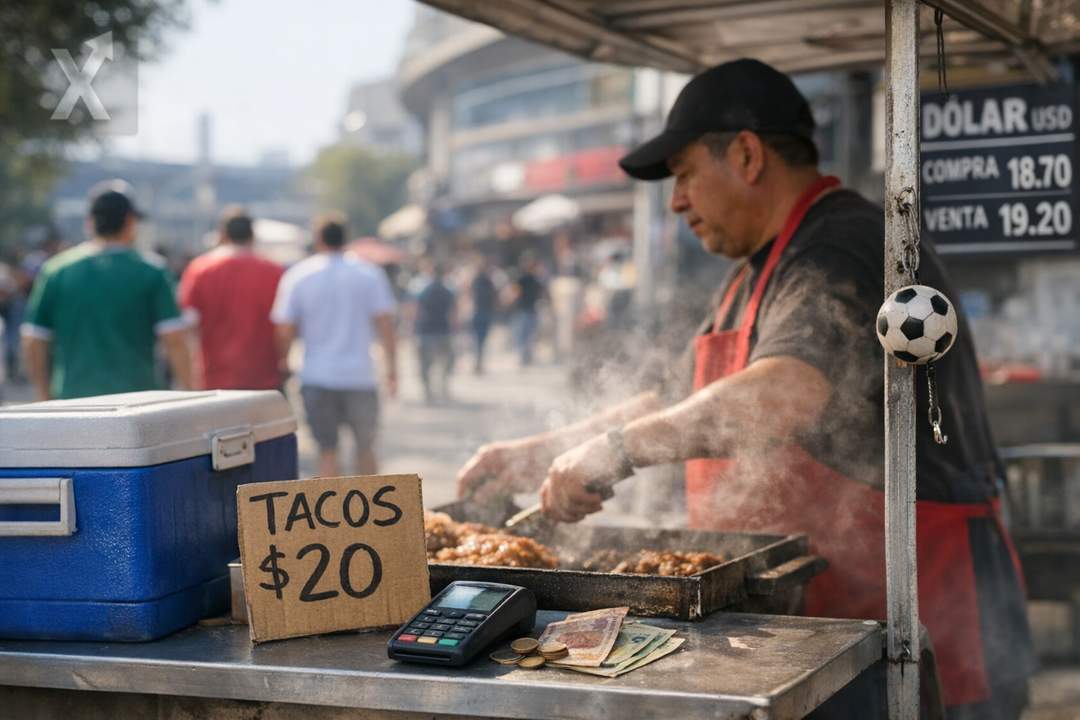
The World Cup in Mexico City, Guadalajara, and Monterrey could trigger a temporary boom in informal commerce, with revenue that doesn’t always show up in official figures.
The 2026 FIFA World Cup, with matches scheduled in Mexico City, Guadalajara, and Monterrey, won’t only boost formal hotels, airlines, and restaurants—it will also open a meaningful income window for thousands of people who work off the books. Estimates from private-sector specialists suggest the informal economy could take in between $450 million and $500 million tied to additional visitor demand and local spending during the tournament.
That figure runs alongside estimates of the impact on the formal sector—commonly cited at around $3.2 billion—and would be explained by the typical dynamics of major events: the need for low-cost services, last-minute purchases, and “street” consumption that kicks in when fans cluster in tourist areas, around stadiums, along dining corridors, and in public spaces.
The economic takeaway is clear: some visitor spending flows through banked channels and registered businesses, but another share disperses into everyday, smaller-ticket transactions—food from street stalls, unofficial souvenirs, unaffiliated guides, informal parking, and local logistics services—that tend to stay off the statistical and tax radar, even though they do affect households’ disposable income.
In Mexico, the ground for that effect is broad. Labor informality remains a structural feature of the job market: more than half of the employed population works without social security or without full registration, according to recent INEGI data. Across the three host cities, the phenomenon is also uneven: the Mexico City metropolitan area shows a high rate, Guadalajara sits in the middle, and Monterrey posts a lower level by comparison—though its commercial dynamism could pull informal supply in from nearby municipalities.
Converting $500 million into pesos at the exchange rate seen in recent months, the size of the flow looks significant at the scale of neighborhood microeconomies: it’s billions of pesos in fast-turnover consumption. Even without going directly into tax collection, it can translate into higher demand for inputs, more work hours and temporary hiring, and an increase in cash circulating in specific areas.
The tournament’s “multiplier”: cash, temporary jobs, and pressure on public space
Informal spillover tends to be amplified by three factors: the low barrier to entry (a mobile stand or personal service requires little investment compared with a formal business), the temporary concentration of demand (days with consumption spikes around matches), and the fast ability to adapt (menu changes, extended hours, location-based selling). That helps explain why, at mass events, informality doesn’t show up as a spontaneous phenomenon so much as an urban-market adjustment to extraordinary demand.
The challenge for local authorities is significant: an increase in street vending and unregulated services can create tensions around land use, mobility, waste management, and safety. At the same time, a “zero-tolerance” policy often pushes activity underground and reduces the ability to organize public space. In practice, the balance comes down to clear rules, permitted zones, coordination with boroughs and municipalities, and temporary permit schemes that prevent abuses without choking off a short-term source of income.
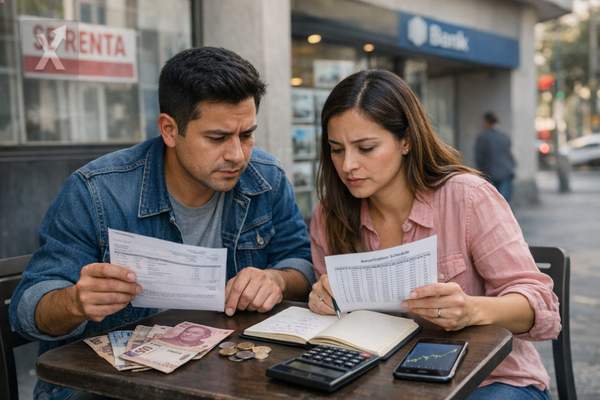
There’s also a tech dimension: today, even small businesses can enable digital payments, buy connectivity, and show matches on screens to draw customers. That modernization can lift sales, but it doesn’t necessarily mean formalization. For many families, the priority is immediate liquidity—especially in an environment where economic growth looks moderate and the cost of living—food and services—keeps pressuring budgets, even though headline inflation has cooled from recent highs.
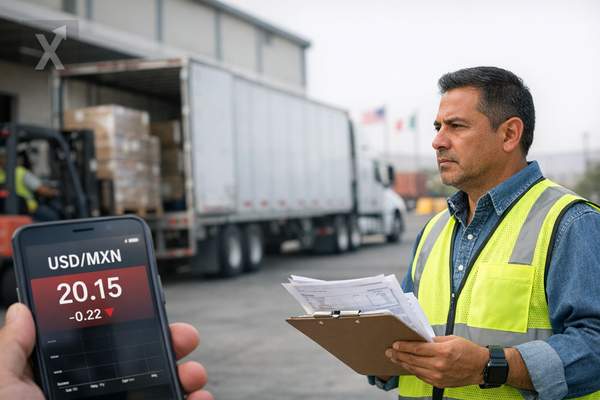
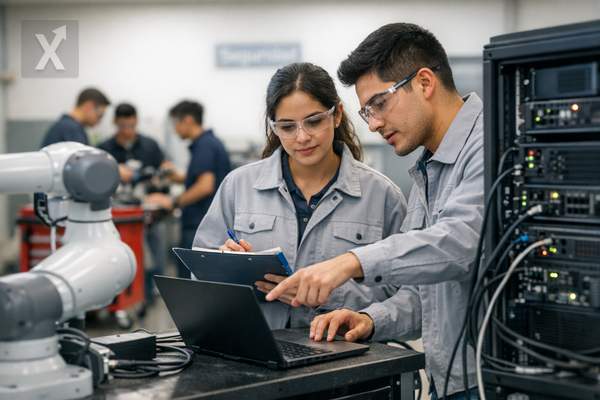
At the macro level, the World Cup will arrive as Mexico tries to sustain investment and employment amid a reshuffling of North American supply chains, with manufacturing gaining momentum in certain regions but persistent productivity gaps between the formal and informal sectors. The tournament’s spillover doesn’t change that structure on its own, but it can act as a local catalyst: it raises consumption in key areas, accelerates tourism activity, and highlights the need for efficient urban infrastructure.
The underlying question is what happens after the final whistle. If the demand spike only leaves temporary income, the effect will be short-lived. If, instead, it’s paired with access to microcredit, training, payment digitalization, and a tourism strategy that recognizes small providers as part of the value chain—without normalizing illegal activities like piracy—some share of those micro-ventures could persist and scale toward formality.
In perspective, World Cup 2026 is shaping up to deliver a visible benefit for the formal economy, but also a less measurable lift for informality that, even if it doesn’t fully show up in public accounts, will affect the day-to-day lives of thousands of workers in the host cities. The key will be managing the boom with urban order and building bridges so extraordinary income translates into longer-lasting opportunities.