Treasury Cuts IEPS Fuel Tax Relief, Raising the Tax Burden on Gasoline and Diesel
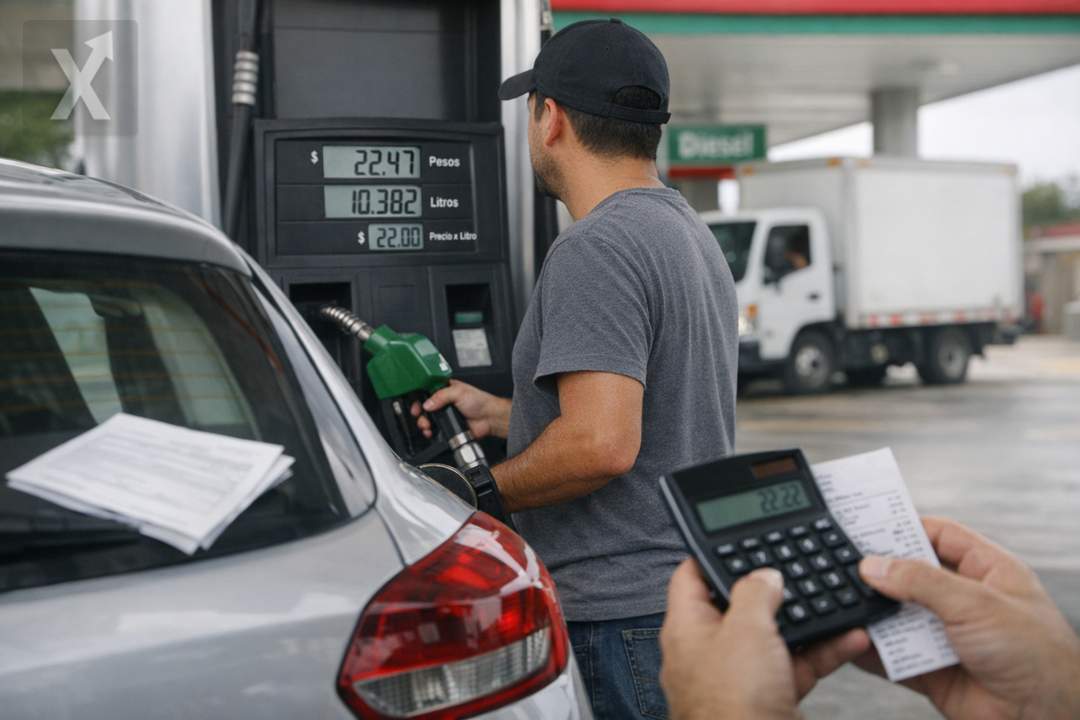
The reduction in IEPS tax relief increases the per-liter tax and puts upward pressure on fuel prices, with potential effects on inflation and logistics costs.
Mexico’s Ministry of Finance and Public Credit (SHCP) reduced the tax incentives (relief) applied to automotive fuels, which translates into higher collections of the Special Tax on Production and Services (IEPS) per liter for the week of May 30 to June 5, according to what was published in the Official Gazette of the Federation (DOF). The adjustment means a larger portion of the tax is passed through to the final price, amid international energy volatility and intermittent pressure on transportation costs.
For regular gasoline (Magna), the IEPS per-liter tax rises to 4.80 pesos per liter from 3.26 pesos the prior week, after the stimulus stood at 28.3% (a discount of 1.89 pesos). For premium gasoline, the tax increases to 4.69 pesos per liter from 3.19 pesos previously, with a 16.9% stimulus (0.96 pesos per liter). For diesel, the tax climbs to 3.96 pesos per liter from 2.62 pesos, although it still retains the largest relative support with a 46.2% stimulus (3.40 pesos), down from the 64.3% seen the immediately preceding week.
In practical terms, the IEPS stimulus works as a fiscal “shock absorber”: when international crude prices, refined fuel prices, or the exchange rate move higher, the Finance Ministry can temporarily reduce the tax burden to moderate the impact on consumers. When the stimulus is cut, the effective tax rises and—if there are no other offsetting factors (such as declines in international quotes)—the risk of upward pressure on pump prices increases.
The adjustment comes at a time when the global energy market remains sensitive to geopolitical events and shifts in supply-and-demand expectations. For Mexico, consumer price performance also has direct implications: energy items influence the non-core component of inflation and spill over into distribution and logistics costs, particularly through diesel, which is key to freight transportation.
Implications for Inflation, Consumption, and Public Policy
The cut in tax relief could affect short-term inflation if it shows up as higher prices at gas stations. While headline inflation depends on multiple categories, fuels often generate visible and rapid changes, with second-round effects on freight costs and food prices. In a country where a significant share of consumer goods travels long distances by road, diesel is especially important: higher transportation costs can translate into pressure on retail chains and producers, particularly if the adjustment persists.
From a fiscal standpoint, the IEPS on fuels is an important component of tax revenue. Reducing the stimulus tends to improve tax receipts compared with a scenario of broader subsidies, which can help sustain deficit and spending targets without resorting to additional borrowing. However, the room for maneuver is not unlimited: an excessive and prolonged pass-through to consumers can weigh on purchasing power and consumption momentum, especially for households that rely more heavily on private transportation or in regions where logistics make basic goods more expensive.
For public policy design, the episode underscores a recurring dilemma: stabilizing prices through tax relief carries a fiscal cost, while pulling it back can increase perceived inflation and production costs. In recent years, Mexico has used this mechanism frequently to smooth external shocks, but its effectiveness depends on the path of oil prices, the exchange rate, and the country’s refining and fuel import capacity—variables that remain subject to risk.
Looking ahead, the performance of international crude and refined gasoline prices, as well as the peso’s trajectory and inflation expectations, will be key to assessing whether the Finance Ministry maintains the cut or expands tax relief again. For now, the increase in IEPS rates raises the likelihood of upward adjustments in pump prices and keeps fuels on the watch list as a factor in inflation and the economy’s operating costs.






