Monte de Piedad Enters Its Sixth Month on Strike: The Labor Clash Shutting Down 301 Branches and Squeezing Popular Credit
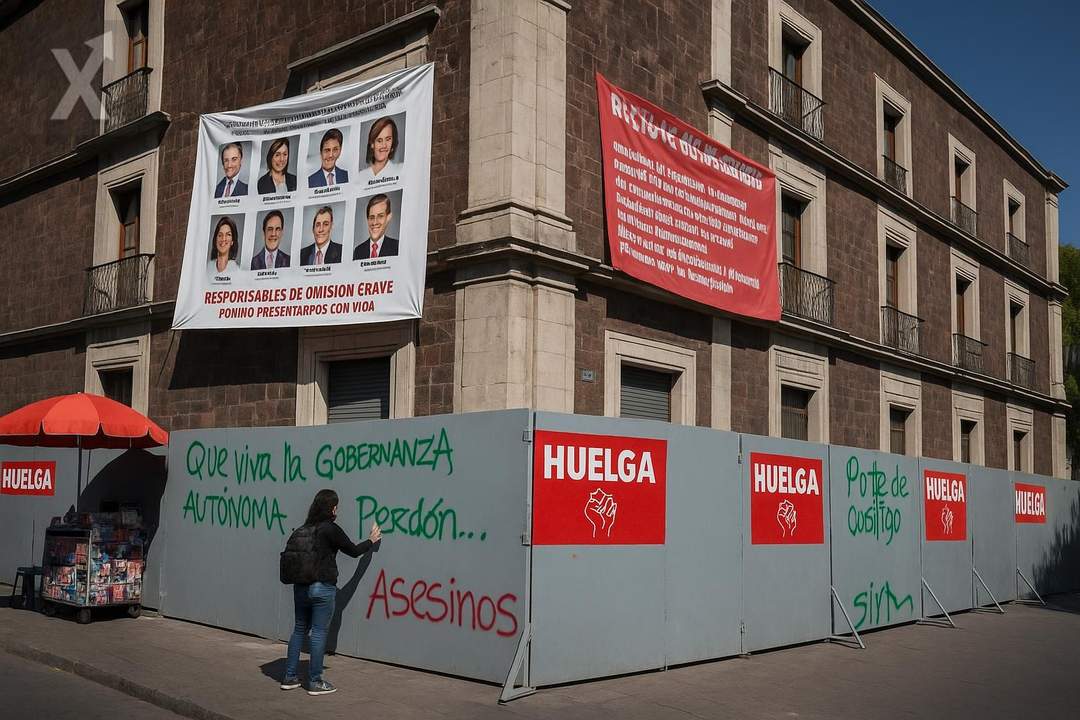
The strike at Monte de Piedad is nearing the six-month mark, with a contested court ruling and stalled negotiations that have kept 301 branches closed.
The strike at Nacional Monte de Piedad is on track to hit the half-year mark with no clear path to resolution. What began as a labor dispute has spilled well beyond strictly union matters and is now a friction point for pawn-based lending and short-term consumption for thousands of families. With 301 branches shuttered nationwide, the institution—one of the main alternatives for quick cash through pawning and renewals—remains at a standstill as the union and management hold opposing positions on promotion rules, control over job slots, and operational reorganization.
The company argues that the core disagreement is not about cutting benefits, but about redesigning how openings and promotions are assigned. It says it wants to shift to a more automated and transparent system for allocating positions, based on skills and open applications, replacing a setup in which the union had direct influence. On the other side, the union has maintained the strike call on the grounds of alleged violations of the collective bargaining agreement, without—according to management—providing conclusive evidence at the negotiating table.
The operational impact is significant: in a typical month, Monte de Piedad processes around 600,000 transactions, so a prolonged closure creates a “bottleneck” for customers who use pawn loans as bridge financing to cope with income shocks, medical bills, school tuition, or emergencies. In an environment where inflation has eased from recent peaks but the cost of living still strains household budgets and interest rates remain relatively high, pawn credit often serves as a liquidity valve for households with limited access to bank financing.
Pawn Credit and Household Finances: Why a Strike Can Shift the Rhythm of Consumer Spending
In Mexico, pawning remains a widely used form of very short-term financing, especially among groups with lower levels of banking access or volatile income. When a large-scale institution suspends operations, some demand shifts to other formal or informal pawnshops, and some simply turns into less immediate spending. This is felt more sharply during highly seasonal consumption periods (back-to-school, year-end) or when formal employment slows. In addition, a prolonged shutdown complicates renewals and customers’ timing, increasing uncertainty about recovering pledged items—even when legal and administrative mechanisms exist to protect users’ rights.
On the legal front, the conflict took a meaningful turn when a federal judge ruled the strike “nonexistent” on February 20, 2026, finding that the union may not have met internal requirements to call and vote on the work stoppage with its rank-and-file members. However, the decision did not end the case: the union filed an appeal before a Collegiate Court, which keeps the strike in effect and raises the possibility that the outcome could stretch an additional three to six months, depending on the ruling. If the court upholds the decision, work would resume; if it overturns it, the stoppage would continue under the applicable legal framework.
In parallel, on March 23 management presented a comprehensive proposal that includes: a strike-ending assistance bonus equal to 52% of wages for the months elapsed since the conflict began; a 5.3% wage increase; a redefinition of staffing plans with no layoffs; the creation of new positions (with salaries still to be negotiated); extra pay for dual-role assignments; and the preservation of union benefits. The company says the redesign would be gradual and would not involve cuts; it also acknowledges, however, staff separations stemming from the strike, mainly among non-union workers.
The stalemate led the institution to request intervention from the labor authority through mandatory arbitration, a mechanism intended to close the gap when the parties can’t reach an agreement on their own. In practice, this route can speed up an institutional exit—but it also raises tensions: for the union, it can be seen as a loss of negotiating leverage; for the company, as an attempt to restart a critical operation in a market where efficiency and service continuity are essential.
Beyond this specific case, the episode comes at a time when Mexico’s labor market is facing competing pressures: on one hand, the debate over productivity, formalization, and process modernization; on the other, the defense of traditional models of representation and internal control in workplaces with strong collective bargaining agreements. In the non-bank financial sector—where much of pawn lending sits—digitalization and process traceability have become central to competing, lowering operating costs, and meeting control standards, increasing the number of flashpoints when these changes disrupt entrenched workplace practices.
Looking ahead, the judicial outcome and any eventual mediation by the labor authority will be decisive not only for reopening branches, but also for setting a precedent on how operational changes are implemented in institutions with a long union tradition and broad national coverage. The immediate economic risk lies in how long the shutdown lasts and the hit to customer trust; the structural risk is that a lack of agreement delays investment and modernization in a segment that meets the liquidity needs of millions of people.
In short, the strike at Nacional Monte de Piedad combines litigation with labor implications, a clash over career-path rules, and a service disruption that reverberates through household finances. How long it takes to resolve—and how it’s resolved—will be key to gauging the social cost of the stoppage and the direction of modernization in Mexico’s pawn-lending market.






