U.S. Tariffs Lift Revenue and Narrow the Deficit: Mixed Signals for Mexico on Trade and Investment
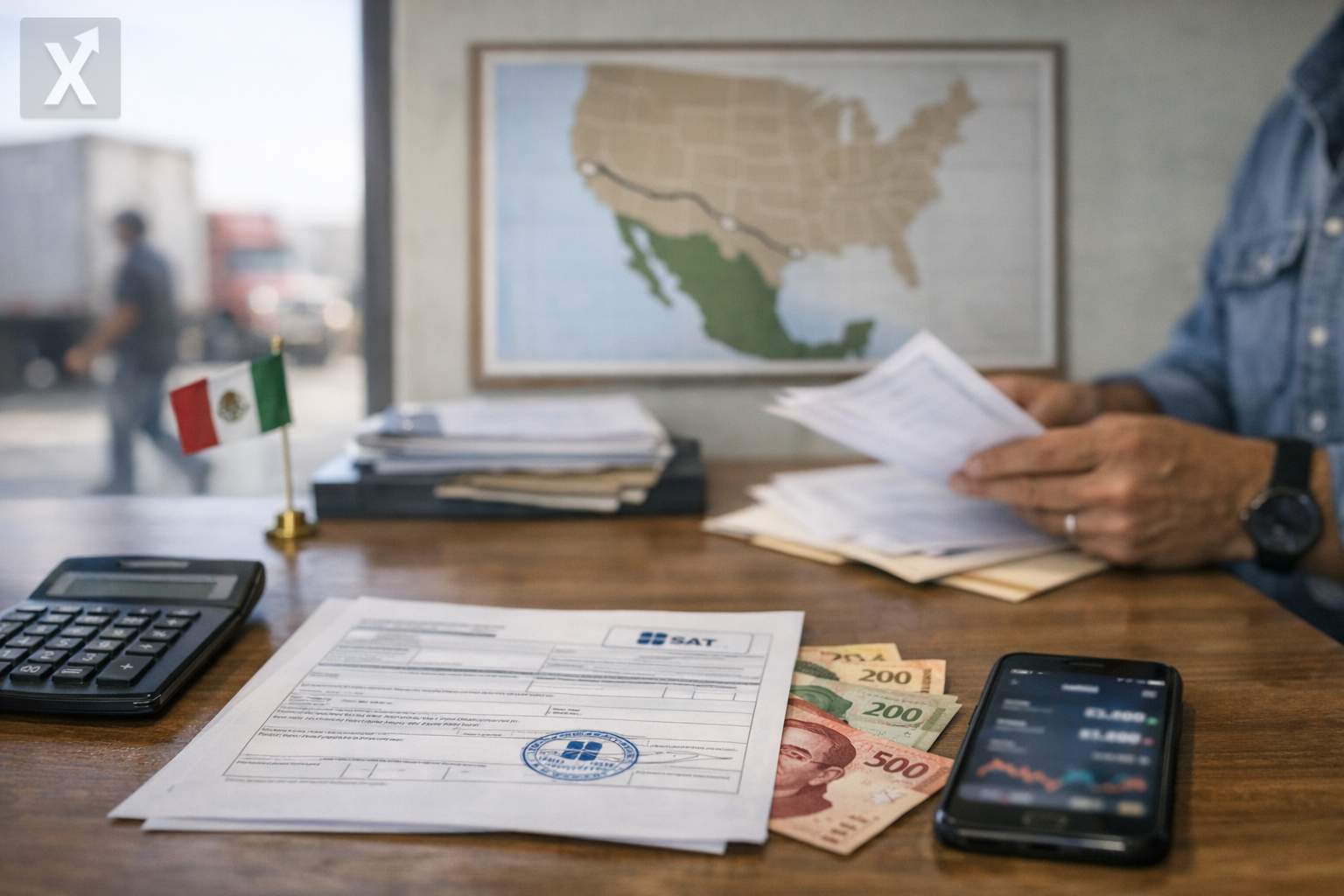
The U.S. fiscal deficit posted a reduction in the fourth quarter of 2025, supported by higher tax collections in which customs duties stood out, according to information from the Treasury Department. The figure matters for Mexico not only because of the weight of the U.S. market in Mexico’s exports, but also because it points to a potentially more volatile trade environment in the near term.
According to the report, the deficit fell 15% versus the fourth quarter of 2024, from $711 billion to $602 billion. At the same time, total revenue rose 13% to $1.2 trillion, while spending increased 2% to $1.8 trillion; both came in at record levels. By component, customs-duty collections surged, jumping from $23 billion to $94 billion, driven mainly by higher tariffs.
The rise in foreign-trade revenue comes amid an expansion of broad-based tariff measures by the U.S. administration. While the fiscal improvement can be read as a temporary strengthening of U.S. public finances, the mechanism—more tariff revenue—often passes through to prices, reshapes supply chains, and raises costs for importing companies, with spillover effects that can hit closely integrated trading partners like Mexico.
For Mexico’s economy, the most immediate channel is trade. Mexico remains highly dependent on U.S. demand, especially in manufacturing tied to the auto industry, electronics, electrical equipment, and medical devices. Even though the USMCA provides a framework of relative certainty, recent years have shown that the use of tariffs, quotas, or administrative measures can increase operating uncertainty, raise input costs, and strain delivery times—critical factors in “just-in-time” production models.
On the macroeconomic front, an environment of greater trade frictions could affect Mexico’s external balance through several channels: (1) changes in export volumes if certain sectors face barriers; (2) shifts in relative prices if imported inputs become more expensive; and (3) a reconfiguration of investment across North America. Mexico has sought to capitalize on nearshoring—the relocation of productive processes to the region—but whether those flows materialize depends on conditions such as adequate energy supply, security, logistics infrastructure, water availability in industrial hubs, and regulatory certainty.
In financial markets, U.S. trade-policy signals also matter because they can affect inflation and rate expectations. If tariffs fuel inflationary pressures in the United States, the Federal Reserve may keep monetary policy tighter for longer, raising the global cost of financing. For Mexico, that translates into an environment in which Banco de México has to calibrate rate cuts cautiously so as not to reignite pressure on the exchange rate or inflation, particularly in a country where exchange-rate pass-through can be meaningful for certain imported goods.
Looking ahead, the net effect for Mexico will depend on the specific implementation of the tariffs and on possible exemptions or rules-of-origin provisions under the USMCA. Higher U.S. customs collections suggest the measures are already having a measurable impact on trade flows. For Mexican companies, the challenge will be to strengthen compliance with rules of origin, diversify markets where viable, and accelerate productivity and logistics investments to remain competitive. For the country, the issue also ties into the domestic agenda: fiscal consolidation, public investment in infrastructure, and a business environment that makes it possible to seize relocation opportunities without raising structural costs.
In short, the narrowing of the U.S. deficit driven by higher revenue—particularly from tariffs—offers a near-term snapshot that combines relative fiscal discipline with greater protectionism. For Mexico, the data point signals that trade with its main partner could face episodes of greater friction, making it even more valuable to bolster competitiveness, certainty, and logistics capacity to sustain exports and investment in a more demanding external environment.






