Trump Again Casts Doubt on the USMCA and Ratchets Up Pressure on Mexico Ahead of the Trade Review
Washington’s threats revive uncertainty around the USMCA at a pivotal moment for investment, exports, and regional supply chains.
Remarks by U.S. President Donald Trump have reopened the debate over the future of the United States–Mexico–Canada Agreement (USMCA) just as the review built into the deal draws near—a process that could set the tone for North America’s economic relationship in the years ahead. By saying he “doesn’t need anything from Mexico or Canada” and that he has not yet decided whether he will support keeping the agreement in place, the president returned to a familiar playbook: using the threat of withdrawal as leverage at the bargaining table.
The USMCA governs close to $2 trillion in regional trade each year and, for Mexico, it serves as an anchor for the export sector—one of the main engines of growth over the past decade. In this context, any sign of a break or a deep renegotiation tends to raise the risk premium, fuel volatility in investment decisions, and force companies to recalibrate production, logistics, and sourcing plans across the region.
Trump argued that the agreement “granted the right to terminate it” and renewed criticism of the old NAFTA, while his administration has signaled it will push to debate sensitive issues such as rules of origin, the auto industry, steel and aluminum, as well as agricultural disputes. In practice, Washington has significant leverage because of the size of its market; however, it also faces potential costs: disrupting the trade framework would hit integrated supply chains, input prices, and production schedules in sectors like autos, where manufacturing depends on just-in-time cross-border flows.
For Mexico, the challenge is twofold. On the one hand, it must defend preferential access and clear rules that have supported the relocation of investment (nearshoring) into the country. On the other, it must show it can manage recurring friction—ranging from regulatory interpretations to sector-specific disputes—without triggering a prolonged period of uncertainty that chills projects already in the pipeline.
What’s at Stake for Mexico’s Economy: Investment, Export Jobs, and Nearshoring
The USMCA review is arriving as Mexico seeks to lock in growth driven by manufactured exports and the attraction of productive capital. In recent years, the country has strengthened its role as an export platform to the United States, especially in vehicles, auto parts, electronics, electrical equipment, and a broad range of manufactured goods. An environment of doubt around the agreement can delay investment decisions, because companies place a premium on legal certainty and stable rules of origin when choosing where to locate production lines, suppliers, and distribution centers.
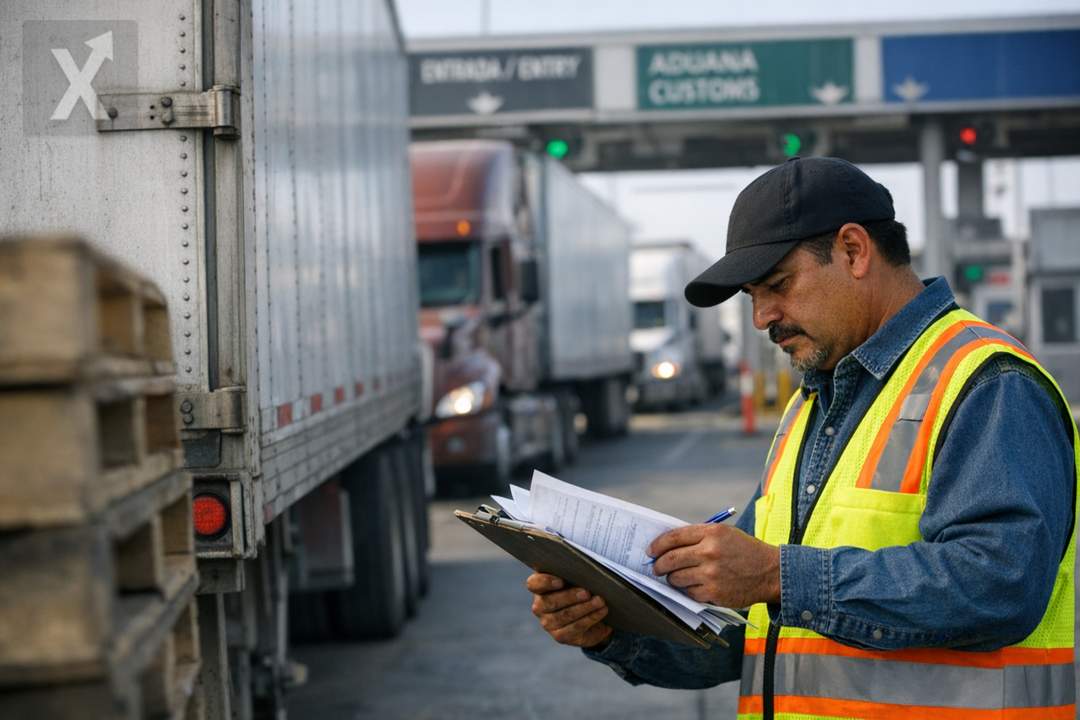
On top of that, the debate is unfolding as Mexico faces internal bottlenecks that limit its ability to fully capitalize on nearshoring: energy availability, electricity transmission capacity, water supply in industrial hubs, border logistics, and security along freight corridors. In that sense, even if the agreement remains in place, the pace of new investment may hinge on how quickly these obstacles are addressed and on regulatory clarity for strategic industrial projects.
At the macroeconomic level, a bout of trade tension with the United States typically transmits through business expectations and financial conditions. Exporters can hedge, but if the noise escalates, hedging costs rise and companies become more cautious about hiring and machinery purchases. Domestic consumption—which has been supported in recent years by employment and remittance inflows—does not necessarily offset an export slowdown if uncertainty drags on.
On the political-economy front, Mexico and Canada have expressed interest in extending the agreement for another 16 years, signaling that they want stability to plan long-term investment. By contrast, Trump’s rhetoric suggests the USMCA’s continuity will be used as a bargaining chip to extract concessions in areas where the United States sees disadvantages—particularly trade deficits and strengthening regional content in manufacturing.
The next phase, beyond the formal start date of the review process, will be determining whether this is a technical tune-up with new commitments or whether it turns into a broad renegotiation. In the best-case scenario, an orderly update could deepen regional integration and bolster North America’s competitiveness against Asia and Europe. In the worst case, the threat of withdrawal could become a cycle of uncertainty that slows investment and complicates private-sector planning.
In perspective, the central message is that the USMCA is once again a meaningful risk factor for Mexico’s economy: its continuity affects not only trade, but export-related employment, industrial relocation, and long-term confidence. The outcome will depend on political negotiation, but also on Mexico’s ability to sustain a domestic agenda that makes its productive chains more competitive.