U.S. Justice Department Closes Probe Into Jerome Powell, Renewing Focus on Fed Independence: Implications for Mexico
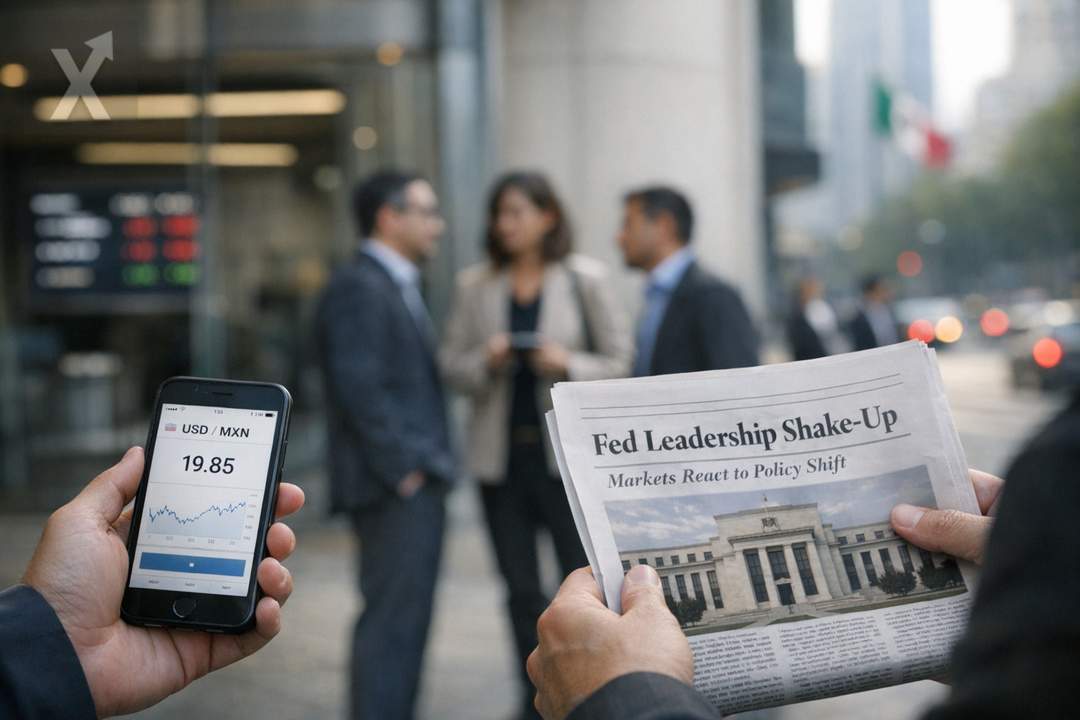
Ending the investigation into Jerome Powell removes a source of political noise around the Fed, but Mexico will remain focused on U.S. interest rates and the exchange rate.
The U.S. Department of Justice has closed a criminal investigation related to Federal Reserve Chair Jerome Powell—a decision that eases immediate institutional pressure on the world’s most influential central bank and clears political runway for the Senate to move forward with confirming Kevin Warsh as a potential successor. The episode unfolds amid tensions between the White House and the Fed, including repeated criticism from President Donald Trump over the pace of rate cuts and cost overruns tied to the renovation of the central bank’s headquarters.
Although the case began in Washington, its outcome carries global implications: the Fed’s leadership and perceived autonomy directly affect international financial conditions, risk appetite, and the behavior of the U.S. dollar—variables that often move Mexico’s exchange rate and the cost of funding for both the government and businesses.
Attorney General Jeanine Pirro said that while the criminal track has been shelved, the Federal Reserve’s inspector general will continue reviewing the renovation project’s costs, and she left open the possibility of reopening a criminal investigation if new information emerges. In parallel, the White House reiterated its expectation that the Senate quickly confirm Warsh, at a time when some lawmakers had conditioned progress on resolving the matter.
In recent months, Powell had publicly defended the Fed’s operations against claims of political interference and, according to the debate in Washington, even suggested he might temporarily remain beyond the end of his term to address the investigations. With the criminal case closed, attention returns to the core question: how credible the next Fed leadership’s commitment will be to its dual mandate (inflation and employment) and to financial system stability.
Implications for Mexico: the exchange rate, interest rates, and borrowing costs
For Mexico, the main transmission channel is financial. Shifts in expectations for the path of U.S. rates tend to show up in the peso’s valuation against the U.S. dollar and in domestic rates. If markets conclude the Fed could tilt toward faster cuts due to political pressure, volatility could rise: in the short run, lower U.S. rates often support flows into emerging markets; but if investors read the situation as weakening the central bank’s independence, the effect can reverse—pushing up the risk premium and strengthening the dollar during bouts of risk aversion.
Banxico, which has tried to anchor inflation expectations and preserve interest-rate differentials consistent with financial stability, faces a recurring dilemma: cutting too quickly in Mexico can narrow the spread versus the United States and put pressure on the exchange rate; cutting more gradually can keep monetary conditions restrictive for longer, weighing on consumption, investment, and the cost of credit. In practice, the Fed sets the global financial “floor,” while core inflation and the peso’s behavior shape how much room Mexico’s monetary policy has to maneuver.
In addition, Mexican companies’ external funding costs—especially for issuers with dollar-denominated debt—depend on the level of U.S. rates and the sovereign spread. Uncertainty about Fed governance can increase volatility in Treasury yields, making hedges and refinancing more expensive even if the overall direction of rates appears to be downward.
On the real side of the economy, Mexico remains deeply integrated with the United States through trade, investment, and remittances. If new Fed leadership or perceptions about its independence alter the U.S. business cycle, that will also change the pace of demand for Mexican exports—particularly in manufacturing tied to autos, electronics, and electrical equipment. In that sense, it’s not just about the exchange rate: a slowdown or acceleration in the United States tends to filter into Mexico’s industrial activity, formal employment, and tax revenues.
Looking ahead, analysts in Mexico will be watching two signals closely: first, the tone of Warsh’s confirmation process and his message on autonomy; second, the consistency between U.S. inflation and employment data and the Fed’s decisions. From there, markets will calibrate the path of the U.S. dollar and financial volatility—factors that often influence expectations for imported inflation in Mexico and, by extension, Banxico’s policy debate.
In sum, closing the investigation removes one source of political friction around the Fed, but it does not end the debate over its independence. For Mexico, the most relevant effect will remain how U.S. rates and risk perception evolve—variables that shape the peso, financing conditions, and Banxico’s room to maneuver.






