Mexico Assembles a “War Room” for the USMCA Review as the U.S. Industrial Shift Accelerates
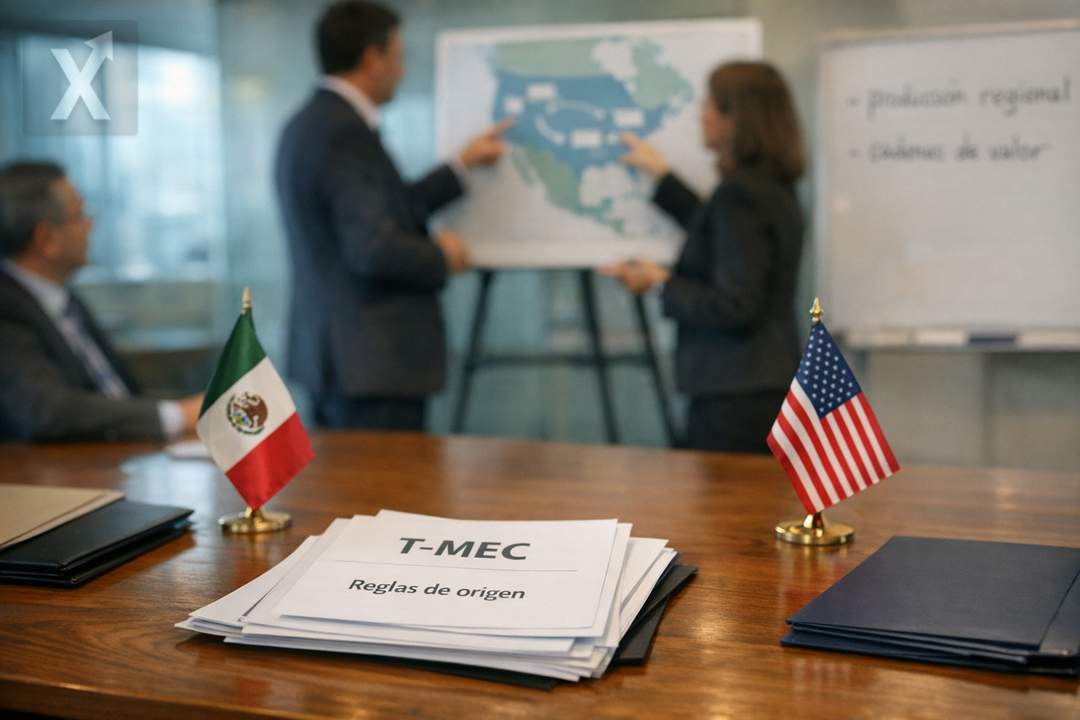
Mexico heads into the USMCA review with an expanded team and the goal of strengthening regional production amid a tougher negotiating environment.
Mexico is gearing up for a review of the United States–Mexico–Canada Agreement (USMCA) with more political and technical weight than in past rounds, at a time when North America’s trade relationship is being reshaped by economic security priorities, supply-chain relocation, and more active industrial policies. Economy Secretary Marcelo Ebrard said the process will be complex and confirmed that the federal government has assembled an expanded team to take on the most sensitive chapters, with formal talks expected to begin on May 26.
Mexico’s strategy starts from a core premise: preserve the certainty the agreement has provided for trade and investment—especially in a country where manufactured exports are a key engine of growth—while adapting to an environment in which the United States is placing greater emphasis on regional content, rules of origin, and defensive measures aimed at Asia. For Mexico, the review also comes amid mixed signals in the economy: moderate growth, selective private investment, infrastructure strain in industrial regions, and an energy-transition agenda that is still taking shape.
Ebrard said that, under presidential instructions, the team includes officials from multiple areas to cover an agreement with many fronts: agribusiness, advanced manufacturing, services, logistics, and telecommunications. Confirmed participants include Agriculture Secretary Julio Berdegué; Altagracia Gómez, coordinator of the Business Advisory Council; Roberto Lazzeri, CEO of development banks Nafin and Bancomext; and Diana Alarcón, Mexico’s representative to the World Bank. Roberto Velasco from the Foreign Affairs Ministry could also join if needed.
The government says it is arriving with technical progress in addressing U.S. concerns, though it acknowledges that new issues have emerged. In practice, the review will unfold under added pressure: Mexico’s export performance has grown on the back of preferential access to the U.S. market, so any change in rules, verification, or compliance criteria can affect costs, border-crossing times, and investment plans.
From Free Trade to Industrial Policy: the USMCA’s New Math
The backdrop to the negotiations is the shift in U.S. approach: rather than expanding trade liberalization, Washington is aiming to reinforce domestic and regional capacity through incentives, government procurement, controls, and origin screens. That translates into recurring tensions over what counts as “North American content,” how it is certified, and which sectors face heightened scrutiny. For Mexico, the opportunity is clear: attract more production links in strategic industries. The risk is that rules tighten enough to raise frictions—especially for integrated companies that rely on global inputs.
In sectors such as semiconductors, pharmaceuticals, and electronics, dependence on Asia remains very high. Mexico is looking to increase its role as a regional supplier, leveraging its manufacturing base, logistical proximity, and export experience. Still, making that leap requires sustained investment in reliable energy, water, transportation, specialized talent, and regulatory certainty. In the short run, the tariff differential versus Asian competitors has acted as a tailwind for Mexico; in the medium term, the challenge will be turning that advantage into a platform for innovation and value added—not just assembly.
In the agricultural chapter, the Mexican team is flagging sensitive products that often trigger disputes due to seasonality, sanitary measures, or allegations of unfair competition. Agriculture’s direct involvement is meant to anticipate disputes and, as much as possible, protect the flow of trade that supports jobs in export-oriented regions. At the same time, bringing private-sector voices into the effort suggests a strategy focused on aligning industrial priorities with the day-to-day realities of supply chains and their costs.
For markets, the USMCA review intersects with two domestic variables: the need to speed up investment in industrial infrastructure (parks, customs facilities, rail, ports, and border crossings) and the continuity of a stable macroeconomic framework. Mexico has generally maintained fiscal discipline and a solid financial system, but it faces the challenge of raising potential growth and productivity. In that sense, the outcome of the negotiation can influence nearshoring decisions, the appetite for expanding existing plants, and the pace of new manufacturing projects.
Looking ahead, the review’s performance will depend as much on negotiating skill as on Mexico’s ability to show it can increase regional content without losing competitiveness. If the understanding moves toward clear, workable rules, Mexico could cement its role as an export platform to the United States; if a more restrictive approach prevails, the cost could show up in higher compliance requirements and a more uncertain environment for trade-linked investment.
In short, Mexico is heading into the USMCA review with a strengthened team and a message centered on regional production; the challenge will be balancing the United States’ new industrial priorities with the certainty and competitiveness that North America’s integrated supply chains demand.






