Afores in Mexico: From Government Bonds to Infrastructure—How Retirement Savings Are Put to Work
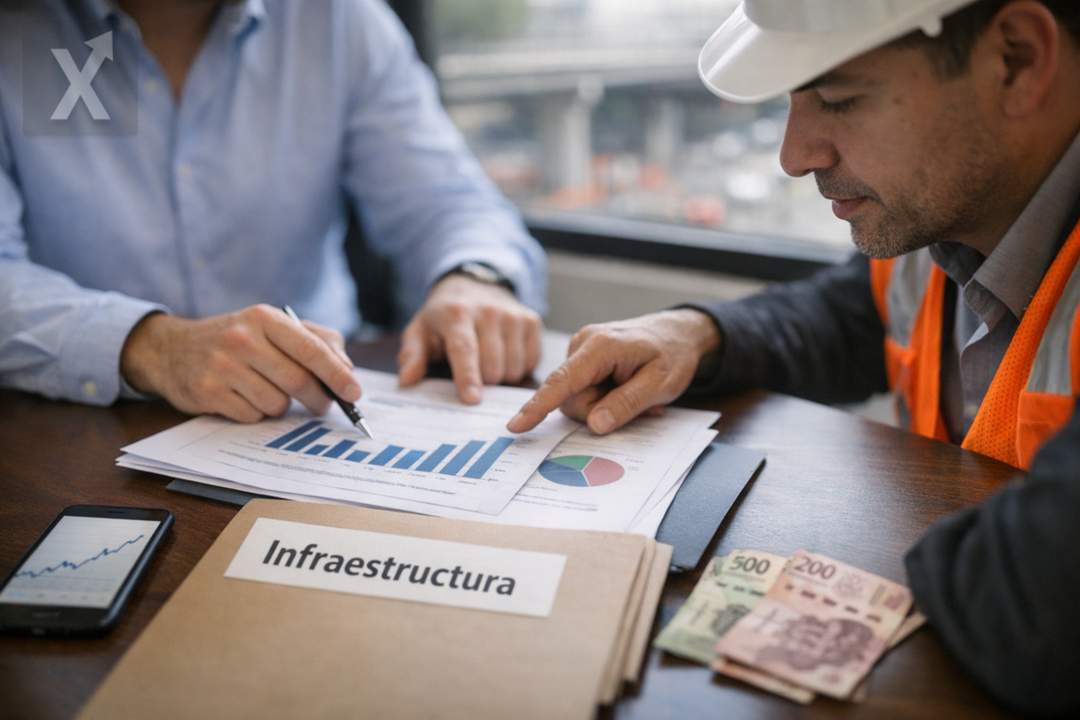
Afores already finance everything from public debt to productive projects, and today’s debate focuses on how to expand infrastructure investment without increasing risk.
The public debate flared up again following approval to issue the Law to Promote Investment in Strategic Infrastructure for Development with Well-Being, which contemplates using resources linked to retirement savings for public-works projects. The issue has sparked criticism and questions among workers, analysts, and market participants, but it also brings back a fact that often gets lost in the debate: for years, the money managed by Afores has not sat “idle.” It is invested in a diversified way across financial instruments that include debt, equities, and infrastructure-linked vehicles.
In Mexico, Afores operate through Specialized Investment Funds for Retirement (Siefores), which are responsible for managing portfolios with a long-term approach and investment mandates tailored by generation. In practical terms, this means the risk profile and asset mix tend to be more aggressive for younger workers and more conservative as retirement age approaches, aiming to balance returns and stability.
According to system figures, as of February 2026 Siefores managed about 8.67 trillion pesos, tied to roughly 69.9 million accounts. Proportionally, that is a volume equivalent to about a quarter of GDP, making retirement savings one of the country’s main institutional investors and, therefore, a relevant factor in financing both government and companies.
The composition of these investments helps explain why the infrastructure debate is not starting from scratch. In the infrastructure bucket, more than one trillion pesos is reported in instruments such as private debt, FIBRAs (Mexican REITs), and structured vehicles, in addition to positions in highways and other related assets. This allocation, however, takes place under prudential rules and regulatory caps designed to avoid excessive concentration and to maintain liquidity and diversification.
The portfolio also includes exposure to the energy sector and private-sector activities, as well as resources allocated to domestic equities and participation in initial public offerings, which tend to be investments more sensitive to the economic cycle and market sentiment. At the same time, a substantial portion remains in government instruments, a component that has historically provided stability and a clear valuation benchmark, especially when financial volatility rises.
In parallel, the Siefores maintain a predominantly long-term strategy. Available figures show that a small share is concentrated in horizons of 0 to 3 years, while most is spread across maturities from 5 to more than 20 years. This duration is consistent with the nature of the system: the liabilities—retirement—occur over decades, and the investment horizon makes it possible to absorb short-term fluctuations, though it does not eliminate the impact of episodes of high rates, inflation, or equity-market declines.
Another relevant component is investment in foreign securities, which remains within established limits. This international window serves two purposes: diversification against local risks and access to sectors and issuers that do not exist—or are limited—in the Mexican market. In recent years, portfolio performance has depended to a large extent on global interest-rate levels, the strength of the economic cycle, and the behavior of currencies and international markets, adding layers of complexity to management.
Infrastructure: Return opportunity, but with demanding corporate governance
Infrastructure is often presented as an attractive investment for retirement funds due to its potential for relatively stable cash flows and long horizons, but its suitability depends on how projects are structured. The critical point is not just to “invest more,” but to ensure robust selection processes, contract transparency, clear execution rules, independent risk evaluation, and mechanisms that align incentives among sponsors, managers, and workers. In a context in which Mexico is seeking to spur investment amid the reshoring of supply chains and growing needs for energy, water, transportation, and logistics, the temptation to fast-track projects is high; however, any weakening of governance standards can translate into losses or insufficient returns for individual accounts.
In addition, the macroeconomic environment adds pressure to the discussion. With a country trying to maintain fiscal discipline, finance infrastructure needs, and at the same time strengthen private investment, retirement savings can look like a large institutional “pocket.” But from a financial perspective, it is not a public fund available for use: these are workers’ resources that require competitive returns and risk control, with oversight and rules that preserve the private property nature of those savings.
In recent years, the total amount managed by Afores has increased significantly—even doubling over the 2020–2026 period—though with a slowdown in the average annual growth rate. This reflects both the rise in accumulated savings and the effect of valuations, contributions, and returns, in an environment in which interest rates and inflation have moved through pronounced cycles, with direct implications for bond values and the performance of diversified portfolios.
In terms of implications, expanding financing toward infrastructure could help close productivity gaps and raise competitiveness if done with solid financial structures, profitable projects, and accountability frameworks. Conversely, if nonfinancial criteria are prioritized or controls are loosened, the potential cost would be borne by workers’ net returns—especially in a country where pension adequacy remains a challenge due to contribution density, labor informality, and intermittent contribution histories.
Overall, the debate is not about whether Afores “can” invest in infrastructure—because they already do—but under what rules, with what transparency, and with what balance between development goals and protection of savings. The legislative and regulatory discussion that follows will be decisive in determining whether the system strengthens its ability to finance productive projects without compromising its central objective: maximizing workers’ future well-being through risk-adjusted returns.






