SAT Suspends In-Person Service at Offices in Four States Over Security Concerns, Increasing Pressure on Tax Filings
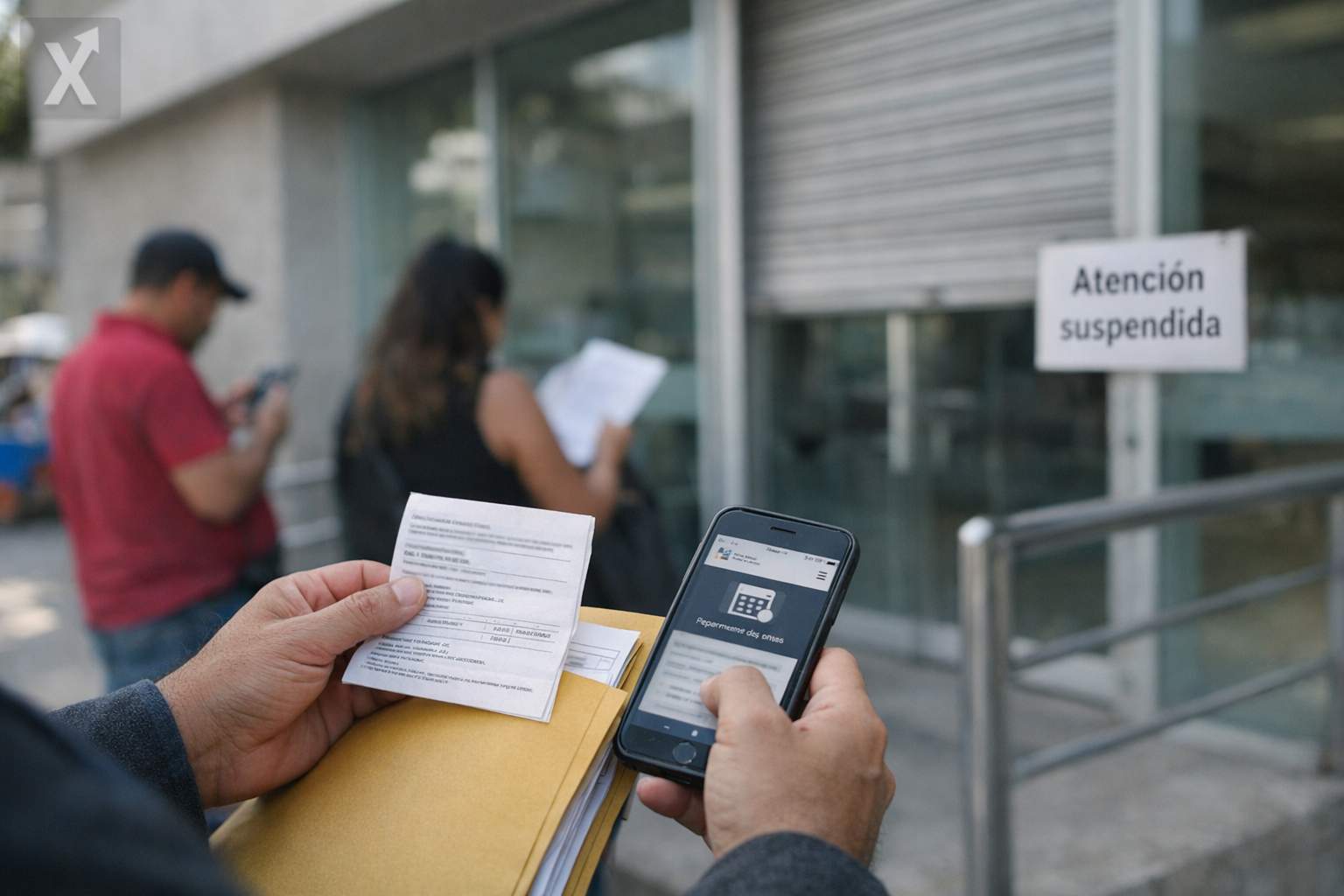
The temporary closure of SAT offices in western Mexico reignites the debate over operational continuity and the digitization of tax services.
The Tax Administration Service (SAT) announced it will suspend in-person service this Monday, February 23, at 20 offices located in Jalisco, Michoacán, Nayarit, and Colima, amid deteriorating security conditions. The decision includes the closure of Regional Tax Administrations and Tax Service Modules in key cities across the region, with a promise to reschedule already confirmed appointments once operations resume.
In practice, the disruption affects taxpayers who rely on in-person visits to meet obligations, respond to notices, or complete procedures that—due to identity checks or document verification—cannot always be fully handled online. For small businesses and individuals, the cost may translate into lost time, administrative delays, and, in some cases, the need to reshuffle cash flow tied to tax compliance.
While SAT continues to offer many processes through its online portal and digital channels, reliance on in-person service remains significant for groups with less access to digital tools or for procedures that require appearing in person—such as updating personal data, obtaining or renewing an e.firma in specific cases, guidance related to audits, and certain refund or clarification processes.
Economic impact: compliance, liquidity, and business operations
The suspension of in-person services in regions with strong commercial and logistics activity has indirect economic implications. When tax procedures are postponed, tax refunds, corrections to tax status, or the issuance of certificates needed to do business with customers and suppliers may also be delayed. In an environment where formality is key to accessing financing, participating in supply chains, and issuing electronic tax receipts, any administrative friction can affect payment continuity and financial planning—especially for micro, small, and medium-sized enterprises.
In addition, operational uncertainty tends to increase demand for intermediaries and private tax advisory services, raising the cost of compliance for taxpayers with limited administrative capacity. In states with tourism, foreign trade, and manufacturing linked to industrial corridors, delays in paperwork can also complicate invoicing timelines or the regularization of obligations, increasing the risk of fines if timely alternatives are not made available.
SAT digitization and institutional resilience
In recent years, SAT has expanded its menu of remote procedures and self-service tools, in line with a global trend toward tax digitization aimed at reducing costs, improving enforcement, and simplifying processes. However, closures caused by force majeure test the model’s resilience: when in-person service stops, the ability to absorb demand through digital channels becomes critical—both in terms of technological capacity and the clarity of procedures.
For Mexico’s economy, a stable-operating tax administration is central to revenue collection, especially in a context where the government has sought to strengthen revenues without a broad tax reform, relying instead on collection efficiency, enforcement, and anti-evasion efforts. Service continuity also influences perceptions of certainty for investing and operating, particularly in regions where public security is a factor companies build into their costs and decisions.
SAT said that scheduled in-person appointments will be rescheduled once service resumes, and urged the public to follow updates through its official channels. In the near term, the challenge will be preventing bottlenecks once operations normalize, so the backlog does not translate into higher compliance costs or prolonged disruptions for businesses and taxpayers.
In broader perspective, the episode underscores that security and administrative continuity are connected to economic performance: when critical public services are interrupted, frictions rise that affect formality, day-to-day operations, and financial planning. Progress in digitization can cushion part of the impact, but it does not eliminate the need for in-person capacity and robust protocols to sustain taxpayer service.






