AI and the Development Gap: Risks and Opportunities for the Mexican Economy

The warning from the United Nations Development Programme (UNDP) about the potential for artificial intelligence (AI) to widen the divide between rich and poor countries presents Mexico with a strategic dilemma: accelerate technological adoption to boost productivity and attract investment, or accept that gaps in human capital, digital infrastructure, and institutional capacity will translate into lost competitiveness and greater internal inequality.
According to the UNDP, AI could generate “major divergences” in economic outcomes, workforce skills, and quality of governance. For Mexico—a market-driven and manufacturing-oriented economy neighboring the world’s main tech hub—the message is twofold. On the one hand, proximity to the United States and the ongoing nearshoring of supply chains create a unique window to modernize processes through analytics and automation. On the other hand, persistent lags in connectivity, workforce training, and financing could leave entire regions and millions of small businesses outside the new technological wave.
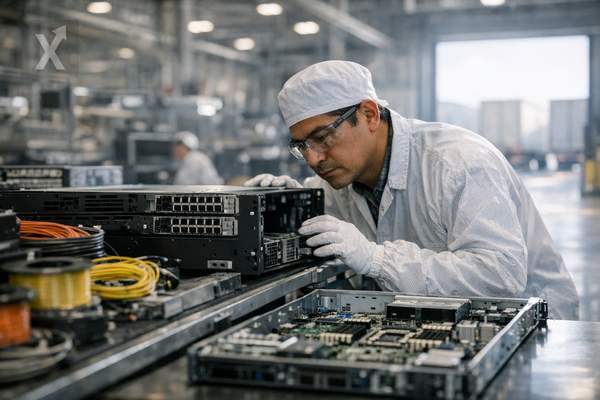
The potential is real. Sectors such as automotive, aerospace, medical devices, and logistics are already integrating data analytics, computer vision, and predictive maintenance to reduce waste and downtime. The data center ecosystem is expanding in the Bajío region and central Mexico, while banks and fintechs are advancing in AI-powered models for fraud detection, credit origination, and customer service. As an OECD member, Mexico has committed to responsible AI principles, and its personal data protection framework provides a solid foundation to deploy solutions without neglecting privacy and transparency concerns.
But asymmetries persist. Investment in R&D as a percentage of GDP remains below the OECD average, digital adoption among micro and small businesses is limited, and the country’s electrical and telecom infrastructure faces bottlenecks in several regions. The connectivity gap between urban and rural areas, the availability of talent with skills in data science and machine learning, and the ability of institutions to regulate and supervise algorithms are all critical links in the chain that still need to be strengthened.
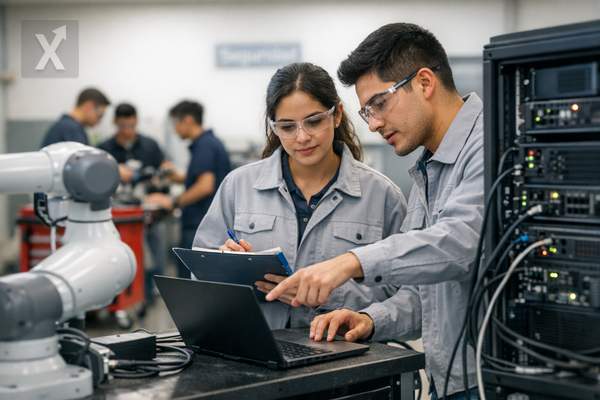
The labor market faces an additional challenge. With high informality, automation may displace routine tasks in services and light manufacturing, while the creation of new jobs—from data engineers to robot maintenance technicians—demands skills that are not yet widespread. Dual training, reskilling programs, and short-cycle technical education, combined with improved English proficiency and basic digital skills, will be essential to cushion negative impacts and more evenly distribute the benefits of AI.
Macroeconomic conditions also play a role. After an extended period of high interest rates aimed at controlling inflation, the cost of credit has been an obstacle to long-term technology investments, particularly for SMEs. Sustained disinflation and greater financial competition could help renew capital and foster AI adoption that raises total factor productivity—a key factor for making nearshoring translate into greater potential growth and higher real wages.
In terms of public policy, the opportunity lies in a national strategy that prioritizes: reliable digital and energy infrastructure; incentives for technology adoption among SMEs; government procurement that drives AI solutions in healthcare, education, and administrative processes under standards of ethics and algorithmic auditing; and robust open data and cybersecurity frameworks. Strengthening agencies responsible for privacy and information access, along with clear frameworks for algorithmic impact assessment, can build public trust and reduce the risks of bias or misuse.
Looking to the medium term, Mexico can turn AI into a vector for convergence if it aligns investment, talent, and clear rules for innovation. If not, technology will deepen inequalities between regions and sectors, as the UNDP warns. The challenge is not just to "have AI," but to ensure it delivers measurable productivity, quality employment, and better public services—with no one left behind.
In summary: AI opens a window to increase productivity and attract investment, but without reliable skills policies, infrastructure, and regulation, it could widen existing internal and external gaps. Whether this turns into opportunity or risk will depend on how swiftly and consistently Mexico addresses its structural shortcomings and turns technological adoption into tangible well-being.