Strong Peso Cuts VAT and Import-Tax Revenue at the Start of the Year
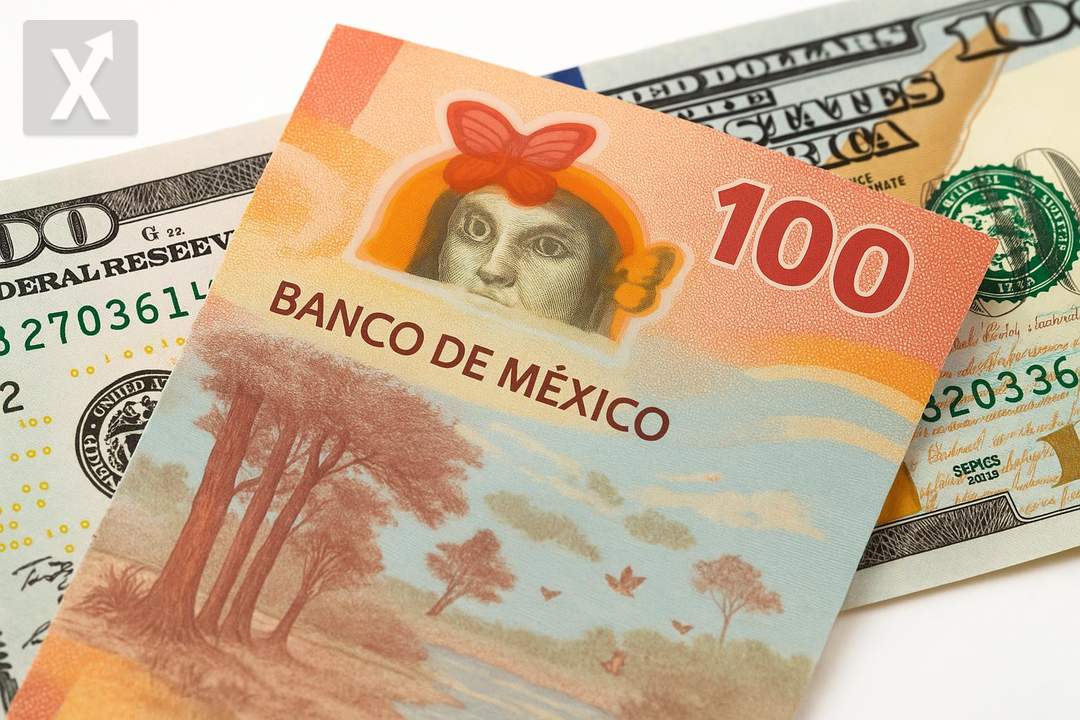
The peso’s appreciation against the dollar reduced the peso value of imports and put pressure on VAT and customs-tax collections.
The strength of the Mexican peso in the first two months of the year became a source of pressure on public finances through the tax channel: by making imported goods cheaper in local-currency terms, it shrank the taxable base used to levy the Value-Added Tax (VAT) and import duties. This is shown in the latest figures from Mexico’s Ministry of Finance and Public Credit (SHCP), which reported an 8.8% year-over-year real decline in VAT revenue in January–February, even as overall tax revenue came in above expectations.
According to the agency, the average exchange rate moved from 20.5 pesos per dollar in the first two months of 2025 to 17.5 in the same period of 2026. This FX move—consistent with an environment of still-high real interest rates and financial inflows into peso-denominated assets—tends to reduce the peso valuation of foreign purchases, translating into lower revenue associated with foreign trade even if import volumes do not necessarily fall.
From a budget-planning standpoint, the Finance Ministry said VAT came in below the schedule: about 271.9 billion pesos were collected in the two-month period, roughly 9.1 billion pesos less than expected. At the same time, revenue from import taxes fell 7.2% in real terms year over year and also came in below the program by about 14.3 billion pesos.
The SHCP attributed part of the performance to a “base effect”: in 2025, VAT collection likely posted one of its strongest increases in more than a decade, raising the comparison point. Even so, the result highlights a key feature for fiscal policy: when the currency appreciates, relief from imported inflation can come with lower revenue from levies tied to the peso value of foreign purchases.
Revenue Shift: Excise Tax and Income Tax Offset the Weakness, but Risks Lie Ahead
While VAT and import taxes showed weakness, the Special Tax on Production and Services (IEPS) provided a counterweight, rising 14.2% in real terms year over year in the two-month period. The increase was driven by higher revenue from the fuels component due to smaller fiscal subsidies than a year earlier, as well as gains in the non-oil component linked to adjustments in taxes on products such as tobacco and sugary drinks. Still, the room this source provides is sensitive to energy shocks: with the rebound in international oil prices in March, the Finance Ministry reinstated subsidies for gasoline and diesel, which implies temporarily giving up revenue to cushion prices for consumers.
Income tax (ISR) also helped support the overall tax balance. In January–February it grew 4.9% in real terms year over year and came in about 33.0 billion pesos above the scheduled amount, as the labor market has remained relatively resilient and real wages have improved compared with years of high inflation. The authority also pointed to enforcement efforts and administrative digitization, as well as higher compliance.
Looking ahead, analysts often note that reliance on cyclical components—such as income tax tied to profits and employment—and on policy decisions—such as IEPS subsidies—can make the month-to-month path of revenue more volatile. If the peso remains strong, the “headwind” for import-related VAT could persist; if, on the other hand, the exchange rate weakens, customs revenue could improve, though at the cost of inflation pressures and higher costs for importing firms.
On the spending side, the public sector posted a year-over-year real increase, but execution ran below plan: total spending was about 219.7 billion pesos less than expected in the two-month period. Most of the shortfall was concentrated in programable spending—the category tied to the provision of public goods and services and investment—while non-programable spending—where, among other items, the financial cost of the debt is recorded—showed a smaller deviation.
This under-execution can be interpreted in different ways, ranging from operational adjustments and project timing to a containment strategy to manage spending pressures during the year. In an environment of moderate growth and still-meaningful debt-servicing costs, the pace of executing programable spending matters because of its impact on public investment, economic activity, and service delivery.
Overall, the first two months’ figures paint a mixed picture: a strong peso helps cheapen imports and contain prices, but reduces revenue tied to foreign trade; at the same time, income tax and the excise tax keep the tax balance supported, though they remain sensitive to economic momentum and subsidy decisions. Performance in the coming months will depend on the exchange rate, energy-price trends, and the ability to sustain strong revenue without hurting activity.






