Mexico to Launch a 25-Peso Coin for the 2026 World Cup: What It Means for the Numismatic Market and Consumer Spending
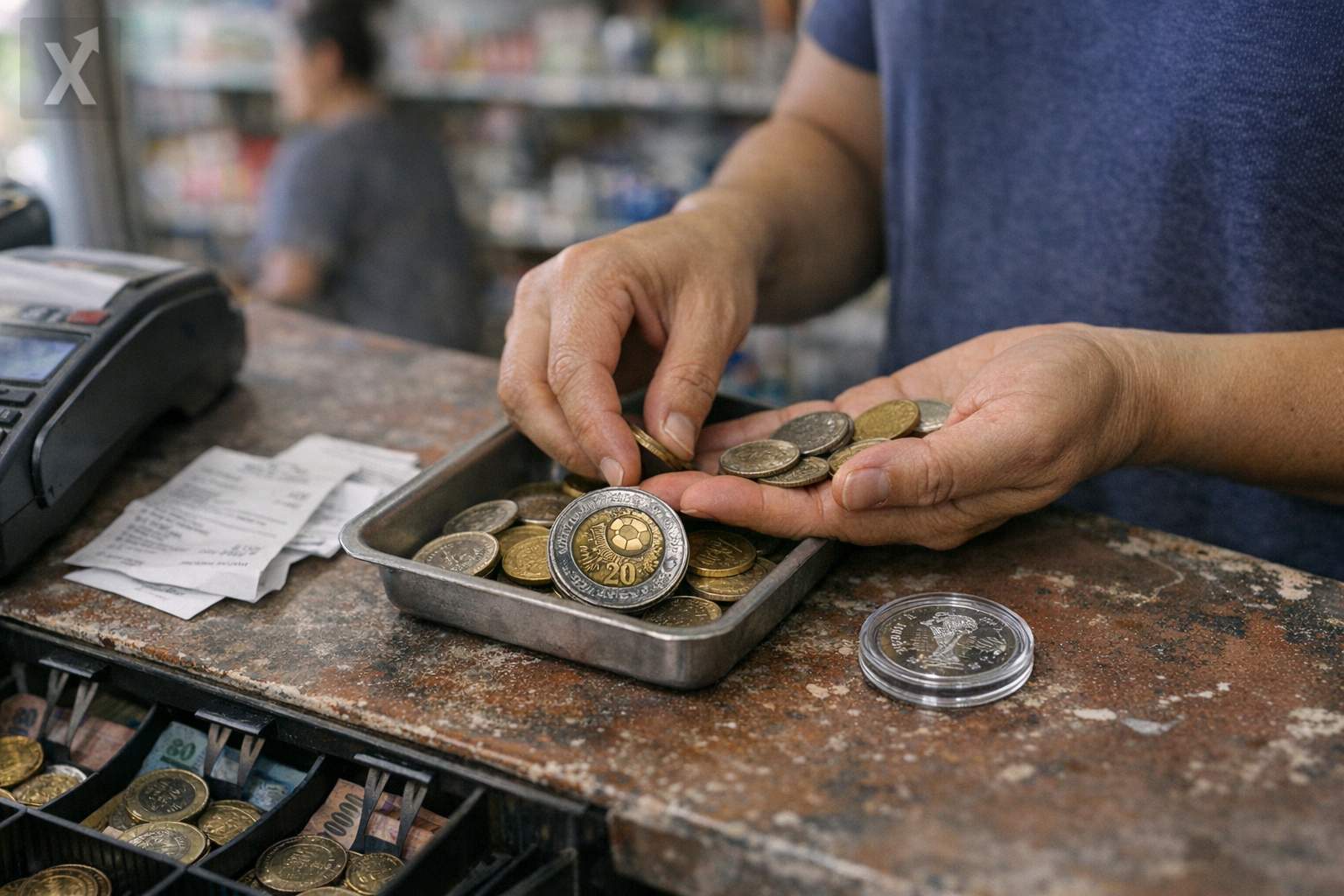
The Senate approved 25-, 20-, and 10-peso coins ahead of the 2026 World Cup—a move that blends symbolism, collector demand, and Banco de México logistics.
Congress has moved forward with authorizing new commemorative coins to mark the 2026 FIFA World Cup, a tournament Mexico will co-host with the United States and Canada. The headline development is the creation of the first Mexican coin with a face value of 25 pesos, planned to be minted in pure gold, along with a pure silver 10-peso coin and a bimetallic 20-peso coin.
Senate approval formally kicks off a process that—while often seen as largely ceremonial—has specific economic implications: it sets minting timelines, production and distribution costs, and can trigger unusually strong demand among collectors, resellers, and the general public. In Mexico, commemorative issues—especially those made of precious metals—often take on a life of their own in the secondary market, where pricing ends up driven more by availability and design appeal than by face value.
According to the ruling, the Bank of Mexico (Banxico) will hold the patrimonial rights, copyright, and intellectual property associated with the designs and the minting process. The obverse will keep the National Coat of Arms in relief with the legend “ESTADOS UNIDOS MEXICANOS,” while the reverse will be designed by Banxico with 2026 World Cup-themed imagery.
Beyond the sports angle, the timing of this initiative matters: Mexico heads into 2026 facing the challenge of sustaining consumer momentum in an environment of still-high interest rates (even with a rate-cut cycle underway), public spending pressures, and a growing need for investment in urban infrastructure and services—especially in cities with heavy tourism and event traffic.
Commemorative coins: between symbolism, metal, and the market
In practice, a gold commemorative coin with a face value of 25 pesos is highly unlikely to circulate as a means of payment. Its market value tends to be driven by metal content (gold) and the premium collectors are willing to pay. In past episodes, commemorative coins or special editions have led to lines, pre-orders, and resale activity fueled by expectations of scarcity. That dynamic often intensifies when the release coincides with a high-profile media event like the World Cup—and when the design taps into a national-identity narrative.
For Banxico, the challenge is twofold: on one hand, ensuring quality and security standards in minting; on the other, managing demand that can overwhelm distribution points and feed unrealistic expectations of “guaranteed profits.” Meanwhile, the bimetallic 20-peso coin fits more naturally with the recent pattern of commemorative coins intended to circulate, which could increase its presence in everyday transactions and reinforce its role as an informal savings vehicle or an accessible collectible.
The precious-metals component also ties into a common habit among Mexican savers: during periods of uncertainty or volatility, some people look for refuge in tangible assets. However, with commemorative coins, the price can include markups for minting, distribution, and collectibility, so they don’t necessarily track the behavior of more standardized instruments linked to gold or silver.
World Cup 2026 and local economies: spillover, services, and price pressure
The 2026 World Cup will be unprecedented in scale: 48 national teams and 104 matches, with Mexico scheduled to host 13 games. For host cities, the event typically translates into a spike in demand for hotels, transportation, food, and entertainment—creating opportunities for small and mid-sized businesses, but also raising risks of congestion and temporary price increases. In Mexico, where domestic consumption has been an important engine since the post-pandemic reopening, a positive tourism shock can support local incomes, though its impact is usually temporary and concentrated in specific areas.
The economic conversation also extends to logistics: urban mobility, security, crowd management, and upgrades to public spaces. In recent years, Mexico has combined private investment in services and real estate with public infrastructure projects; looking toward 2026, the challenge will be ensuring the benefits don’t stay limited to a handful of sectors and corridors—and that related works don’t lead to cost overruns or bottlenecks that undermine visitor experience and the event’s impact on local economies.
Banxico, circulation, and financial literacy: the “display case” effect
Commemorative coin issues often create a “display case” effect in public conversation about money: how it’s made, what backs it, and what its value really means. In a country where the preference for cash remains high across many segments—despite the rise of transfers and digital payments—a 20-peso coin in circulation can become a tangible reminder of Banxico’s role in monetary stability and cash supply. At the same time, a gold coin with a low face value can cause confusion unless it’s clearly communicated that its sale and resale price responds to other variables.
For consumers, the practical takeaway is to distinguish between face value and market value, check official sales or distribution channels when available, and factor in transaction costs and authenticity. For businesses—especially small ones—an increase in commemorative coins in circulation may require minor adjustments to cash handling, but it can also create an opportunity to communicate with customers about acceptance and proper care of the coins, particularly if they become collectible items.
Overall, approving these coins ahead of the 2026 World Cup combines a gesture of cultural identity with specific economic effects: it will stimulate Mexico’s numismatic market, add logistical pressure to minting and distribution, and accompany an event that can boost consumption and tourism—though with uneven and short-lived impacts. The key will be Banxico’s execution and clear public communication to align expectations about the coins’ true value and real-world use.






