U.S. Agriculture Pushes to Lock In Certainty Around the USMCA as Mexico Weighs Risks to Prices and Supply
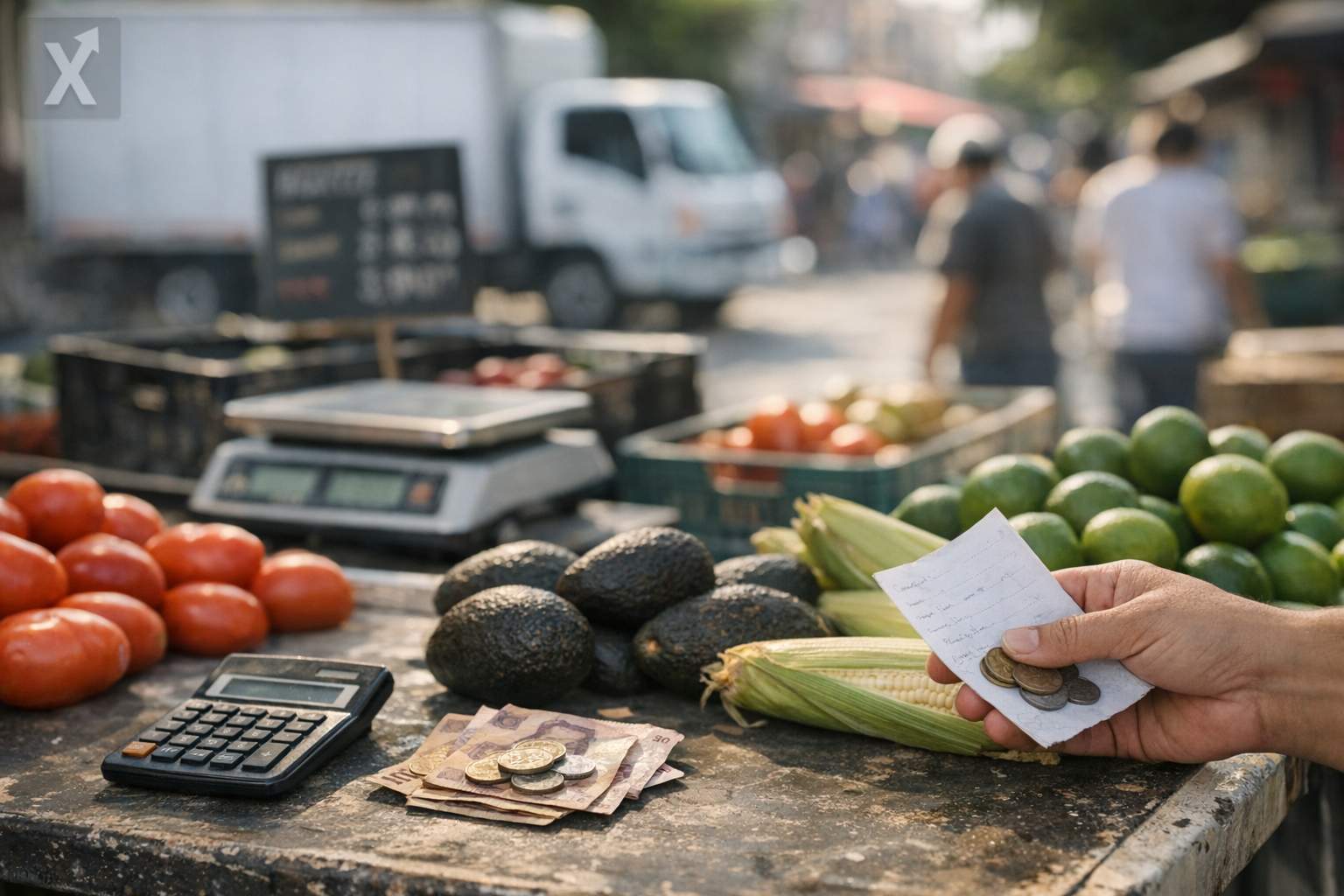
The U.S. farm sector’s campaign to “bulletproof” the USMCA underscores how much Mexico’s food supply and inflation depend on stable agrifood trade.
U.S. agriculture is organizing to defend—using data and lobbying—the continuity of the USMCA ahead of its review, at a time when the trade relationship is facing political pressure and recurring disputes. Nearly 40 agricultural and agribusiness organizations launched the Agricultural Coalition for USMCA, arguing that the agreement supports a critical share of their regional economies: in 2024 alone, U.S. agricultural and fisheries exports to Mexico and Canada totaled $60.904 billion, of which $59.697 billion came from agricultural goods and $1.206 billion from seafood.
The coalition’s core message is that the impact goes beyond the headline export value: factoring in supply-chain linkages and consumption associated with earned income, they estimate those sales generated $148.556 billion in domestic economic activity in the United States. In their view, for every dollar exported under the USMCA, an additional $2.45 in activity was created within the U.S. economy. They also calculate that agrifood trade with Mexico and Canada supported 493,054 full-time-equivalent jobs in 2024, with $35.622 billion in labor income, and contributed $64.105 billion to U.S. GDP, plus $13.184 billion in tax revenue.
For Mexico, the relevance of that effort isn’t just rhetorical: it confirms that, heading into the treaty’s review, agricultural sectors in partner countries will seek to preserve market access while also pushing for regulatory and sanitary changes that reduce their uncertainty. Mexico’s economy—with a consumer basket that is sensitive to staple foods and inflation that often reacts to shocks in agricultural goods—faces the challenge of keeping clear rules for trade without giving up room for public policy on environmental, health, and biosafety issues.
Since the USMCA took effect in 2020, agrifood trade in North America has shown more momentum than trade with the rest of the world, according to data cited by the group itself: between 2020 and 2024, U.S. agricultural exports to Mexico and Canada rose by about $20 billion, a 47% increase over the period, versus an 18% gain to other destinations. In 2024, standout categories included corn ($5.961 billion), dairy ($3.644 billion), bakery-cereals-pasta ($3.472 billion), pork ($3.447 billion), and fresh fruit ($2.812 billion), among others.
From Mexico’s standpoint, the degree of integration matters because of its effect on production costs and consumer prices: yellow corn for animal feed, feed grains, oilseeds, and meats are part of supply chains that underpin industries such as animal protein and processed foods. Any friction that increases time, logistics costs, or sanitary requirements can show up in input costs and, eventually, in food inflation—a category that typically weighs more heavily on lower-income households.
Agricultural disputes: from GMO corn to tomato tariffs
The U.S. agricultural coalition points to the U.S.-favored outcome in the genetically modified corn dispute as “proof” of the USMCA’s institutional strength. For Mexico, the case highlights an underlying tension: how to reconcile public-policy goals—such as regulating agricultural biotechnology inputs—with market-access commitments and the need for certainty for producers and importers. At the same time, trade conflicts that raise the temperature persist: the United States imposed a 17% antidumping duty on Mexican tomatoes; U.S. producers have pushed for investigations or measures against berries and avocados; and on the Mexican side there have been antidumping investigations into U.S. apples and certain pork products. In the triangle with Canada, there are also frictions over protections for the dairy sector and regulatory differences in agricultural inputs.
Recent experience suggests these disputes tend to multiply when the political cycle accelerates and when global food prices become more volatile. For Mexico, an additional factor is the interaction between trade and climate: droughts in agricultural regions, pressure on water availability, and changes in yields increase reliance on imports for certain grains and feed, making a predictable trade framework even more valuable. In that context, the USMCA doesn’t eliminate conflicts, but it does provide a rules-based structure and dispute panels that can limit damage and keep differences from turning into prolonged, unilateral shutdowns.
In the near term, the treaty debate is unfolding as Mexico looks to sustain growth in an environment of still-high real interest rates, cautious investment, and an external sector that has been a driver through manufactured exports. Agriculture is a different piece of the puzzle, but a connected one: on the one hand, Mexico is a significant exporter of fruits, vegetables, and processed foods to the United States; on the other, it imports grains and proteins that influence domestic costs. Trade certainty supports planning for crop cycles, investment in storage infrastructure, and technology adoption—key elements for boosting productivity and containing price pressures.
Heading into the 2026 review, the U.S. farm sector’s interest in “bulletproofing” the agreement points to a negotiation with a strong emphasis on sanitary and phytosanitary measures, traceability, biotechnology, and dispute-settlement mechanisms. For Mexico, the challenge will be to maintain preferential access for its agrifood exports, avoid measures that raise the cost of critical inputs, and at the same time strengthen its productive resilience: greater water-use efficiency, improved domestic logistics, more financing for the farm sector, and diversification strategies that reduce vulnerability to external shocks.
In perspective, the U.S. agriculture move reinforces a pragmatic takeaway: the USMCA has become a predictability backstop for highly integrated supply chains. For Mexico, the priority will be to arrive at the review with data, technical capacity, and an approach that minimizes trade friction—because in food, certainty doesn’t just protect exports; it also protects prices and supply.






