Mexico and Canada Seek to Relaunch Their Economic Relationship with an Investment Agenda in High-Value Sectors
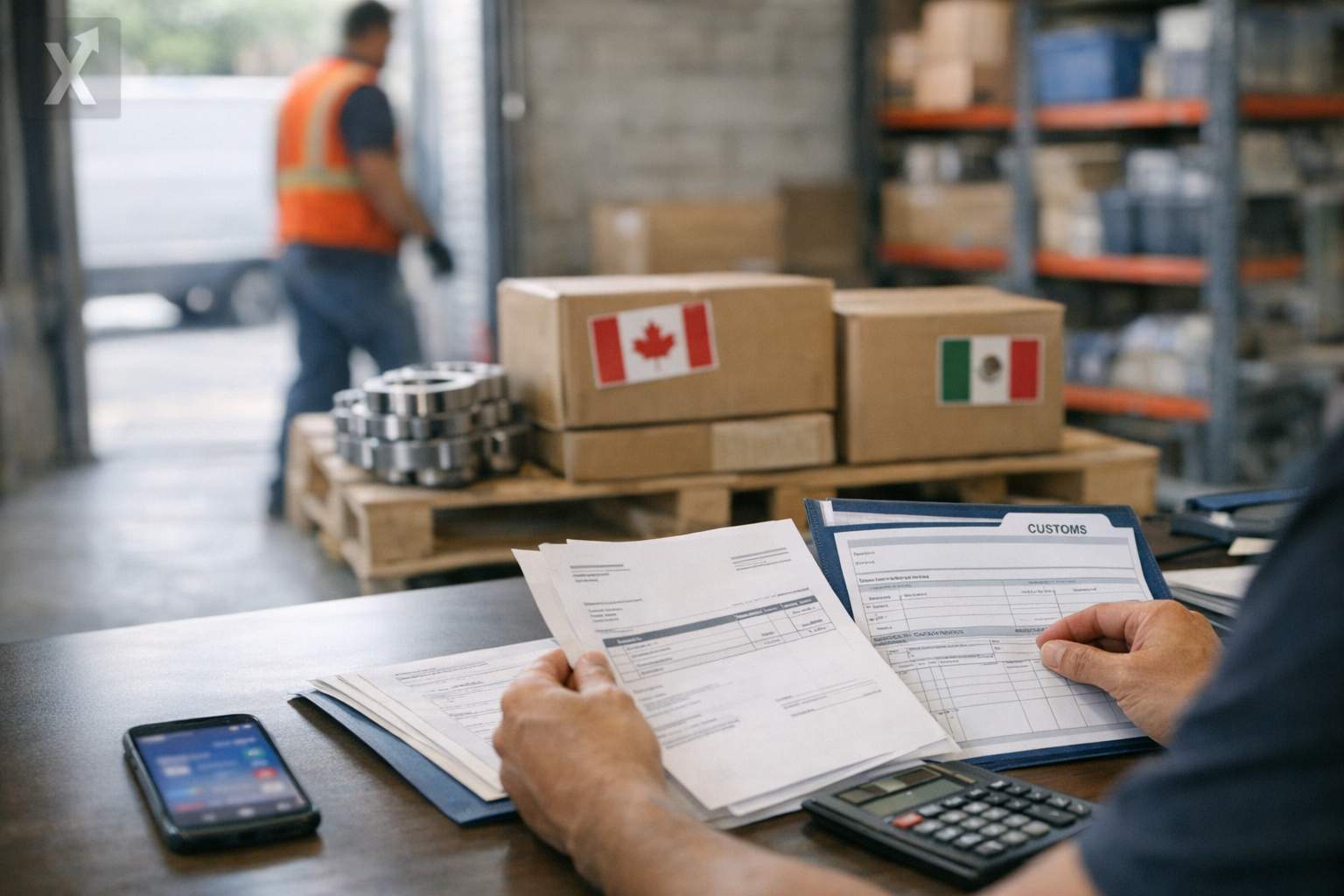
Mexico and Canada are betting on expanding investment and trade in technology, advanced manufacturing, and critical minerals through thousands of business meetings.
Mexico and Canada have launched a push to deepen their economic relationship with a clearer focus on high value-added sectors, at a time when supply-chain reshoring and reconfiguration, North American industrial policy, and global volatility are reshaping investment decisions. The gathering of about 400 companies from both countries—with a target of nearly 2,000 business meetings—aims to turn decades of commercial ties into concrete projects in advanced industry, emerging technologies, and strategic supply.
Economy Secretary Marcelo Ebrard said the goal is not only to increase trade, but to open a “new phase” in areas where the bilateral relationship has fallen short of its potential. Canadian Minister Dominique LeBlanc, leading the business delegation in Mexico, underscored the scale of the corporate dialogue as a sign of urgency: identifying opportunities that can withstand an uncertain environment, with greater diversification and deeper integration.
The strategy is anchored in areas such as pharmaceuticals, aeronautics, the space industry, and advanced manufacturing, along with projects tied to robotics, drones, Artificial Intelligence, vaccines, and new medical technologies. For Mexico, this shift connects to structural challenges: raising domestic content, improving productivity, and moving beyond maquila assembly toward design, engineering, certification, and high-value services—especially in regions where investment faces constraints in energy, water, logistics, and specialized human capital.
The approach also fits within the context of North America as a production platform. With the United States as Mexico’s main export market, coordination with Canada becomes important to strengthen regional supply chains, raise standards, and improve logistical resilience. At the same time, Mexico is looking to attract investment and technology while keeping in view the regulatory compliance, traceability, and sustainability requirements that have become common in large-scale projects.
Critical Minerals and the Challenge of Moving from Supplier to Processor
One of the highest-potential—and most complex—areas is critical minerals. Canada brings mining expertise, financing, and refining capacity, while Mexico is trying to stop being only a raw-material supplier and move toward processing and related manufacturing. The challenge is significant: unlocking value-added activity requires regulatory certainty, permits, infrastructure, competitive energy, and environmental and social standards that enable integration into global chains—particularly in industries that demand traceability and compliance at the source.
If cooperation advances, the impact could be felt beyond mining. The availability of processed and reliable inputs can influence investment decisions in advanced manufacturing, electronics, industrial components, and sectors tied to the energy transition. For Mexico, the potential benefit would concentrate in better-paying jobs and technology transfer, though it would be conditional on the ability to develop local suppliers, strengthen technical training, and resolve logistical bottlenecks.
Operationally, a reciprocal visit by the Mexican delegation to Canada is expected, along with the presentation of a bilateral action plan during the second half of the year, setting priorities for the coming years. In parallel, infrastructure, ports, and supply-chain security were placed on the agenda—areas that have become decisive in risk assessments for cross-border projects.
A standout element is the intention to balance capital flows: in addition to Canadian investment in Mexico, a significant investment by a Mexican company in Quebec is taking shape. If it materializes, it would signal a more mature bilateral relationship by showing the link can run both ways—not only as a destination for capital—with implications for the international expansion of Mexican firms and for building more integrated corporate networks across North America.
The conversation also touched on sensitive issues such as security and efforts to combat arms trafficking into Mexico. While not strictly a trade issue, it affects logistics costs, operational continuity, and risk perception—factors that increasingly weigh on investment models, insurance, financing, and industrial location decisions.
Overall, the relaunch with Canada points to a clear narrative: Mexico wants to use the window created by the global production realignment to attract and develop projects with higher technological content. Success, however, will depend on turning business meetings into contracts, aligning public policy with infrastructure and energy needs, and maintaining clear rules that allow multi-year planning in capital-intensive sectors.
In perspective, the bilateral bet could strengthen Mexico’s position in North America if it translates into value-added production and processing capabilities, while reducing vulnerabilities in strategic supplies. The next barometer will be the quality of the announced projects and the speed of their execution.






