Banks Closed on Maundy Thursday and Good Friday 2026: What It Means for Payments, Businesses, and Cash Flow
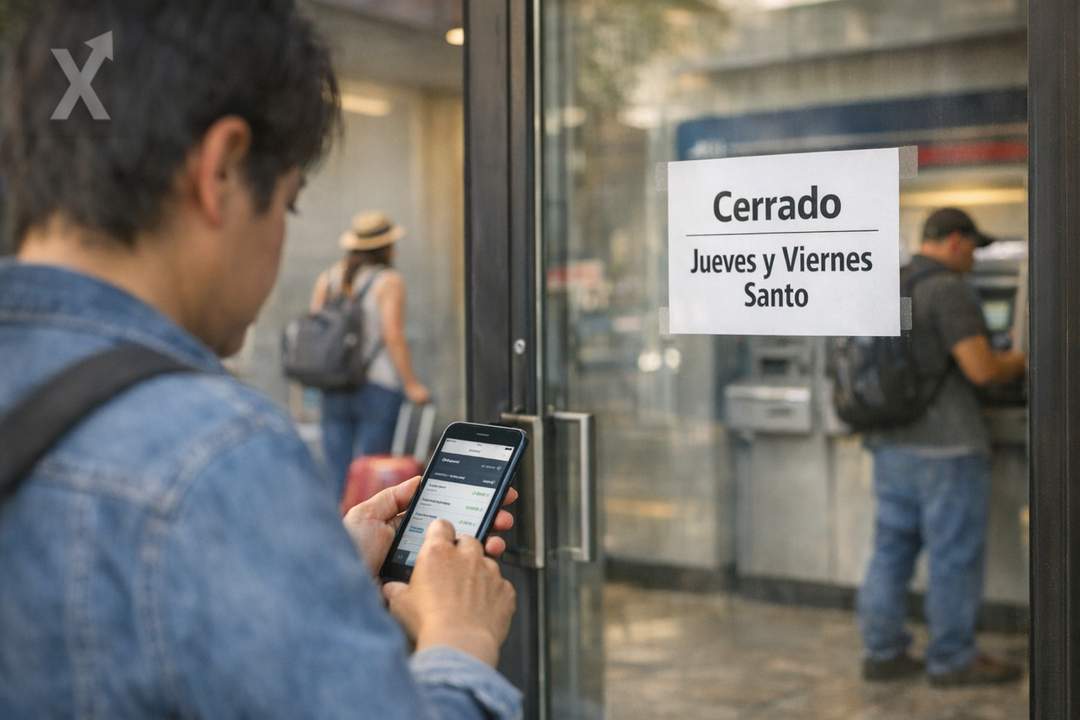
Branch closures during Holy Week make it necessary to plan payments and collections ahead of time, amid highly digitalized finance and still-elevated borrowing costs.
Financial planning becomes essential again heading into Holy Week 2026, when the calendar will reduce in-person banking operations in Mexico. Under the usual criteria for supervised financial institutions, bank branches will not provide service on Maundy Thursday and Good Friday, which in 2026 fall on April 2 and 3, respectively. While physical closures are a recurring event, their impact varies by user type—from households scheduling transfers and bill payments to small businesses that rely on deposits, payroll distribution, and receivables collection.
In practice, the immediate economic effect isn’t that there is “no banking,” but rather a reshuffling of transactions: payments that must be scheduled earlier, collections whose effective posting date can be pushed back, and in-person tasks—such as disputes, submitting documentation, or teller-window transactions—that get postponed. During high-travel periods like Holy Week, heavier use of electronic payment methods is also common, which reduces friction but does not eliminate the risk of delays when due dates are near.
The message for customers is straightforward: digital banking and remote channels typically operate as usual, but timing matters. Interbank transfers, credit-card and utility payments, funds disbursements, or major deposits may require extra lead time—especially if the customer needs in-person verification or if the transaction depends on internal processing cutoffs. In an environment where households are still adjusting budgets after recent years of accumulated inflation, and where consumer credit remains relatively expensive despite rate-cut cycles, avoiding late fees and penalty interest continues to be a key financial priority.
Payments, Transfers, and Spending: How a Banking Holiday Affects Day-to-Day Economic Activity
Branch closures during Holy Week tend to shift spending toward digital channels and card payments, but they can also strain cash flow for some businesses—especially micro and small firms with fast cash turnover. If a supplier requires payment on a specific date, or if a company needs to secure deposits to meet obligations, the holiday forces businesses to move transactions forward and review processing schedules. During vacation season, the rise in transactions at retailers, hotels, and transportation providers also increases the importance of having sufficient limits, backup payment options, and liquidity on hand for unplanned expenses.
From a macro perspective, these operational pauses rarely change economic trends on their own, but they can amplify friction at sensitive moments: month-end, tax due dates, payroll runs, or periods of elevated cash demand. The standard recommendation for businesses is to build extra room into treasury calendars, review value dates, and automate payments where possible. For households, the most effective step is usually simple: schedule bill and credit-card payments in advance, avoid operating right up against due dates, and keep a cash cushion for contingencies.
In recent years, banking digitalization in Mexico has reduced dependence on the branch—but not the need for planning. During Holy Week, when travel and leisure spending also rises, an organized calendar helps prevent delays, fees, and operational complications. In that sense, the in-person closures on April 2 and 3, 2026 will be a reminder that digital continuity exists, but financial discipline and proactive planning remain decisive for households and businesses alike.






