Mexican Tomatoes Look for Breathing Room in Canada After U.S. Antidumping Duties; Diversification Tests the Agro-Export Sector
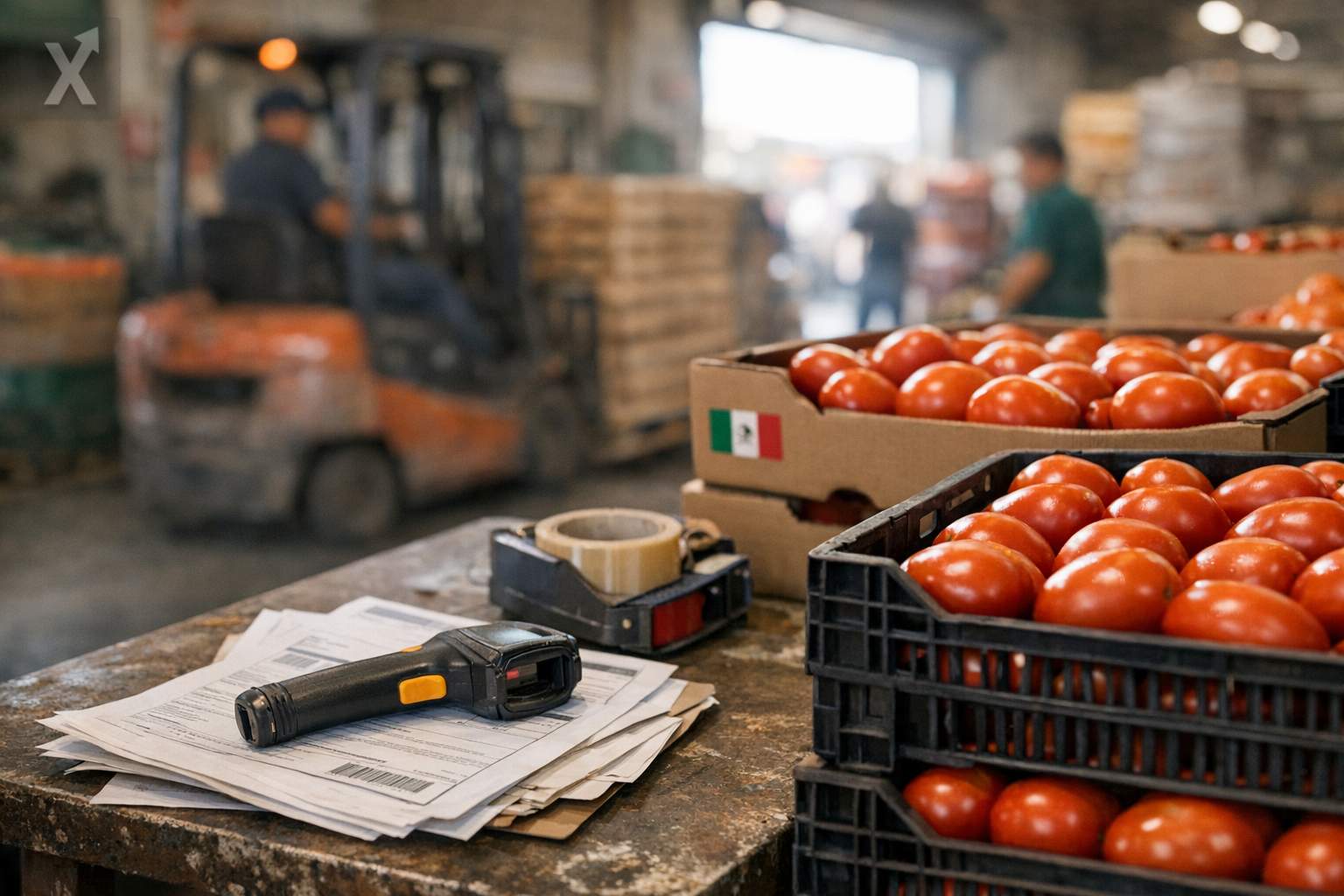
The trade hit from the antidumping duty imposed by the United States on Mexican tomatoes starting in July 2025 sped up a shakeup the industry had been putting off: relying less on the U.S. market and opening up—however gradually—new export routes. In that shift, Canada has become a more visible pressure-release valve, with a notable jump in shipments of fresh or chilled tomatoes during the second half of the year.
From January through November 2025, Mexican tomato exports to Canada totaled $8.1 million, up 134% from the same period in 2024, according to figures reported by economic authorities. The timing is key: nearly three-quarters of that amount was concentrated between August and November—after the antidumping measure took effect in the U.S. market. The pattern points to a tactical adjustment by growers and marketers to offset part of the higher costs and added uncertainty of shipping across the northern border.
The 2025 rebound contrasts with the prior year, when Mexican tomatoes lost ground in Canada: sales came in at roughly $4.1 million, a 24.5% year-over-year decline. Even with the recent gains, Canada remains marginal in the tomato export map: in the first ten months of 2025, it accounted for about 0.34% of total exports, up from 0.11% a year earlier. The figure is small, but relevant in context: at the same time, the U.S. share slipped, reflecting the impact of the new trade cost.
The tomato industry is a central pillar of Mexican agriculture: it generates jobs in producing states in the Northwest and West, activates packaging chains, refrigerated transport and cross-border logistics, and contributes around $3 billion a year in exports in a typical year. In a country where economic growth has cooled and where domestic consumption faces bouts of food inflation, the performance of the agro-export sector also influences regional income, investment, and price stability in the domestic market.
The 2025 episode was shaped by the end of the Suspension Agreement and the imposition of a 17% antidumping duty in the U.S. market. For growers, the impact goes beyond the tariff: it translates into greater volatility in benchmark prices, contract renegotiations, adjustments to planting schedules, and in some cases, more pressure on working capital. With interest rates that, while starting to ease from recent peaks, remain high in real terms for many producers, financing inventories or retrofitting infrastructure can become more expensive—especially for mid-sized operations.
The response on the Mexican side included setting minimum export prices by tomato type, aiming to bring more order to the market and reduce disputes over undervaluation. However, room to maneuver is limited as long as the main buyer is made more expensive by the duty. From January through November 2025, total shipments to the U.S. posted a decline of about 16% year over year, according to data cited by the industry itself. On top of that are non-trade risks: more erratic weather, water stress in farming areas, and logistics costs that have seen periodic spikes.
Canada, for its part, offers clear advantages: it consumes close to 780,000 metric tons of tomatoes a year and, under the USMCA framework, maintains tariff-free access for Mexican product. The challenge lies in scale and competition. Mexico supplies only a very small fraction of the Canadian market, which suggests potential room to grow—but also the need to build deeper commercial relationships, ensure consistent quality, meet packaging specifications, and strengthen cold-chain logistics for longer hauls and more demanding schedules.
Diversification, moreover, isn’t solved just by “finding buyers.” It requires investment in agricultural technology (greenhouses, efficient irrigation, pest control), post-harvest innovation to extend shelf life, and a value-added strategy that makes it possible to compete without depending on low prices. Over the medium term, the macro backdrop also matters: a strong or weak U.S. dollar affects export revenues, while exchange-rate volatility impacts the cost of imported inputs (fertilizers, plastics, technology). Likewise, manufacturing reconfiguration tied to nearshoring could strain logistics infrastructure in key corridors, increasing competition for transportation and warehousing.
Looking ahead, the performance of Mexican tomatoes will hinge on three fronts: how the trade dispute with the United States evolves, the real ability to open and sustain market share in Canada and other destinations, and production adaptation in the face of climate and costs. If the sector manages to solidify exports outside the U.S. market, it could reduce vulnerability and stabilize income; if not, the duty will continue to act as a structural drag on one of the country’s most important agro-industries.
In perspective, the 2025 surge toward Canada confirms a fast reaction to a trade shock, but it also underscores Mexican tomatoes’ longstanding concentration in the U.S.. Diversification looks feasible, though slow and demanding in terms of investment, logistics, and compliance; the outcome will depend on how trade rules, financing costs, and production conditions reset over the next agricultural cycles.






