Minimum Wage Set for Another Jump in 2026; OECD Urges Caution Amid Risks to Formal Employment and Inflation
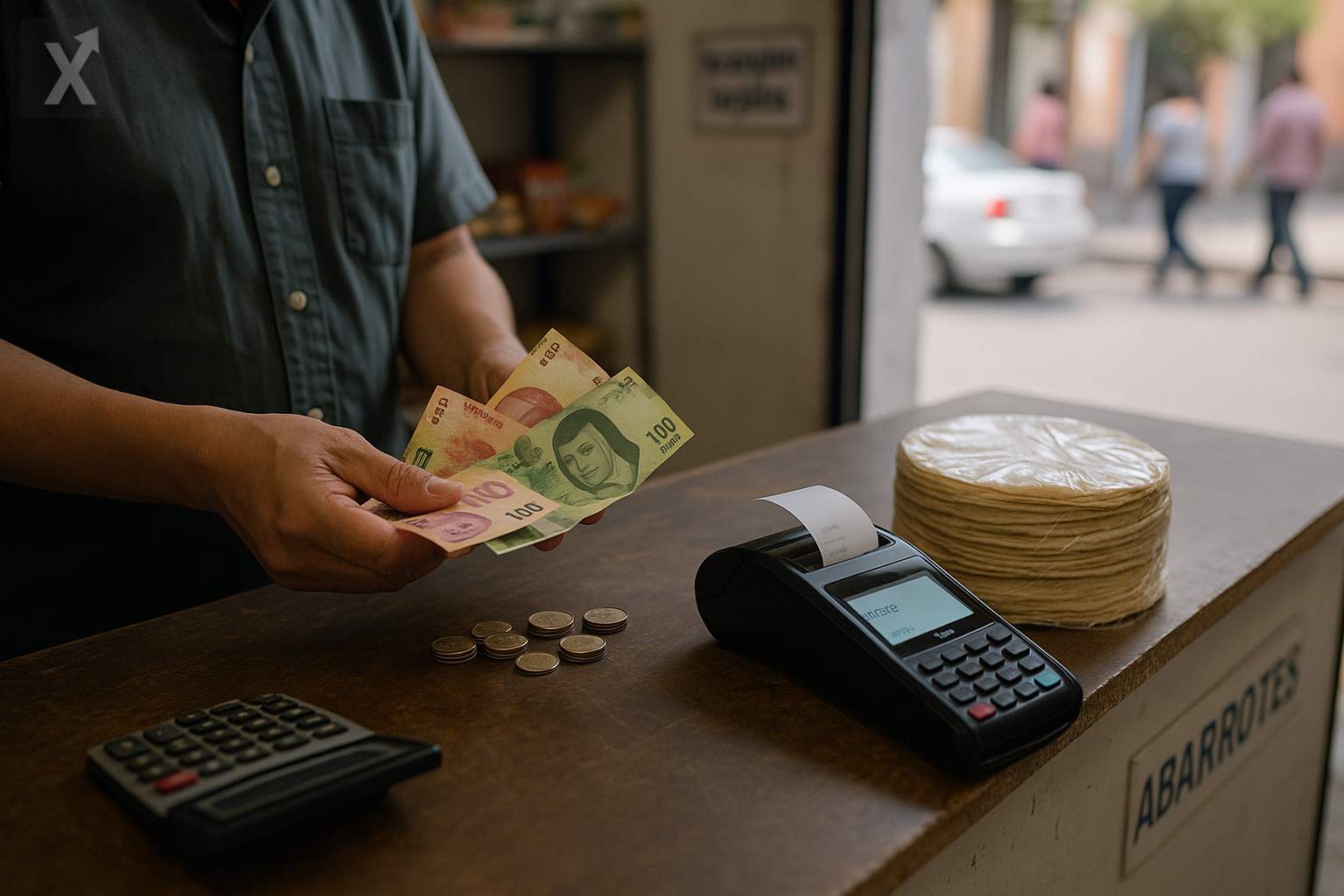
The 13% increase in the general minimum wage, effective January 2026, consolidates the recovery in purchasing power that began in 2019. However, it also places Mexico in a zone that the OECD considers one of caution: the minimum wage now exceeds 60% of the median wage—a threshold beyond which the risks to formal employment, productivity, and access to the job market for young and less-skilled workers begin to rise. The adjustment comes at a time of slowing economic activity and a recent uptick in informality.
With the new adjustment, the minimum monthly wage will reach 9,582.47 pesos, while in the Northern Border Free Zone it will increase 5%, to 13,409.80 pesos per month. The Ministry of Labor highlights that since 2018, the minimum wage’s purchasing power has made cumulative gains, leading to reductions in labor poverty and improvements in purchasing capacity. According to officials, the new level covers up to two basic baskets of goods, moving closer to the official goal of 2.5 baskets by 2030.
Analysts see clear benefits in the increase: it strengthens the income of households with less bargaining power, helps reduce labor poverty, and sends an important signal ahead of the 2026 USMCA review, showing that Mexico is raising its wage standards and discouraging unfair competition. It could also support the peso if the central bank maintains a prudent monetary stance. Nonetheless, risks remain, particularly regarding persistent inflation—especially core inflation—and cost pressures for businesses in an environment of weaker consumer momentum.
The labor market enters this adjustment with mixed signals. Recent data show that all job growth projected for 2025 is coming from the informal sector, while formal employment has seen several consecutive months of annual declines—a combination historically associated with periods of cyclical weakness. There is also evidence of a slowdown in services and in non-automotive exports. In this context, additional increases in the minimum wage could have different effects than in previous years.
The OECD recommends caution when the minimum-to-median wage ratio exceeds 60%, as rapid increases in labor costs tend to disproportionately impact young people, micro-businesses, and labor-intensive activities with low-skilled workers. The starting point matters: if productivity fails to keep pace with wage growth, margins shrink, formal jobs may be replaced by informal ones, and there’s an increased risk of price passthrough, especially in sectors with low competition or contracts indexed to the minimum wage.
Underlying all this, Mexico’s labor productivity has been stagnant for years, informality remains high, regional gaps are pronounced, and there are bottlenecks in infrastructure and energy that drive up business costs. The opportunity for nearshoring could help boost wages and productivity, but it demands regulatory certainty, workforce training, greater competition, and a more robust electrical and logistics network to ensure that minimum wage hikes are sustainable without sacrificing employment.
The business sector has supported the adjustment, while calling for an annual evaluation of the impact on inflation, jobs, and productivity. Mexico’s main employers’ association, Coparmex, points out that the new minimum meets the family welfare line—equivalent to two basic baskets of goods as defined by Coneval—and praised the 5% bump in the Northern Border to prevent distortions in a market where the wage was already more than 2.5 times the value of the basket of food and non-food goods. Tripartite consensus within Conasami has been key to making the trajectory of increases more predictable, according to business groups.
Looking ahead to 2026, key issues to watch include: the path of core inflation, the stance of monetary policy, wage negotiations at companies and local governments, and the degree to which minimum wage raises act as a “lighthouse effect” influencing other pay scales. Externally, the USMCA review will focus closely on wage improvement and compliance with labor standards, while new productive investment might offset costs if accompanied by improvements in physical and human capital. Complementary policies—such as streamlining taxes for micro and small companies, incentives for formalization, dual training programs, and expanded energy capacity—can help ensure that wage increases translate into higher productivity.
In summary, this new minimum wage hike strengthens a significant social advance, but is being implemented at a stage in the economic cycle that demands technical precision. Its ultimate impact will depend on the country’s ability to boost productivity and keep inflation expectations anchored without eroding formal employment. Careful tracking of prices, formal job creation, and investment will be crucial to calibrate the next steps.






