Holy Week 2026: bank branches will be closed on Maundy Thursday and Good Friday—how to plan payments and transfers
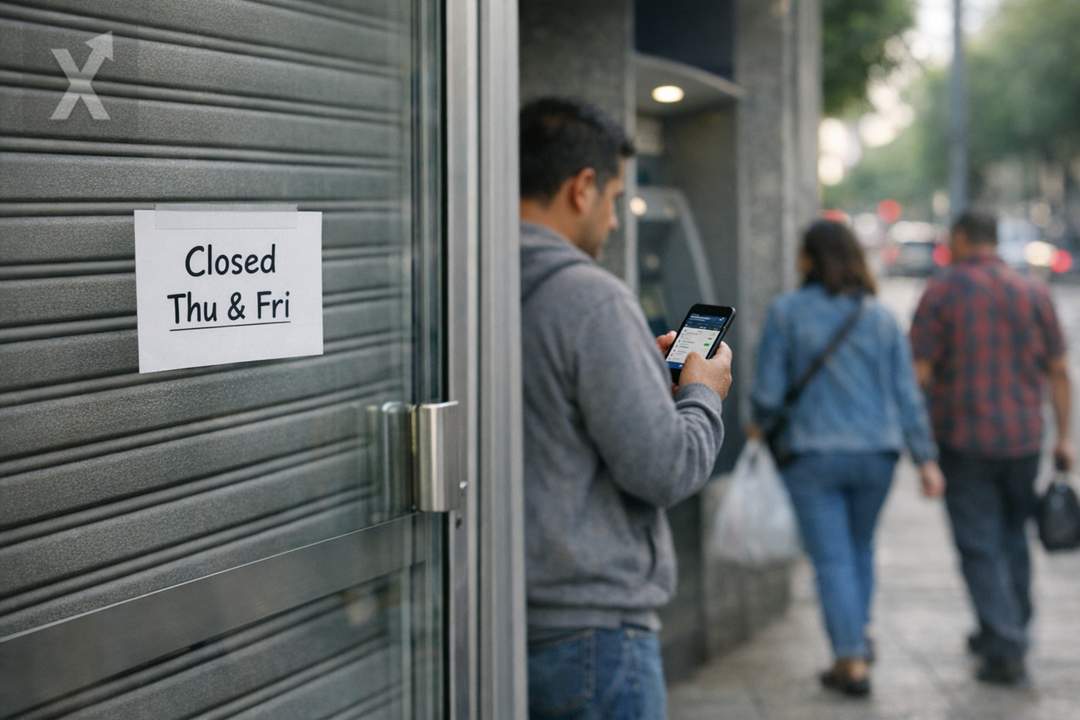
Branch closures on Maundy Thursday and Good Friday mean you’ll need to handle in-person banking ahead of time, even though digital banking and ATMs will keep operating as usual.
Holy Week 2026 will once again test the financial planning of households and businesses in Mexico: bank branches will not provide service on Maundy Thursday and Good Friday, which that year fall on April 2 and 3, respectively. For customers, the practical takeaway is clear: reference deposits, over-the-counter payments, check-related transactions, in-person dispute resolutions, and administrative procedures should be scheduled in advance to avoid hassles.
Based on the guidelines typically communicated by the banking sector, the suspension of in-branch operations aligns with the branch-closure calendar for institutions supervised by Mexico’s National Banking and Securities Commission (CNBV). By contrast, digital services—mobile apps, online banking, and, in most cases, ATMs—remain available, although confirmation of certain transactions may depend on processing cutoffs and interbank settlement times.
In 2026, the liturgical calendar places Maundy Thursday on April 2, Good Friday on April 3, and Holy Saturday on April 4. While these dates are not universal, across-the-board official holidays for the entire economy, they do trigger operational adjustments in public-facing sectors and, in particular, in traditional branch-based banking, where demand for cash and last-minute bill payments tends to rise.
For those who rely on teller windows—older adults, small businesses, people without full access to digital banking, or customers with specific in-person needs—the recommendation is to check due dates several days in advance for utilities, tuition, rent, vendor payments, and tax obligations. During high-travel vacation periods, card usage and cash withdrawals also tend to increase, so it’s worth factoring in withdrawal fees, daily limits, and ATM cash availability.
Economic implications: liquidity, consumption, and retail operations during a long weekend
Branch closures during Holy Week come at a time of year when tourism-, restaurant-, and transportation-related spending tends to pick up, especially in beach destinations and cities with strong religious attendance. In practice, this can shift some demand toward card payments and electronic transfers, while certain segments—open-air markets, neighborhood convenience shops, and local services—still prefer cash. When branches aren’t operating, access to liquidity depends more heavily on the ATM and banking-agent network, and on whether customers planned key withdrawals or deposits ahead of time.
For businesses—especially SMEs with short receivables cycles—these days can affect cash flow if payments or payroll disbursements cluster around the holiday period. Even if digital banking remains available, interbank posting times can vary due to processing windows and the heavier operating load typical of vacation periods. From a macro standpoint, the impact usually isn’t significant for GDP on its own, but it can create temporary friction in payment chains and treasury management, particularly in cash-intensive sectors.
From an economic policy perspective, the episode underscores the growing importance of electronic payment methods in Mexico. In recent years, financial digitization has advanced, driven by widespread use of banking apps, transfers, and mobile-device payment collection. However, the economy still shows a strong preference for cash across much of the retail sector, which is why branch closures remain operationally relevant for a large share of the population.
In this context, customers typically benefit from planning a cash “buffer” for travel spending, checking card expiration dates, updating transfer limits, and confirming credit statement closing dates and payment deadlines ahead of time. For businesses, a common practice is to move up reconciliations and schedule vendor payments early to avoid delays that could lead to penalties or supply disruptions.
All told, branch closures on Maundy Thursday and Good Friday don’t stop the financial system, but they do change how transactions are carried out and how liquidity is managed during one of Mexico’s highest-mobility periods of the year.






