Banxico to Change the Metals Used in the 10-Peso Coin Starting in 2026: Industrial Savings and a Signal About Input Costs
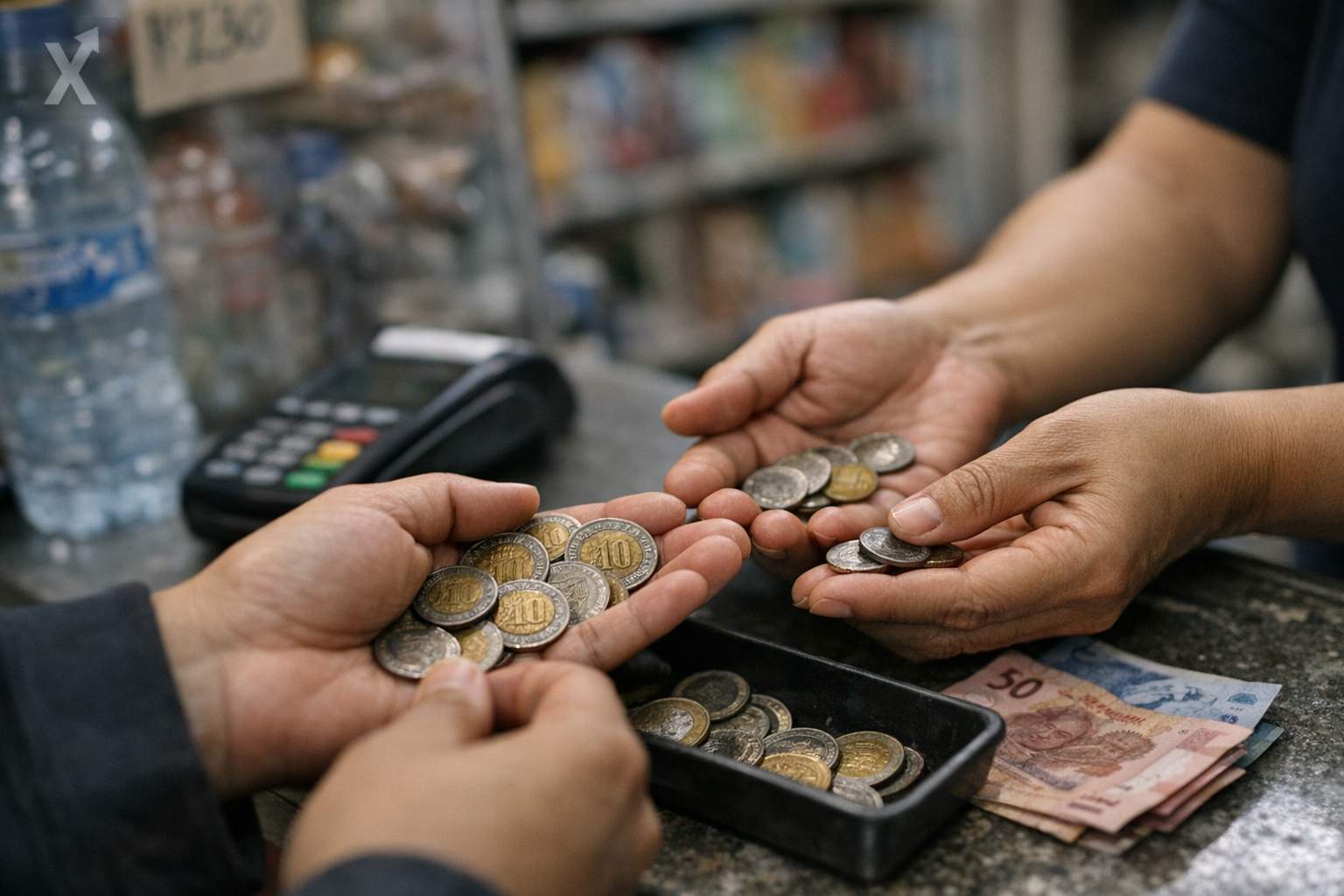
The 10-peso coin—one of the most widely used pieces in everyday transactions—will change its composition beginning in February 2026. The update, published in the Official Gazette of the Federation (DOF), opens the door to new material combinations for the coin’s center and outer ring, with the stated goal of lowering minting costs, modernizing processes, and maintaining durability and security standards for coins in circulation.
The economic driver behind the adjustment is rising metal input costs, especially copper, the main component of the alloy known as “silver nickel” (alpaca plateada). In recent years, the international price of copper has trended upward due to a mix of factors: demand tied to electrification (power grids, electric vehicles), supply constraints in some producing countries, and higher energy costs. For a currency issuer, these moves are not trivial: if metal prices rise, the per-coin cost rises as well, narrowing the room to sustain production without budget pressure.
Under the approved reform, the 10-peso coin’s core may be made from sterling silver, silver nickel, or nickel-plated steel; the outer ring may be made from aluminum bronze or bronze-plated steel. The design aims to preserve key physical characteristics—weight, strength, appearance, and machine compatibility—while giving greater flexibility in sourcing inputs and relying on alternatives that are less exposed to volatility in certain metals.
In practice, the change fits a global trend: many mints have shifted toward plated steel to cut production costs without sacrificing coin lifespan. In Mexico, the measure is backed by technical evaluations of performance against wear and corrosion—relevant factors in a country where cash is still widely used for transportation, small businesses, and low-value payments.
The adjustment is not happening in isolation. Banco de México has been rolling out gradual changes in other denominations as well: 1-peso coins made with bronze-plated steel are already in circulation, and similar approaches are expected to be applied to 2- and 5-peso coins in 2026. The rationale is industrial and fiscal: electroplating allows a cheaper substrate with an outer layer that preserves the traditional look, while improving efficiency and reducing resource use in the manufacturing process.
From a macroeconomic standpoint, the decision does not change the coins’ face value and does not, by itself, imply any shift in purchasing power. Still, it reflects a broader challenge for the Mexican economy: the impact that global commodity prices and international logistics can have on domestic costs, even in areas that usually go unnoticed. With an economy deeply integrated into supply chains and public finances seeking to optimize operating spending, cutting minting costs may seem marginal, but it adds up in a context where the state is under pressure to become more efficient.
There is also an operational angle for merchants and users: during the transition period, 10-peso coins with different compositions will coexist, and all will remain valid for payments. To avoid confusion, the key will be clear institutional communication and consistency in anti-counterfeiting measures. In recent years, counterfeiting has grown more sophisticated, and the use of new materials and coatings can make it easier to incorporate additional technical features without changing the user experience.
In perspective, the metals change in the 10-peso coin confirms that monetary policy is not expressed only through interest rates or inflation control: it also shows up in industrial decisions about how to produce physical money more efficiently. If input-price volatility persists, a flexible materials strategy is likely to become the norm for future issues, preserving the balance between cost, durability, and security for coins in circulation.
In sum, Mexico is moving toward cheaper-to-produce coins without changing their value, driven by higher metal prices and the push for more efficient industrial processes. The challenge will be to manage the transition clearly for the public and reinforce security standards, while the country continues navigating a global environment where raw-material costs can shift quickly.






