Banxico to tweak the 10‑peso coin “recipe” starting in 2026: metal savings and a new minting phase
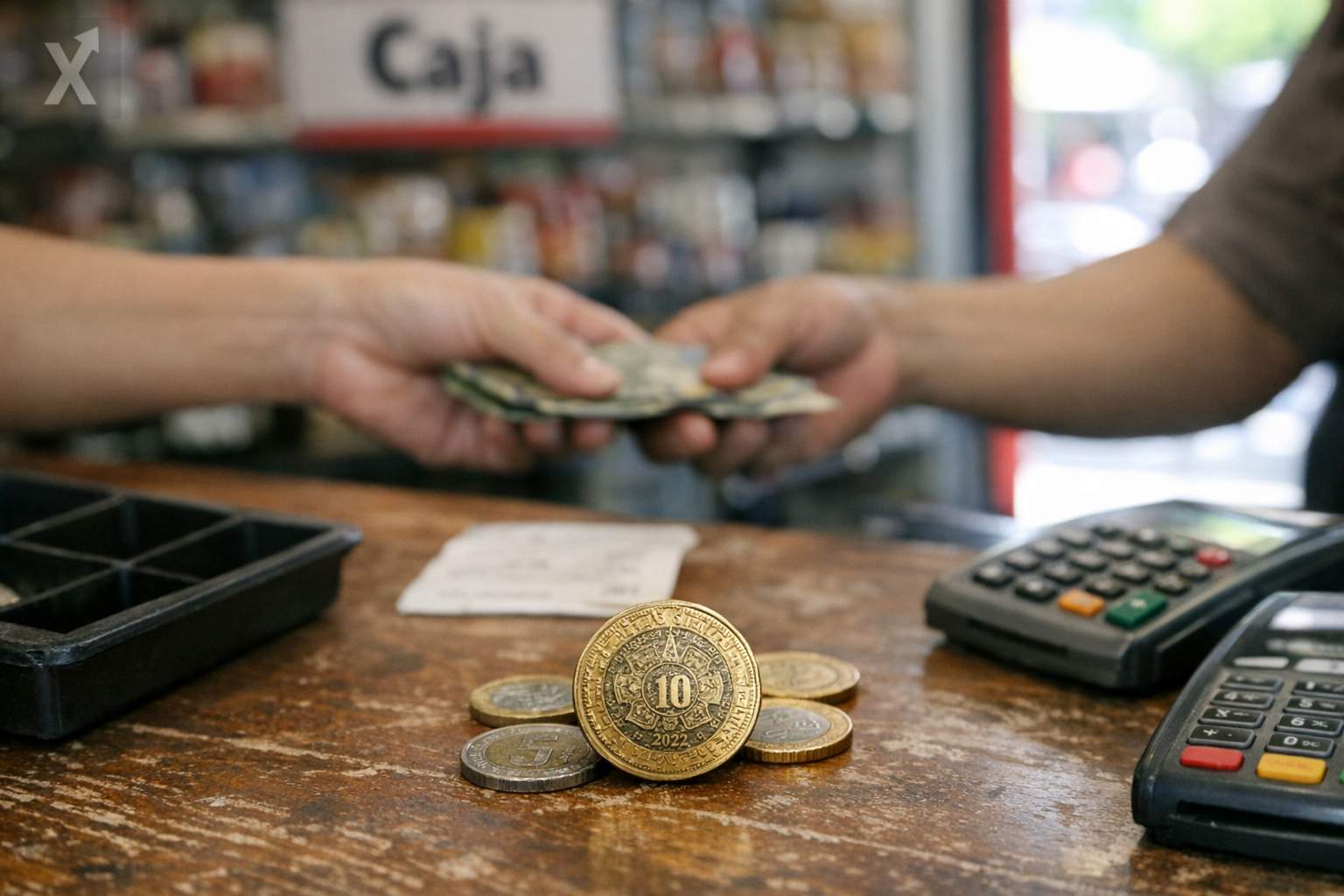
The 10‑peso coin—one of the most commonly used pieces in everyday transactions—will change its composition beginning in February 2026, according to provisions published in Mexico’s Official Gazette of the Federation. The adjustment, approved as part of a cost‑reduction and industrial modernization strategy, will allow Banxico and the Mexican Mint to use alternative alloy combinations for the core and the outer ring without altering the coin’s face value or its function as legal tender.
The main trigger is the rising cost of metal inputs, particularly copper, which in recent years has been highly volatile due to global demand tied to electrification, power grids, and the energy transition. In practice, when metal prices climb, minting costs rise as well, putting pressure on production budgets. For the government, shifting toward materials such as plated steel is intended to partially decouple coin production from commodity price spikes while maintaining standards for strength, appearance, and security.
According to the initiative the Executive Branch sent to Congress, the traditional alloy used in the center of the 10‑peso coin (silver‑colored nickel silver) contains a high proportion of copper, along with nickel and zinc. Under the regulatory change, the core may be made from sterling silver, silver‑colored nickel silver, or nickel‑plated steel; and the outer ring may be aluminum bronze or bronze‑plated steel. The goal is to preserve critical physical characteristics—weight, diameter, durability, and compatibility with counting and sorting machines—while enabling more efficient production pathways.
As technical support, the Executive Branch requested an assessment from UNAM’s Institute of Materials Research on the performance of nickel‑plated steel under real circulation conditions: friction wear, corrosion, and continuous use. The conclusion was that the material meets appropriate physicochemical and mechanical parameters for Mexican coins. From an industrial standpoint, coating methods such as electroplating make it possible to use a lower‑cost base “core” and protect it with a metallic layer that preserves finish and surface resistance.
This move is not happening in isolation. Since late 2025, monetary authorities have pointed to similar adjustments in lower denominations: 1‑peso coins made with bronze‑plated steel are already in circulation, and the same approach is expected to be extended in 2026 to 2‑ and 5‑peso coins. For those coins, the official case combines budget savings and process improvements, including lower input consumption and operational efficiencies. In a context where cash remains important for small purchases and for groups with less access to digital payments, the cost of maintaining enough currency in circulation matters as much as its quality.
From a macroeconomic perspective, changing alloys is a micro‑industrial decision with fiscal and operational implications: it reduces unit costs, cushions the impact of external commodity shocks, and can potentially free up resources for maintenance, logistics, and replacing worn currency. It may also strengthen anti‑counterfeiting security, since updates to materials and processes often come with improvements in electromagnetic properties and manufacturing tolerances—factors that matter for validators and banking equipment.
The adjustment also comes at a time when Mexico is seeking to boost productive efficiency amid a more uncertain global environment: interest rates still relatively high in real terms, pressure from energy costs, and supply chains being reconfigured. While the change in coins does not alter monetary policy—an authority of the Bank of Mexico—it does reflect how technical decisions can help manage recurring government costs and sustain Mexico’s cash infrastructure with less exposure to international volatility.
Looking ahead, the challenge will be ensuring an orderly transition: the new coins must circulate smoothly alongside the existing ones, without creating confusion for retailers or consumers, and the production and distribution chain must maintain consistent quality. At the same time, demand for cash may continue to adjust gradually as electronic transfers and payments grow; even so, cash will remain a key part of Mexico’s payments ecosystem due to its universal acceptance and its role in low‑value transactions.
In short, the material change in the 10‑peso coin targets a pragmatic goal: mint at lower cost and with greater resilience to rising metal prices, without affecting day‑to‑day use of cash. The measure fits into a broader trend of gradual modernization in minting, and its success will depend on technical consistency, public communication, and the ability to maintain security and durability under real‑world use.






